The Ultimate Sail Trim Guide for Better Boat Speed
Learning proper sail trim is one of the fastest ways to become a more confident and capable sailor. Whether you are steering a small keelboat for the first time or building your skills on a larger cruising boat, understanding how to trim a sail correctly helps you sail faster, point higher, reduce heel, and keep the boat balanced.
This practical sail trim guide explains the fundamentals of trimming a sail, the main controls that shape your sails, and the step-by-step process for trimming both the mainsail and jib. For new sailors, the goal is not to make every adjustment perfectly. It is to understand what the sail is telling you, make small changes, and build feel over time.
What Is Sail Trim?
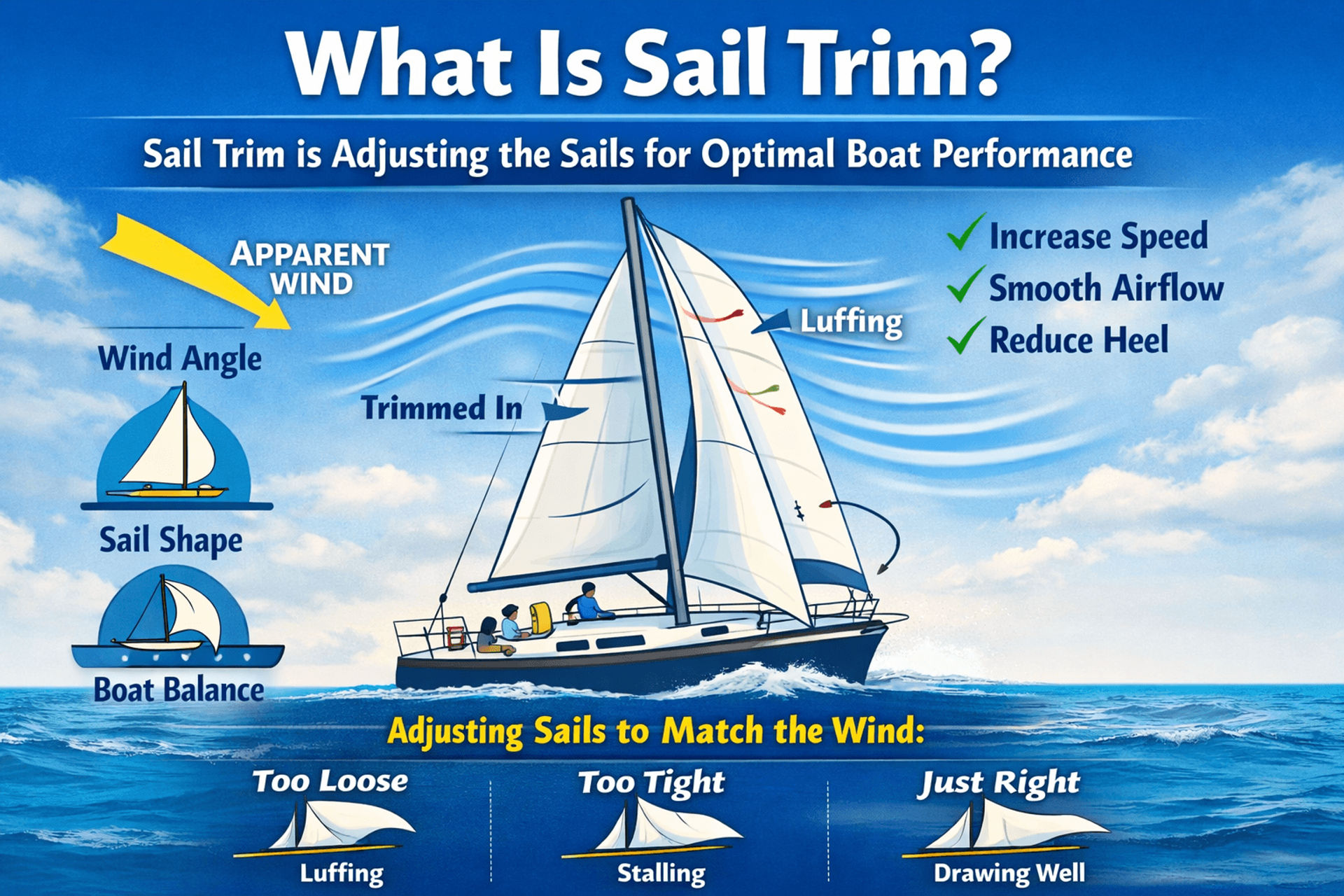
Sail trim is the process of adjusting the sails so they work efficiently with the wind. Good sail trim allows the sail to create smooth airflow and generate forward drive. Poor trim creates drag, stalls the sail, and slows the boat down.
At its core, sail trim is about matching the sail to three things:
- Wind strength
- Wind angle (understanding apparent wind angles is key to effective sail trim)
- Boat balance
A well-trimmed sail is not simply pulled in tight. In many cases, effective trimming a sail means easing it out, adding twist, or flattening the shape depending on the conditions.
Why Sail Trim Matters for Boat Speed
A good sail trim guide always starts with why it matters. Proper sail trim helps you:
- Improve boat speed
- Sail closer to the wind when going upwind
- Reduce excessive heeling
- Maintain better helm balance
- Make the boat easier and more comfortable to steer
Optimizing sail trim also helps maintain or improve the boat's average speed.
For beginners, even small changes in sail trim can make a noticeable difference. A few inches of sheet adjustment or a slight change in sail shape can turn a sluggish boat into one that feels alive and responsive.
The Basic Goal When You Trim a Sail
When you trim a sail, you are trying to set the sail at the correct angle to the wind while shaping it for the conditions. This comes down to a few essential ideas.
The goal is to find the sweet spot where the sail is full, smooth, and drawing efficiently. Proper sail trim helps prevent stalling by maintaining efficient airflow over the sail, ensuring the telltales stream smoothly and the sail continues to generate lift.
Angle of Attack
The angle of attack is the angle between the sail and the apparent wind. For upwind sailing, the sails are trimmed closer to the centerline of the boat. As you bear away onto a reach or run, the sails are eased farther out.
Adjusting the sheeting angle is a key way to set the correct angle of attack for optimal sail trim.
If the sail is pulled in too tight, airflow can stall. If it is eased too much, the sail will luff and lose power. The goal is to find the sweet spot where the sail is full, smooth, and drawing efficiently.
Telltales
Telltales are one of the best tools in any sail trim guide. These small yarn streamers attached to the sail show how air is flowing across the surface.
On the jib and mainsail:
- If the windward telltale flutters, the sail usually needs to come in
- If the leeward telltale flutters or stalls, the sail may be overtrimmed and should be eased
- If both stream straight aft, airflow is generally attached and efficient
Pay special attention to the top telltale, as it is crucial for monitoring airflow at the top of the sail and ensuring optimal sail trim, especially when sailing upwind.
For new sailors, telltales make sail trim much easier. They take the guesswork out of trimming a sail and help you react quickly.
Sail Shape
A sail is not just a flat surface. Its shape matters greatly.
Three key shape concepts matter most:
- Draft or depth: This is how full or flat the sail is. Fuller sails, or a deep sail, create more power in lighter wind and are needed to build speed in light air. Flatter sails reduce power and are better in stronger wind or smooth water, where a flat sail with less twist is preferred for higher pointing and more stability. The position and amount of draft, sometimes called maximum depth, are controlled by halyard tension and luff tension. Increasing halyard tension moves the draft forward, creating a more rounded entry, while easing it moves the draft aft. A draft-forward sail shape is more forgiving and easier to steer, while a draft-aft shape allows for higher pointing. If you notice a few wrinkles along the luff, it may indicate the need to fine-tune luff or halyard tension.
- Twist: Twist is the difference in angle between the bottom and top of the sail. Since wind direction and speed can vary with height, twist helps the sail work efficiently from foot to head. Less twist, combined with a flatter sail, can provide more stability and better pointing in smooth water, while more twist can help maintain flow and power in choppy or light wind conditions.
- Balance and heel: If the boat heels too much or develops heavy weather helm, it is often a sign that the sails are too powerful. This is where depowering becomes important.
Key controls for adjusting sail shape include mast bend, main outhaul, and foot tension. Mast bend and main outhaul are used to flatten the mainsail and control depth, while foot tension affects the shape of the sail's foot and overall stability. Adjusting these controls helps you achieve the desired maximum depth, whether you need a deep sail for power or a flat sail for speed and stability.
The Main Controls Used in Sail Trim
Before learning how to trim a sail step by step, it helps to know what each control does.
Mainsheet
The mainsheet controls the angle of the mainsail and also influences mainsail twist, especially on smaller boats. By pulling the mainsheet in, the boom is brought toward the centerline and, as it becomes more vertical, is pulled down, which reduces sail twist and flattens the sail. Easing the sheet allows more sail twist and can reduce power, which is useful in gusty or lighter wind conditions.
Monitoring leech telltales and the top batten helps ensure proper sail twist and optimal airflow over the sail. Adjusting the mainsheet while watching these indicators allows for fine-tuning of sail trim for maximum efficiency.
Jib Sheets
Jib sheets control the angle of the jib and are your primary tool for jib trim. Adjusting the jib sheet and the lead position (headsail car) directly affects the twist of the sail. Moving the car aft increases foot tension and decreases leech tension, which is crucial for optimal performance. Easing the jib sheet or adjusting the lead position can add power in lighter winds, helping to improve pointing ability and speed. Small changes here make a big difference in overall boat handling and performance.
Traveler
The traveler moves the boom sideways without changing sheet tension as much. It is especially useful for controlling power and balance upwind. If the boat heels too much, easing the traveler down can depower the mainsail while keeping leech tension.
Outhaul
The main outhaul adjusts the tension along the foot of the mainsail, directly affecting foot tension and the overall sail shape. By tightening the main outhaul, you increase foot tension, resulting in a flatter sail for stronger wind. Easing the outhaul reduces foot tension, creating a fuller sail for lighter wind.
Additionally, foot cords can be used to fine-tune foot tension and further refine the sail's shape, helping to prevent flutter and optimize performance in varying wind conditions.
This is a key part of sail shape control in any beginner sail trim guide.
Boom Vang
The vang helps control sail twist and mainsail twist, especially off the wind. It keeps the boom from lifting too much and helps maintain power and shape on reaches and runs. The boom vang is essential for adjusting sail twist and mainsail twist, allowing you to optimize airflow, power, and efficiency in varying wind conditions.
Backstay
On boats equipped with an adjustable backstay, increasing backstay tension not only helps flatten the mainsail and open the leech, but also increases mast bend and reduces headstay sag. This combination depowers the rig, improves upwind performance, and is especially useful in stronger breeze to reduce heel and weather helm. More headstay sag creates a fuller, more powerful sail shape, so in light air, the backstay should be looser to allow for increased headstay sag and a more powerful sail trim.
How to Read Telltales When Trimming a Sail
Telltales are one of the best tools for beginners learning trimming a sail. These small yarn streamers attached to the jib or mainsail show how air is flowing over the sail.
A simple rule for jib telltales:
- If the windward telltale lifts or flaps, trim the sheet in
- If the leeward telltale flutters, ease the sheet out
- If both telltales stream straight aft, your sail trim is close to correct
Telltales take the mystery out of trim a sail decisions and provide immediate feedback. New sailors who watch telltales consistently usually improve much faster.
Sail Trim by Point of Sail
A complete sail trim guide should explain that sails are trimmed differently depending on the boat's angle to the wind.
Upwind Sail Trim
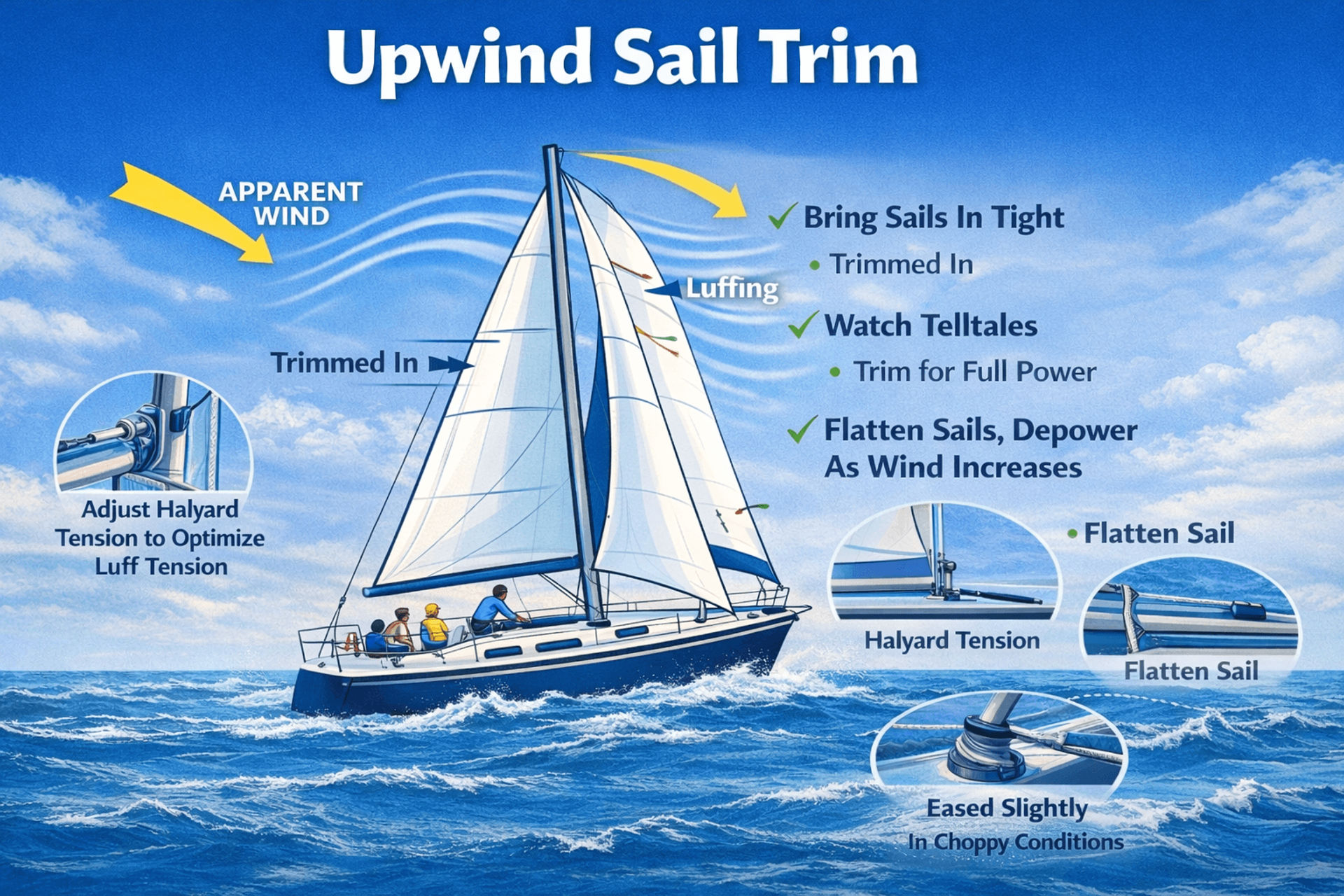
When sailing close-hauled or close reaching, sails should be trimmed in relatively tight. The goal is to keep the sails efficient without overtrimming them.
For upwind sail trim:
- Bring the sails in toward the centerline
- Adjust halyard tension and luff tension to optimize sail shape for higher pointing and less heel
- Watch telltales closely
- In medium air, trim for full power and ensure telltales are easy to read
- In choppy conditions, ease the sheets a couple of inches to help prevent stalling
- As wind increases or in heavy airs, flatten the sails and depower to maintain control and limit energy transfer into the sail
This is where precision matters most when trimming a sail for speed.
Beam Reach Sail Trim
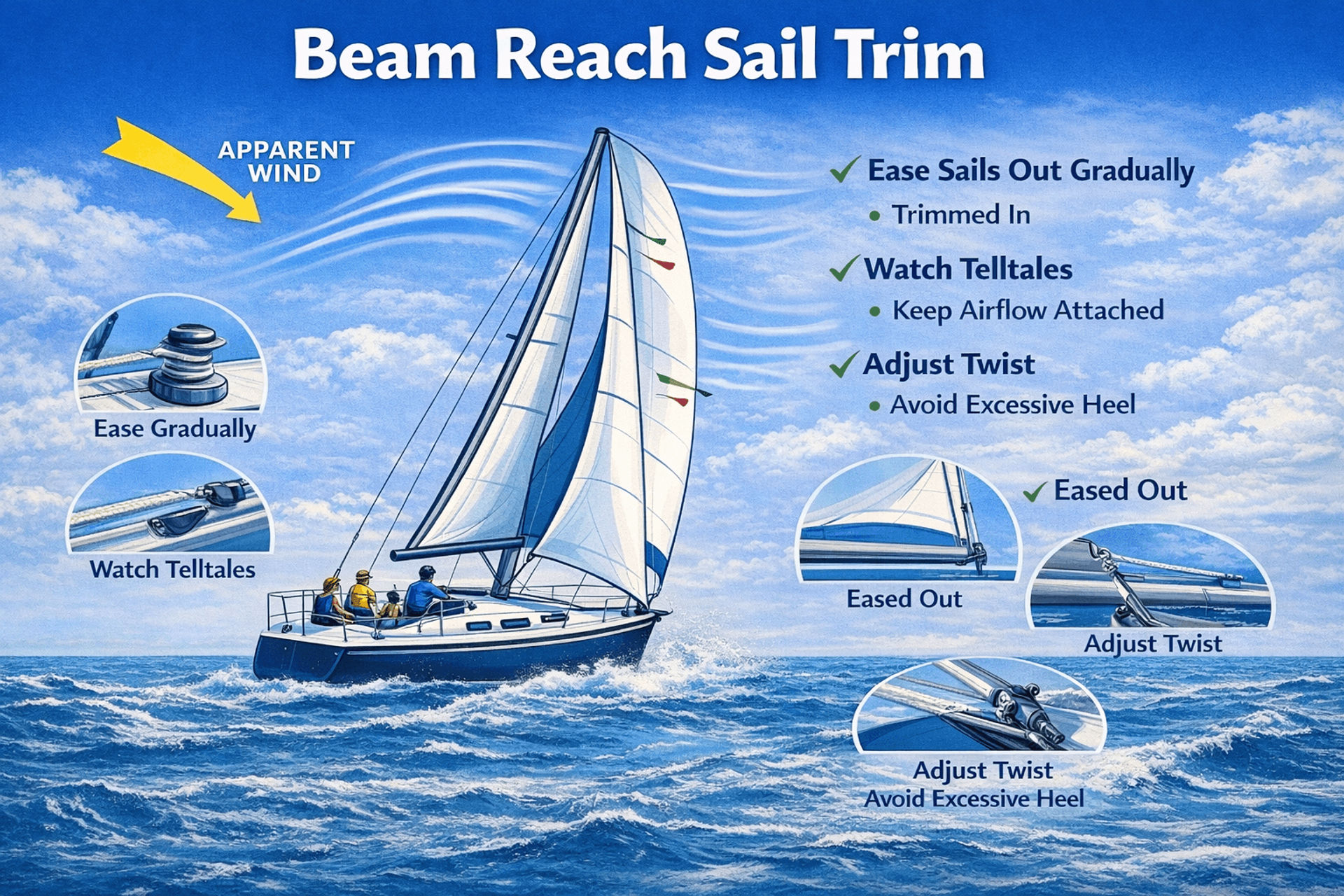
A beam reach is often one of the fastest and easiest points of sail for beginners. Sails are eased out from the upwind position to a wider angle to the wind, maximizing power and speed, and the boat feels more balanced.
On a beam reach:
- Ease the mainsail and jib gradually
- Keep airflow attached using telltales
- Adjust twist to avoid excessive heel or stalled upper sections
Broad Reach Sail Trim
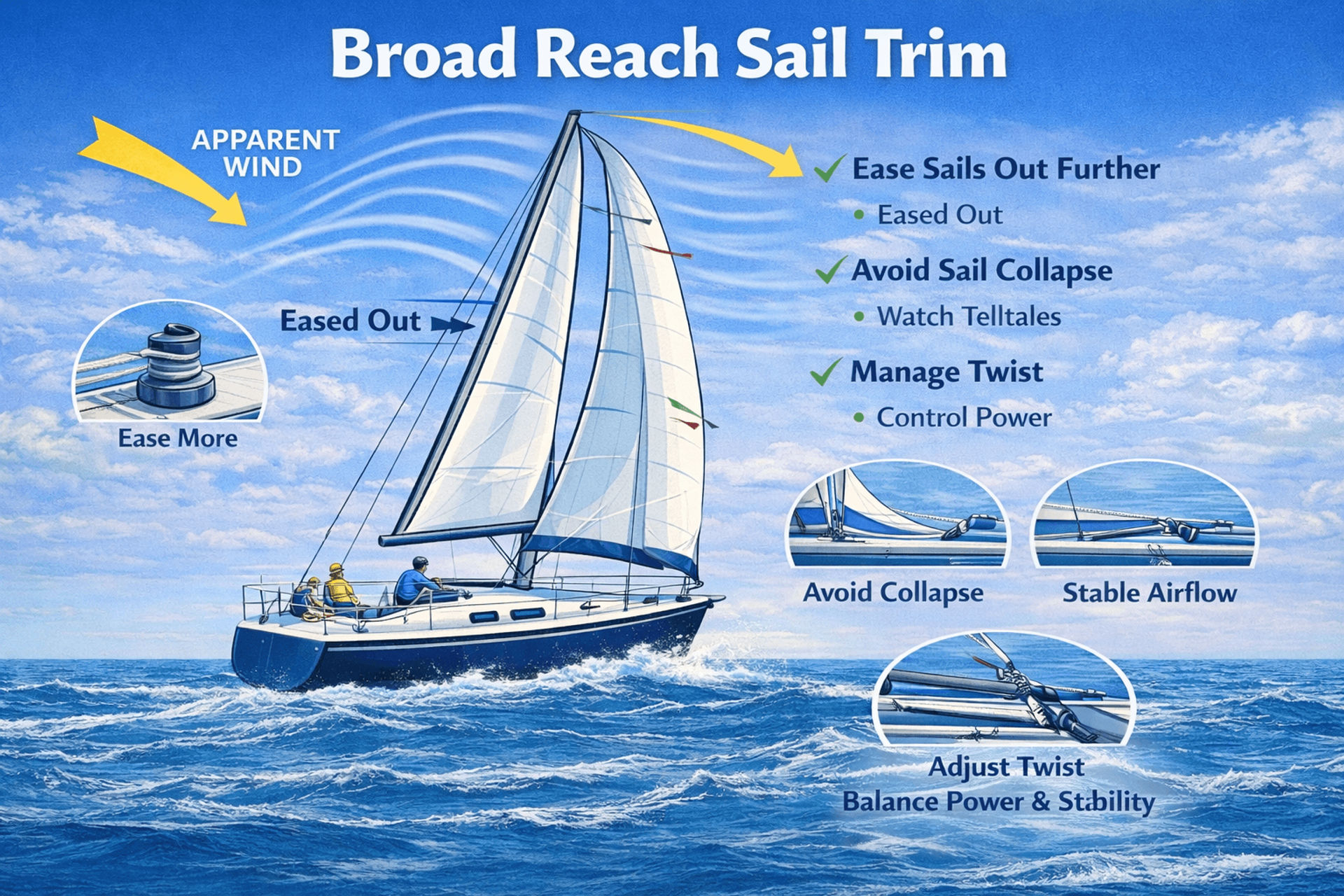
On a broad reach, sails are eased farther out and twist control becomes more important. As apparent wind angles change on this point of sail, ongoing sail trim adjustments are necessary for optimal performance. The boat can still generate good speed, but proper sail trim is needed to avoid collapse or unstable airflow.
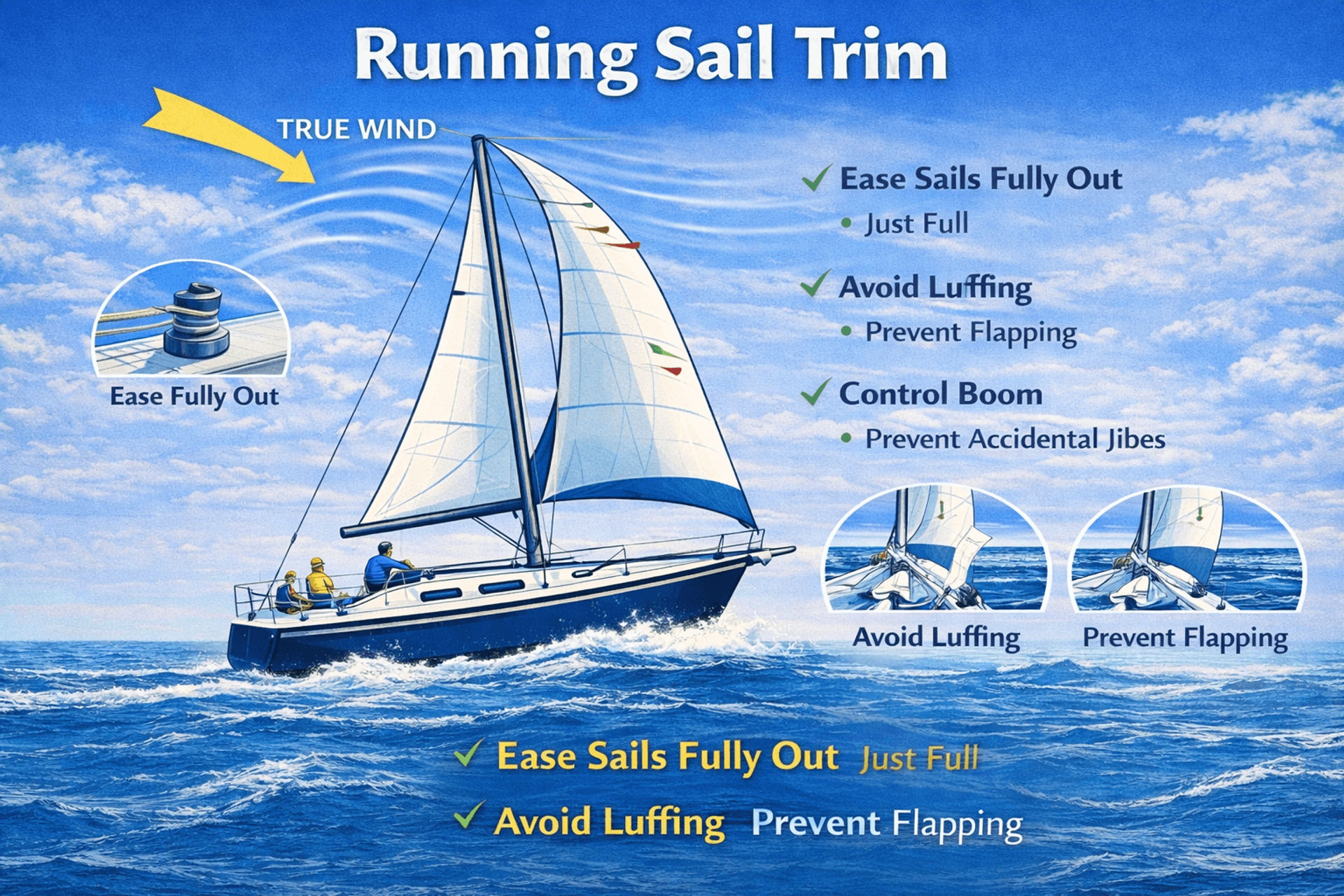
Running Sail Trim
When running downwind, sails are eased well out. Efficiency is different here because the apparent wind decreases and sails are often working more by drag than lift. However, maintaining proper airflow over the sails is still important for maximizing efficiency and speed, even when running.
When trimming a sail on a run:
- Ease sails until they are just full
- Prevent unnecessary luffing
- Be mindful of boom control and accidental jibes
How to Trim a Sail: Step-by-Step
If you are new to sailing, use this simple process every time you trim a sail.
1. Set Your Course First
Before adjusting the sail, know your point of sail. Your sail trim depends on whether you are heading upwind, reaching, or running.
2. Start With the Sail Slightly Eased
Begin with the sail eased enough that it may just start to luff. This gives you a clear reference point. In very light air, it is especially important to start with the sail eased and open up the top of the sail to prevent stalling and allow airflow.
3. Trim In Slowly
Pull the sheet in gradually until the luffing stops. This is often your starting point for effective sail trim.
4. Check the Telltales
Watch the telltales and adjust:
- Windward telltale flapping means trim in
- Leeward telltale flapping means ease out
This is one of the best beginner habits for trimming a sail correctly.
5. Assess Boat Speed and Heel
Notice how the boat feels. Is it accelerating? Is it heeling too much? Is the helm heavy? Efficient sail trim should increase speed without making the boat feel out of balance. Adjusting sail trim for more stability can help maintain control and comfort, especially in challenging conditions.
6. Fine-Tune Sail Shape
Use controls like the outhaul, traveler, vang, or backstay as needed.
- Flatten sails in stronger breeze
- Add fullness in lighter air
- Add twist when overpowered
- Reduce heel if weather helm builds
In gusty conditions, fine-tuning sail shape becomes especially important. Watch for a few wrinkles or check the maximum depth of the sail to help optimize performance and maintain control.
7. Keep Adjusting
Wind shifts, puffs, course changes, and wind increases all affect sail trim. Good sailors are always making small adjustments rather than setting the sails once and forgetting them, especially as wind increases, when ongoing adjustments are necessary to maintain optimal performance.
Common Sail Trim Mistakes Beginners Make
Everyone makes mistakes while learning to trim a sail. The good news is they are easy to correct once you know what to look for.
Overtrimming
One of the most common beginner habits is pulling the sails in too hard. Overtrimmed sails stall airflow and slow the boat.
Ignoring Telltales
Telltales provide constant feedback. Not using them means missing one of the easiest ways to improve sail trim.
Forgetting Sail Shape
Angle is only part of the equation. Depth and twist matter too. A sail can be at the right angle but still be poorly shaped.
Sailing With Too Much Heel
Excessive heel often means the boat is overpowered. Depower early rather than waiting until the helm feels heavy and the boat becomes hard to control. Adjusting sail trim for less heel not only improves control but also increases comfort for everyone on board.
Making Large Adjustments
Small, deliberate changes usually work best. Trim, observe, and adjust again.
Simple Sail Trim Tips for New Sailors
If you are new to sailing, keep these ideas in mind as you practice:
Look at the sails often. They are giving you information all the time. Use telltales as your guide, especially on the jib. Trim until luffing stops, then fine-tune from there. If you notice a few wrinkles along the sail, it can be a sign that further adjustment is needed. In light air, think fuller and more powered up. In stronger wind, think flatter, more twisted, and more balanced. Above all, make one change at a time so you can feel what it does.
How Practice Improves Sail Trim
Reading a sail trim guide is valuable, but sail trim becomes real on the water. The more time you spend adjusting sails and watching the boat respond, the faster your instincts develop. Practicing sail trim not only sharpens your skills but also helps you maintain or improve your average speed over time. Soon, you start noticing how the helm lightens, how the boat accelerates out of a tack, and how small trim changes affect heel and speed.
That is why structured instruction can make such a difference for new sailors. Learning with experienced instructors helps turn abstract sail trim concepts into practical skills you can use right away.
Learn How to Trim a Sail at Naos Yachts in Marina del Rey
At Naos Yachts in Marina del Rey, we help new sailors build real-world confidence on the water through professional, hands-on instruction. Our sailing school offers a wide range of American Sailing and American Boating certified classes designed for beginners and advancing boaters alike.
For students who want to better understand sail trim, boat handling, and the fundamentals of how to trim a sail, our American Sailing 102 Keelboat Sailing class is an excellent next step. In this course, students learn practical skills including luffing, tacking and jibing, points of sail, and more, all in a supportive training environment that makes it easier to connect classroom concepts with on-the-water experience.

Master Sail Trimming With Confidence at Naos Yachts
A solid understanding of sail trim can transform your sailing. When you know how to read telltales, control sail shape, manage twist, and properly trim a sail, you gain more speed, more balance, and more confidence every time you leave the dock.
If you are ready to put this sail trim guide into practice, contact us at Naos Yachts in Marina del Rey or book a class directly online. Our team is here to help you build your skills and get more out of every day on the water.
FAQs
What does trimming a sail mean?
Trimming a sail means adjusting the sail's position and shape to match the wind conditions and direction of travel. This usually involves changing sheet tension and, in some cases, using controls like the outhaul, traveler, vang, or backstay.
What is the difference between mainsail trim and jib trim?
Mainsail trim affects both speed and helm balance, so it plays a major role in controlling heel and weather helm. Jib trim is especially important for airflow, pointing ability, and maintaining proper balance between the front and back of the sail plan.
What happens if you overtrim a sail?
If you overtrim a sail, the airflow can stall and the boat may actually slow down rather than speed up. Overtrim can also make the boat feel less balanced and increase unnecessary heel or helm pressure.
What controls are used to trim a sail?
The main controls used in sail trim include the mainsheet, jib sheets, traveler, outhaul, boom vang, and sometimes the backstay. Each control affects either the angle of the sail, the shape of the sail, or the overall power in the rig.