You have owned the boat for years. You know every through-hull, every quirk of the rig, every bolt you replaced yourself. Now the slip renewal is due, and the old question has resurfaced: sell it privately and keep the full price, or hand the process to a broker and let someone else carry the work. It is a genuine trade-off, and the right answer depends on what your time and your boat's market position are really worth. The reasons why private owners choose Naos for brokerage exposure, screening, and closing support come down to three jobs a broker performs that a for-sale-by-owner listing cannot: putting the boat in front of buyers who are actually looking, filtering out everyone who is not ready to buy, and carrying the deal through survey, paperwork, and funding without it stalling. This article walks through each job in concrete terms, so the decision rests on process rather than hope.
Exposure: Where a Broker Puts Your Boat That You Cannot
Most private sellers start with the same two moves: a "for sale" sign at the marina and a listing on a general classifieds site. Both can work for small, local boats. For a cruising sailboat or a family catamaran, they rarely reach enough of the right people, because serious buyers often come from outside the local marina.
A brokerage listing changes the reach. When you list with Naos Yachts, your boat appears in our current inventory alongside the Beneteau and Lagoon models we carry, so buyers already comparing brands find it where they research boats. From there it moves through every channel we use: national marine listing platforms, our Southern California network of brokers and yacht clubs from Marina del Rey to San Diego, and the boat shows where buyers and brokers meet. The seasonal patterns that shape the calendar are documented in industry reporting from NMMA.
Co-brokering is the layer most private sellers never see. Other brokers in the region can bring their own qualified buyers and earn a share of the commission, turning the local brokerage community into an extension of your sales effort. A marina signboard has no equivalent — on the Beneteau and Lagoon sides of our inventory, your boat sits where brand buyers already browse.
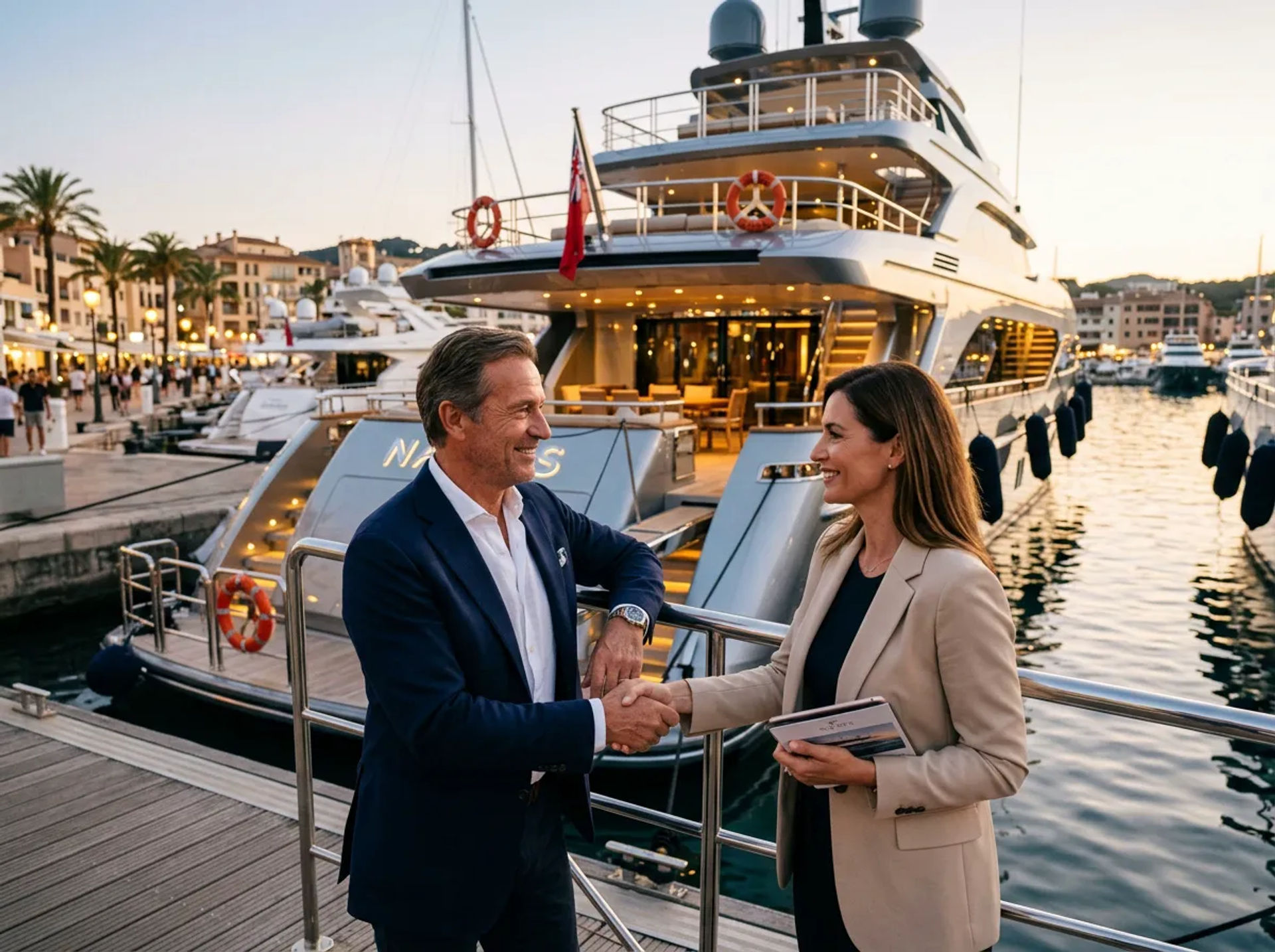
Screening: Protecting Your Time from Tire-Kickers
Ask anyone who has sold a boat privately, and the frustration sounds the same: dozens of calls, a handful of showings, almost nobody who could actually buy. Screening is the second reason private owners choose a broker. Before a showing happens, the broker qualifies the buyer: intended use, financing or available funds, a slip or mooring lined up, and prior experience with boats this size. It is not about being exclusive; it is about making sure the people who step aboard can close. BoatUS, in its guide to what a yacht broker can do for you, notes that prescreening responses avoids most tire-kickers.
The showing itself changes character too. With a broker, buyers are walked through on a schedule that suits you, and the broker answers the technical questions while you stay out of the negotiation. Curious parties rarely reach that point; serious ones rarely drop out. For owners with careers or families, this is often the quietest, most valuable benefit of a brokerage listing — a funnel, not a wall, producing a short list of people who can genuinely buy.

Closing Support: Carrying the Deal Across the Finish Line
Exposure attracts attention and screening keeps it focused, but the deal is won in the last stretch: survey, sea trial, paperwork, funding. This is where private sales most often stall — a buyer flags something the surveyor found, the owner takes it personally, the negotiation drags, and the buyer walks to the next listing.
The broker's job is to keep that process moving without the owner's emotions taking over. The sale dossier — service records, maintenance history, owner's manuals, registration or federal documentation — is assembled before the first showing, not after the offer. Sea trial and survey dates are coordinated around both calendars, and the results are handled as data, not verdicts. Title transfer, lien payoffs, and escrow are managed so the paperwork is done right the first time; the USCG boating site covers the federal documentation basics a broker resolves before they become closing-day problems.
Negotiation belongs to the same job. Offers are countered with clear rationale, post-survey adjustments are handled factually, and the deposit sits in escrow, protecting both sides. None of this requires the owner to become a marine contracts expert overnight — it requires someone who has run the process many times, which is the role a listing broker fills.
Brokerage vs. Private Sale: Where the Difference Actually Shows
Set the brochures aside, and the comparison is concrete: who shows the boat, who holds the deposit, who manages the survey, who carries the paper trail, who takes the call when financing slips a week before closing. In a private sale, every one of those jobs falls on the owner; in a brokerage sale, they fall on a professional whose income depends on closing the deal.
That does not mean a private sale is always the wrong choice. For a smaller, lower-value boat sold to someone you know, brokerless can be simple, and the full proceeds stay in your pocket. But when the buyer pool for your boat is wider than your personal circle — which is true of most Beneteau and Lagoon models — and when the transaction involves a survey, financing, or documentation complexity, the broker's structure becomes the deciding factor. Our detailed comparison of net proceeds, risk, and timeline in a broker vs. private sale walks through the trade-offs line by line, including where owners most often underestimate the hidden work.
Who Gains Most from a Brokerage Listing
The sellers who get the most from a brokerage listing share a few traits: they value their time, want a defensible sale price rather than a lottery ticket, and would rather not be holding the deposit when a deal turns complicated. If that sounds familiar, the brokerage you choose matters as much as the decision to use one.
Credibility is part of it. Naos Yachts marked 15 years as a premier Beneteau dealer, and that longevity shapes how buyers perceive the boats we list — a sale backed by a dealership's reputation reads differently than a posted classified ad. The team works out of Marina del Rey and San Diego, and the about page explains how the brokerage and dealership sides fit together. That combination of reach, screening, and closing discipline is precisely why private owners choose Naos when the stakes are real.
What Is the Strongest Reason to Sell Through a Broker?
The strongest reason is a completed sale at a defensible price. A broker multiplies your exposure, filters out buyers who cannot close, and carries the deal through survey, paperwork, and escrow. That combination protects your time and your net proceeds, which is why private owners choose a broker when the boat and the market justify the commission.
FAQs
How much does it cost to list my boat with a broker?
Broker compensation is commission-based and earned only when the sale closes. Your listing agreement states the percentage up front, before any marketing begins, and no commission accrues while the boat sits. Confirm what the commission covers — marketing, screening, showings, and closing support — before you sign.
Do I need to be present for showings?
No. Your broker runs showings on your schedule, so you do not take afternoons off work for each interested party. You stay informed of every visit and offer; the logistics belong to the broker.
How do brokers screen out curious buyers?
Before a showing, the broker walks through the buyer's plan: intended use, financing or available funds, slip arrangements, and previous ownership experience. Serious buyers answer these questions easily; curious ones usually lose interest before they ever set foot aboard.
What happens if the survey uncovers problems?
The broker manages the renegotiation factually — a repair credit, a price adjustment, or a documented decision to walk away. Because the broker is not emotionally attached to the boat, the owner negotiates from a steadier position than in a private sale.
Can I still decide who buys my boat and at what price?
Always. The broker advises, negotiates, and presents offers, but acceptance is the owner's call. Your listing agreement and the purchase contract keep that authority with you from first offer to closing.
What do I need to prepare before listing?
A clean title, current registration or federal documentation, service and maintenance records, owner's manuals, and any lien or payoff information. Your broker walks you through assembling the dossier before the first showing, so nothing is missing when the right offer arrives.
Make the Call with the Full Picture in Front of You
The decision between a private sale and a brokerage listing comes down to one honest question: what is your time worth, and how wide is the buyer pool for your boat? If the answer points toward professional representation, the practical next step is to get an accurate read on where your boat sits in the current market — no obligation, just the facts.
Start with a confidential listing consultation at our Marina del Rey or San Diego office. While you are at it, browse the current inventory to see how the boats we represent are presented to buyers, and picture where your own listing would sit.
Last reviewed: October 2026.