What to Do During a Medical Emergency at Sea: Essential First Aid and Safety Procedures
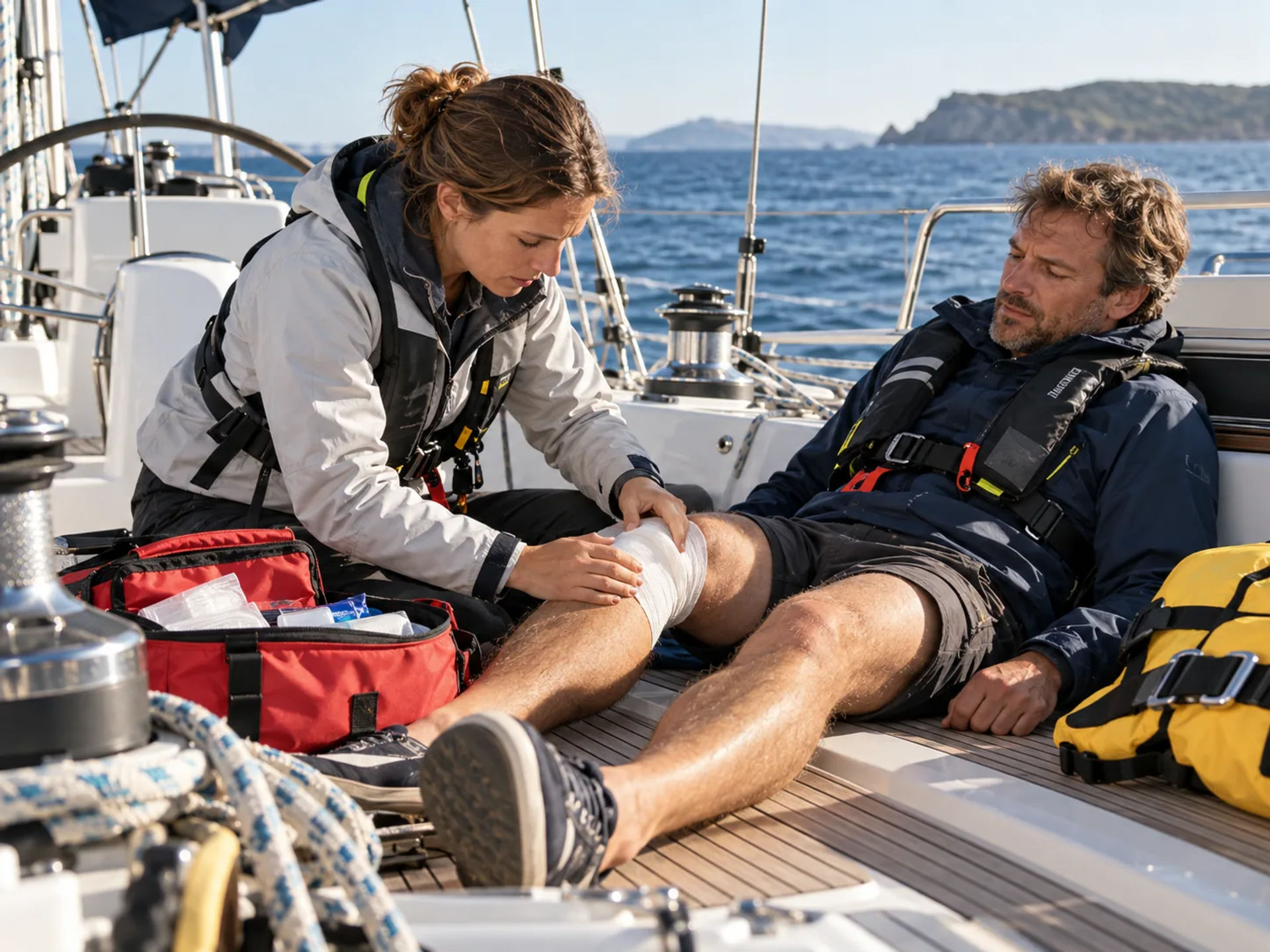
A medical emergency at sea can develop quickly and may become more serious when professional medical care is not immediately accessible. Whether someone suffers a fall, severe cut, near drowning, allergic reaction, or another sudden illness or injury, knowing how to assess the situation and provide appropriate first aid can make a significant difference while help is on the way.
Preparation is especially important for sailors because conditions aboard a boat can complicate even relatively common medical problems. Limited space, vessel movement, exposure to the elements, and distance from shore can all affect how an emergency is handled. Learning basic first aid, carrying appropriate supplies, and knowing how to contact emergency services can help sailors respond more effectively to medical emergencies at sea.
Why Medical Emergencies at Sea Require Special Preparation
Responding to an injury or illness on land often means emergency medical services can reach the patient relatively quickly. At sea, the situation may be very different. Depending on your location, weather, vessel, and available rescue resources, professional assistance could take considerably longer to arrive.
Sailors also have to account for hazards unique to the marine environment. A moving deck can make it difficult to assess or treat an injured person, while waves and wind can complicate evacuation. Saltwater exposure, sun, heat, cold, and seasickness may further affect the patient or the person providing care.
Preparation should therefore extend beyond simply carrying a first aid kit. Crew members should understand how to stabilize an injured person, communicate their location, manage the vessel, and continue providing care until professional assistance becomes available.
First Steps During a Medical Emergency at Sea
When a medical emergency at sea occurs, avoid immediately rushing toward the injured person without first checking the surroundings. An uncontrolled boat, moving equipment, fire, electrical hazards, rough conditions, or other dangers could result in additional injuries.
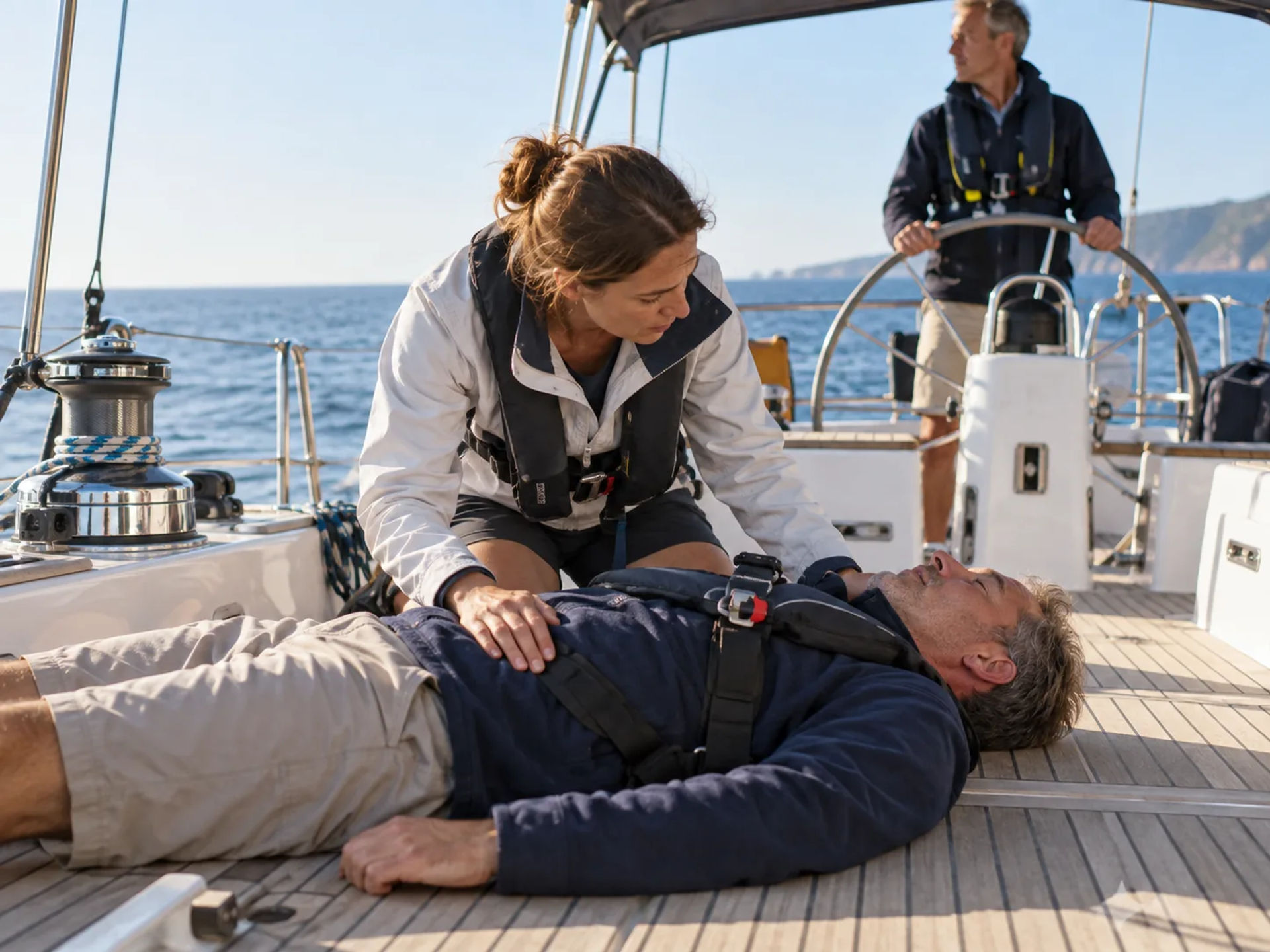
A practical initial response generally involves:
-
Assessing the scene: Identify hazards that could endanger the patient or other crew members.
-
Protecting yourself: Use gloves or other personal protective equipment when appropriate.
-
Checking the person: Determine responsiveness and look for immediate threats to life.
-
Calling for help: Contact emergency services or maritime rescue authorities as appropriate for your location and situation.
-
Assigning responsibilities: Have available crew members handle communications, navigation, vessel control, or first aid as needed.
-
Providing appropriate care: Address the most serious immediate problems while awaiting additional assistance.
For life-threatening situations, follow your first aid and CPR training and instructions from emergency personnel.
How to Call for Emergency Assistance at Sea
Communication is an essential part of managing serious medical emergencies at sea. Before leaving the dock, sailors should know how to operate the vessel’s VHF radio and understand what communication equipment is available onboard.
For a grave and imminent threat to life, a Mayday call over VHF radio may be appropriate. Depending on where you are boating, other communication methods may include a cell phone when within coverage, satellite communications, or emergency signaling equipment.
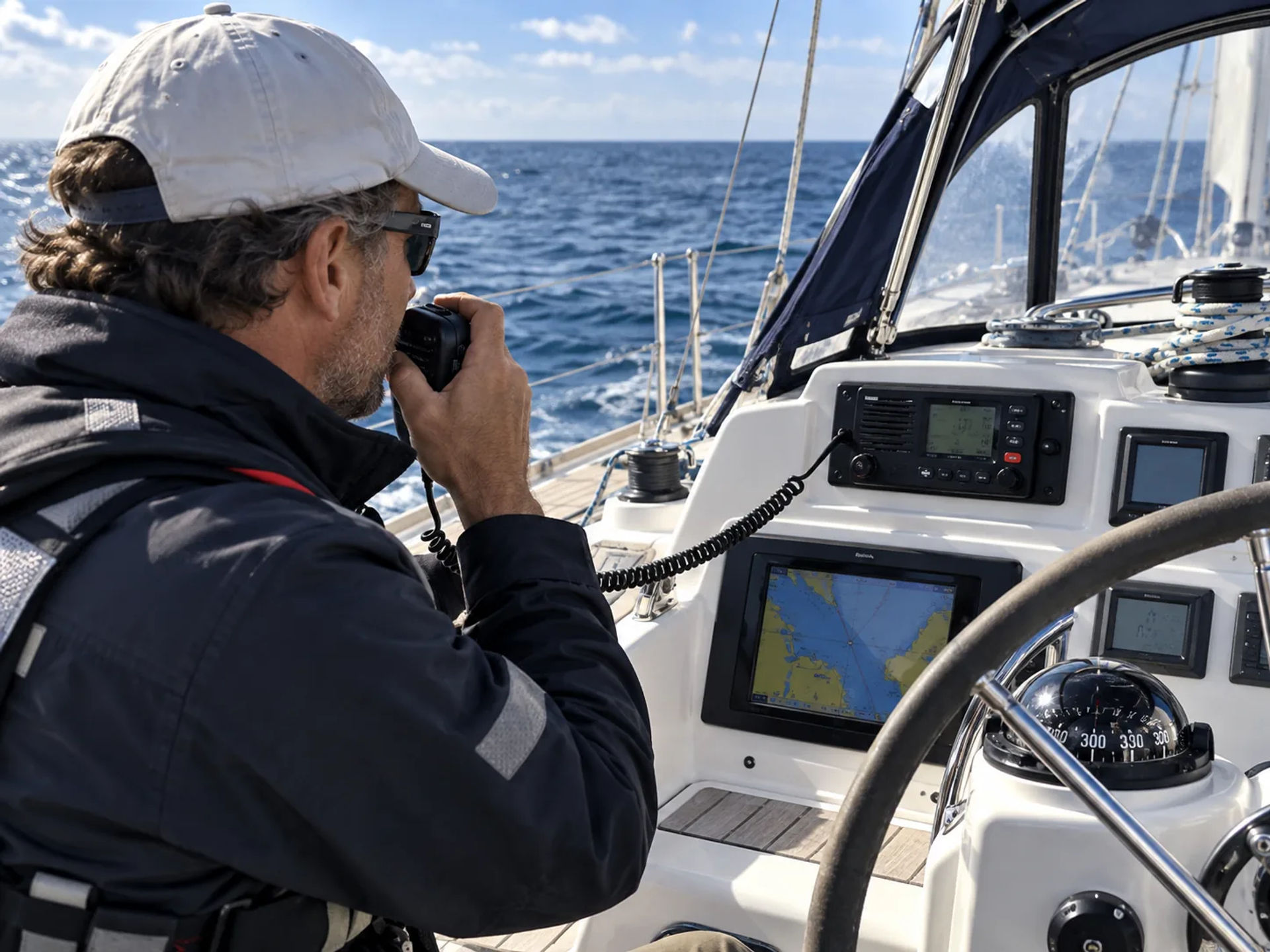
Be prepared to communicate important information such as:
-
Vessel name and description
-
Current position or GPS coordinates
-
Nature of the medical emergency
-
Patient’s condition
-
Number of people onboard
-
First aid already provided
-
Your intended course or current vessel status
Follow instructions from the responding authorities. They may provide medical guidance, arrange a rendezvous, direct you toward a suitable harbor, or coordinate evacuation.
Assess the Injured or Ill Person
Once the immediate environment is reasonably safe, assess the person’s condition according to your level of first aid training. Serious problems involving responsiveness, breathing, circulation, or severe bleeding generally require immediate attention.
Continue monitoring the patient because their condition can change while you wait for assistance. If the person is conscious, gather relevant information when possible, such as what happened, symptoms, allergies, medications, and pertinent medical history.
Avoid moving someone unnecessarily when a serious head, neck, back, or other traumatic injury is suspected unless remaining in place presents an immediate danger. Follow the procedures taught in your first aid training and directions from medical or rescue personnel.
Control Severe Bleeding and Treat Cuts
Cuts and lacerations are among the injuries sailors may encounter aboard a boat. Sharp hardware, broken equipment, fishing gear, tools, and other onboard objects can cause wounds ranging from minor cuts to serious bleeding.
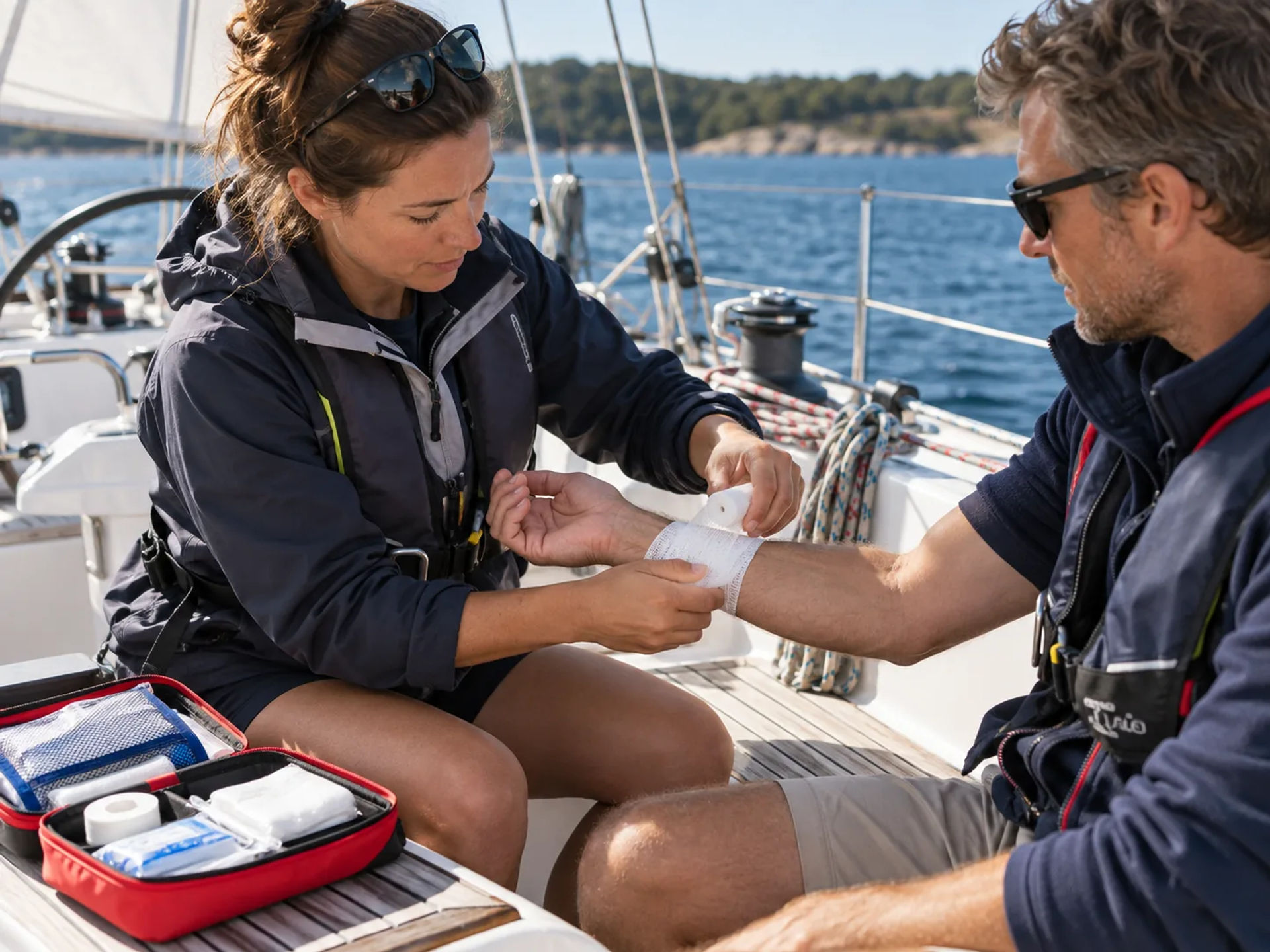
For significant external bleeding, first aid commonly focuses on applying firm direct pressure with an appropriate dressing or clean material and seeking professional assistance when needed. Severe or uncontrolled bleeding is a medical emergency.
Even smaller wounds should be handled carefully in the marine environment. Once immediate bleeding has been controlled, wounds may require cleaning, dressing, monitoring, and later professional evaluation depending on their severity and contamination.
Respond to Falls, Fractures, and Internal Injuries
Falls can happen on wet decks, stairs, ladders, and other areas of a vessel. Crew members can also be thrown against equipment when a boat moves unexpectedly. These accidents may cause sprains, fractures, rib injuries, head injuries, or internal trauma.
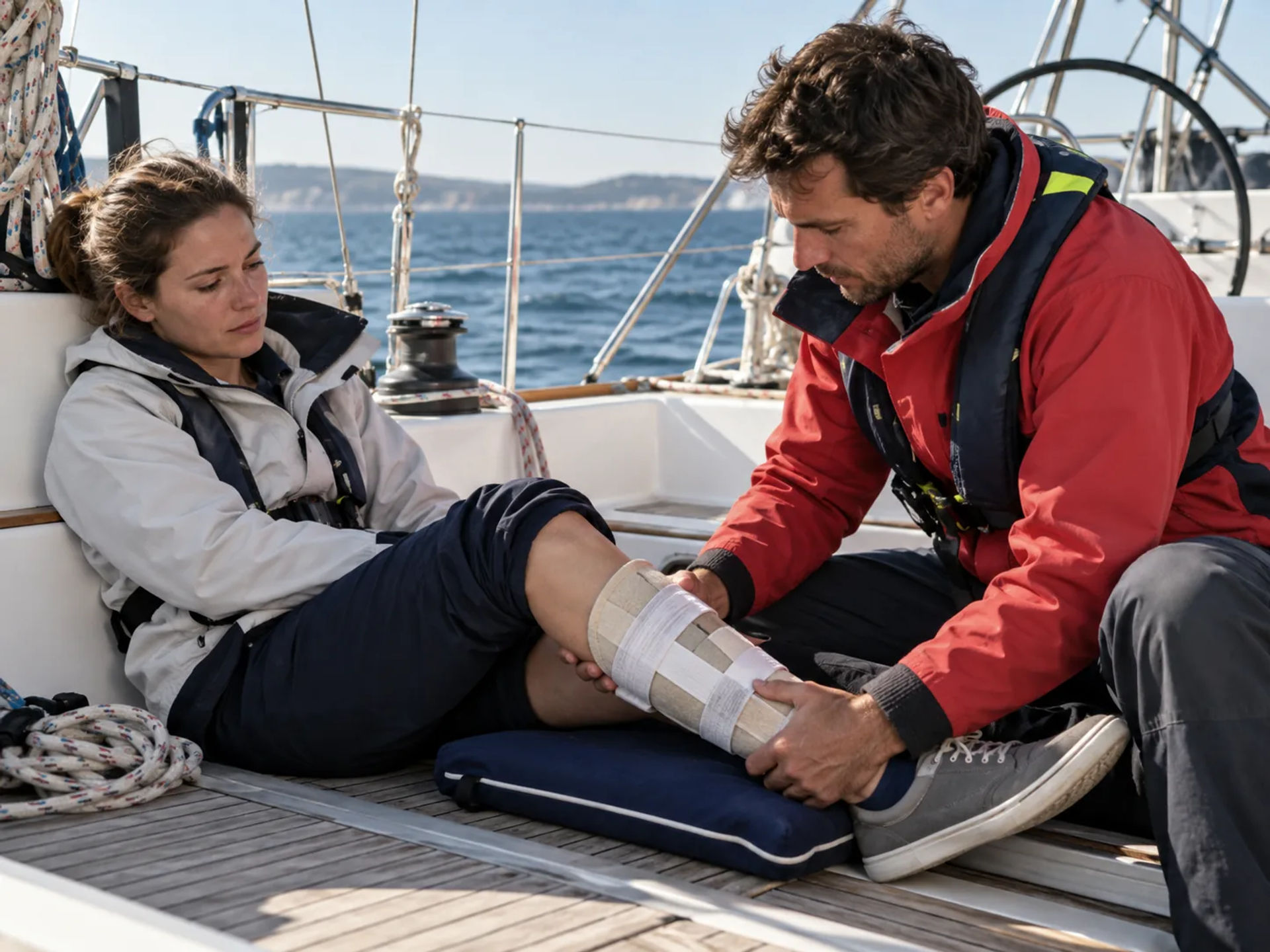
If a fracture or serious injury is suspected, limit unnecessary movement and support the injured area according to your training. Do not attempt to straighten an obvious fracture or dislocation unless specifically directed by qualified medical personnel.
Internal injuries can be particularly difficult to identify. Significant abdominal or chest pain, difficulty breathing, worsening weakness, confusion, or deterioration following a serious impact should be treated as reasons to seek urgent professional medical guidance.
Know How to Respond to a Drowning or Near-Drowning Emergency
A person who has fallen overboard and experienced difficulty breathing requires prompt attention once they have been safely recovered from the water.
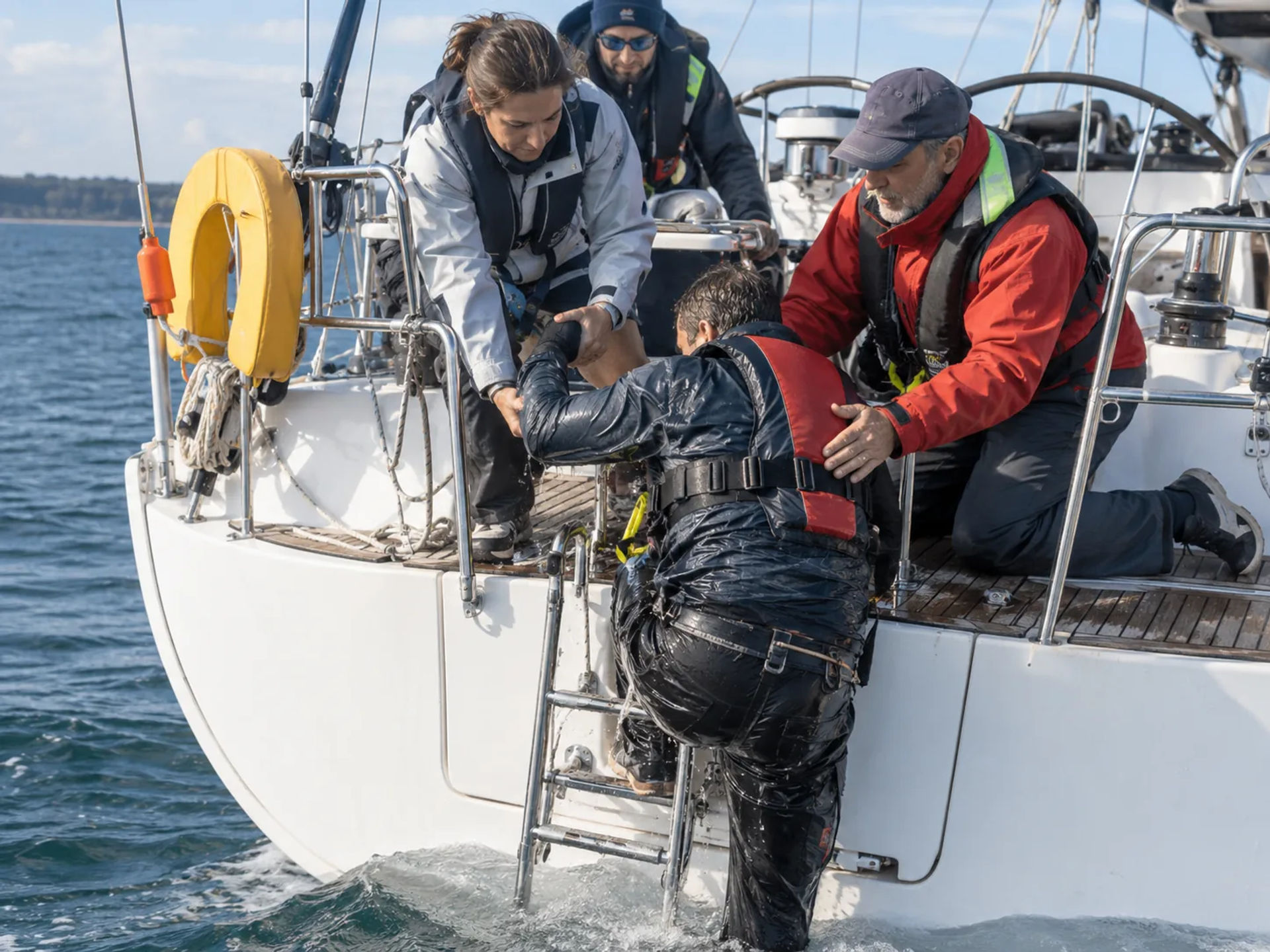
After recovery, assess responsiveness and breathing and provide CPR or other appropriate care if indicated by your training. Emergency assistance should be requested for a person who experienced a serious drowning or near-drowning event, even when their initial condition appears to improve.
Prevention is equally important. Appropriate personal flotation devices, established man-overboard procedures, proper lighting, safe movement around the vessel, and crew awareness can reduce the likelihood that someone ends up in the water in the first place.
Treat Common Boating-Related Injuries
Some medical emergencies at sea involve hazards that sailors may not regularly encounter on land. Familiarity with these risks can make it easier to recognize dangerous situations and respond appropriately.
Winch and Line Injuries
Lines under heavy loads can cause serious hand, finger, and crush injuries. Sailors should keep hands and other body parts away from loaded lines, winches, blocks, and pinch points. A significant crush injury, amputation, or severe bleeding requires immediate emergency attention.
Propeller Injuries
Propellers can cause severe lacerations and traumatic injuries. The engine should be secured before attempting a rescue near the propeller, and significant injuries require rapid bleeding control and professional medical assistance.
Rib and Chest Injuries
Falls or impacts against the boat can injure the ribs or chest. Difficulty breathing, significant chest pain, coughing blood, or worsening symptoms after an impact warrant urgent medical evaluation.
Jellyfish Injuries
Jellyfish encounters can cause painful skin reactions and, in some cases, more serious systemic reactions. Because recommended first aid can vary by species and region, sailors should follow current guidance from appropriate medical or local authorities and seek emergency assistance if the person develops breathing difficulty, severe symptoms, or signs of a serious allergic reaction.
Managing Seasickness and Motion Sickness
Not every onboard medical problem begins as a life-threatening emergency. Seasickness is common, but prolonged vomiting can contribute to dehydration, weakness, and reduced ability to safely participate in vessel operations.
Someone experiencing significant seasickness should be monitored, encouraged to stay hydrated when appropriate, and kept in a safe location where a sudden movement of the vessel will not cause a fall. Preventive strategies and medications should be discussed with a healthcare professional before departure when seasickness is a known concern.
Persistent vomiting, confusion, fainting, severe dehydration, or other concerning symptoms may require professional medical advice.
Keep the Patient Safe While Waiting for Help
Once immediate first aid has been provided, continue monitoring the patient’s condition. Protect them from unnecessary movement and exposure while keeping yourself and the rest of the crew safe.
Conditions at sea can also make maintaining a stable environment difficult. When practical, move the vessel in a manner that reduces excessive motion without compromising navigation or safety. Someone else may need to assume responsibility for steering, sails, navigation, and communication so the first aid provider can remain focused on the patient.
Documenting changes in symptoms, consciousness, breathing, and the care provided may also be helpful when communicating with emergency responders.
What Should Be in a Marine First Aid Kit?
A well-stocked first aid kit is an important part of preparing for a medical emergency at sea. The appropriate contents will vary depending on the length of the trip, number of passengers, cruising area, remoteness, and crew members' medical needs.
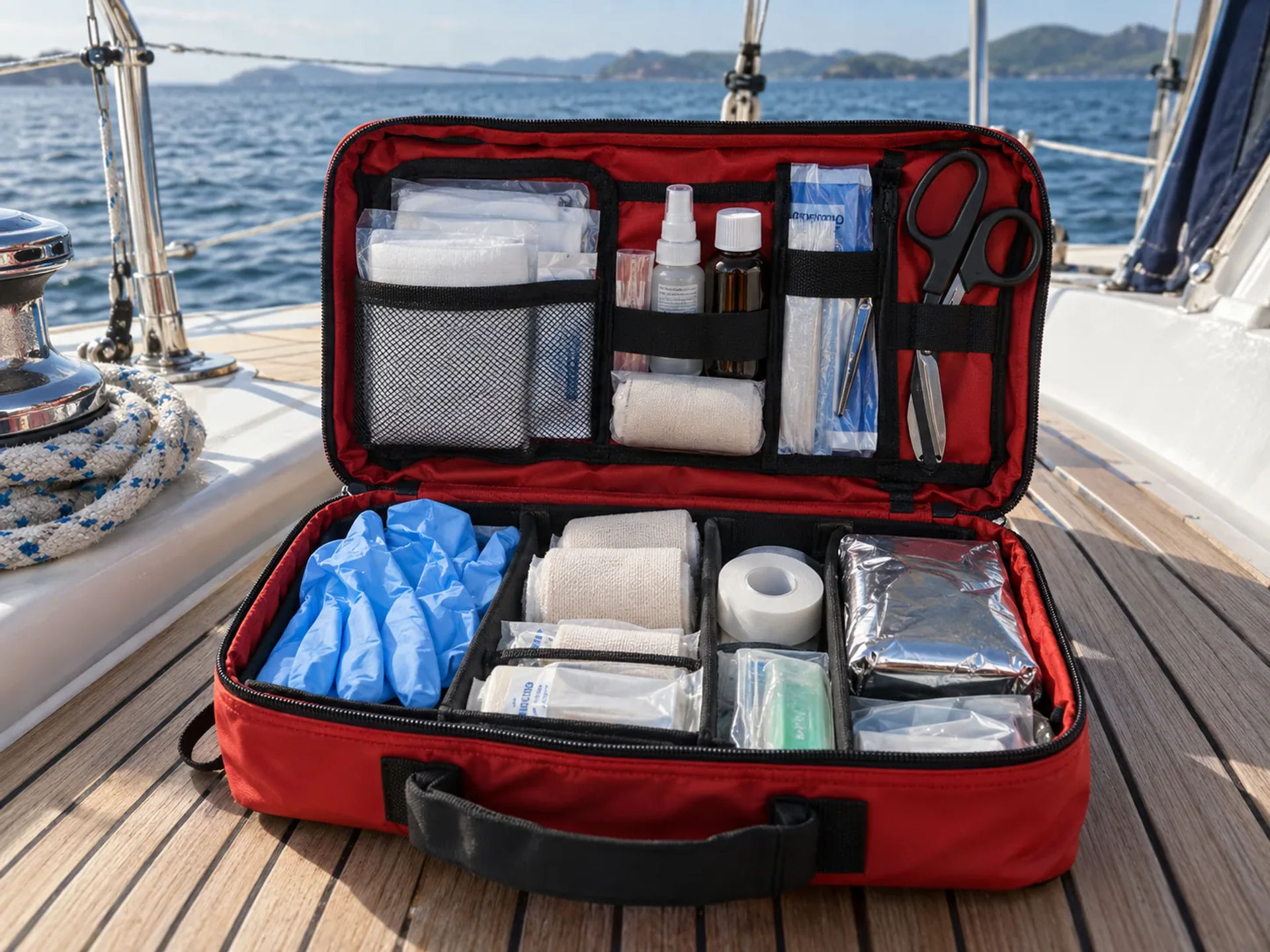
A marine first aid kit may include items such as:
-
Disposable medical gloves
-
Sterile gauze and wound dressings
-
Adhesive bandages
-
Medical tape
-
Elastic wraps
-
Antiseptic supplies
-
Trauma shears
-
Cold packs
-
CPR barrier equipment
-
Emergency blanket
-
Splinting materials
-
First aid reference materials
Sailors should also consider the personal medical requirements of everyone onboard. Prescription medications and other individual necessities should be available in adequate quantities for the planned voyage, with additional consideration given to unexpected delays.
First aid supplies should be stored somewhere accessible and protected from water. Check the kit periodically and replace used, damaged, or expired items.
Prepare for Medical Emergencies at Sea Before Leaving the Dock
The best time to prepare for an emergency is before the boat leaves the marina. A pre-departure safety plan should account for the route, weather, communications equipment, crew experience, and expected access to emergency services.
Before getting underway, consider:
-
Checking and restocking the first aid kit
-
Identifying crew members with first aid or CPR training
-
Reviewing the location of safety and emergency equipment
-
Making sure everyone knows how to use the VHF radio
-
Reviewing man-overboard procedures
-
Checking communication and signaling equipment
-
Identifying relevant medical conditions or medications within the crew when voluntarily disclosed
-
Planning how the vessel could return to port or meet emergency responders
-
Reviewing the sailing area and potential safe harbors
For longer or more remote passages, emergency planning should become correspondingly more detailed.
First Aid Training Is an Important Part of Sailing Safety
Reading about emergency procedures is useful, but practical training provides experience that is difficult to gain from written instructions alone. First aid courses can teach sailors how to assess injuries, prioritize treatment, communicate during an emergency, and respond more confidently when conditions are stressful.
Training is particularly valuable for boaters because marine emergencies may involve scenarios such as near drowning, falls, fractures, cuts, winch accidents, propeller injuries, seasickness, and other problems that occur in an environment where immediate medical care may not be available.
Regularly refreshing these skills can also help crew members remember procedures that may otherwise be difficult to recall during an actual emergency.
Prepare With Naos Yachts' Coastal Cruising First Aid Class
At Naos Yachts in Marina del Rey, we offer sailing education designed to help boaters develop the practical skills they need to become safer and more capable on the water. Our sailing school offers a wide range of American Sailing and American Boating certified classes, giving sailors opportunities to expand their knowledge as they progress from foundational skills to more advanced cruising.
For sailors who want to become better prepared for a medical emergency at sea, our Coastal Cruising First Aid class combines a two-hour online class with a half-day class aboard a boat. The course is designed to prepare participants to provide care when emergencies arise and incorporates First Aid training from the American Red Cross.
Topics can include motion sickness and seasickness, jellyfish injuries, drowning and near-drowning response, cuts, fractures, internal injuries, falls, and boating-related accidents such as propeller cuts, winch injuries, falls down stairs, and rib injuries. By addressing situations sailors may realistically encounter, the course helps participants develop practical first aid knowledge they can bring aboard their own vessels.
Build the Skills to Respond to a Medical Emergency at Sea
A medical emergency at sea can be challenging because professional care may be farther away and the marine environment can complicate treatment. Knowing how to assess the situation, contact emergency services, provide appropriate first aid, manage the vessel, and monitor an injured person can help you respond more effectively when every minute matters.
Preparation starts before you leave the dock. Contact Naos Yachts or book a class directly online to explore our sailing courses, including Coastal Cruising First Aid, and develop the safety skills and practical knowledge you need for your next day on the water.
FAQs
What should you do first during a medical emergency at sea?
First, make sure the surrounding area is safe and assess the injured or ill person’s condition. If the situation is serious or life-threatening, contact emergency services or maritime rescue authorities as soon as possible while providing first aid according to your training.
How do you call for medical help while at sea?
Boaters can use a VHF marine radio to contact the appropriate maritime authorities, particularly when cell service is unavailable. Be prepared to provide your vessel name, location, nature of the emergency, patient’s condition, and other information requested by responders.
What are the most common medical emergencies at sea?
Medical emergencies at sea can include severe cuts, falls, fractures, head injuries, burns, allergic reactions, dehydration, near drowning, and boating-related injuries. Seasickness and exposure to excessive heat or cold can also become serious under certain circumstances.
What should be included in a marine first aid kit?
A marine first aid kit should generally contain gloves, sterile gauze, wound dressings, bandages, medical tape, antiseptic supplies, trauma shears, cold packs, emergency blankets, and other appropriate first aid equipment. The kit should reflect the number of people onboard, length of the voyage, destination, and distance from professional medical assistance.