How to Dock a Sailboat 101: A Step-by-Step Guide for Beginners
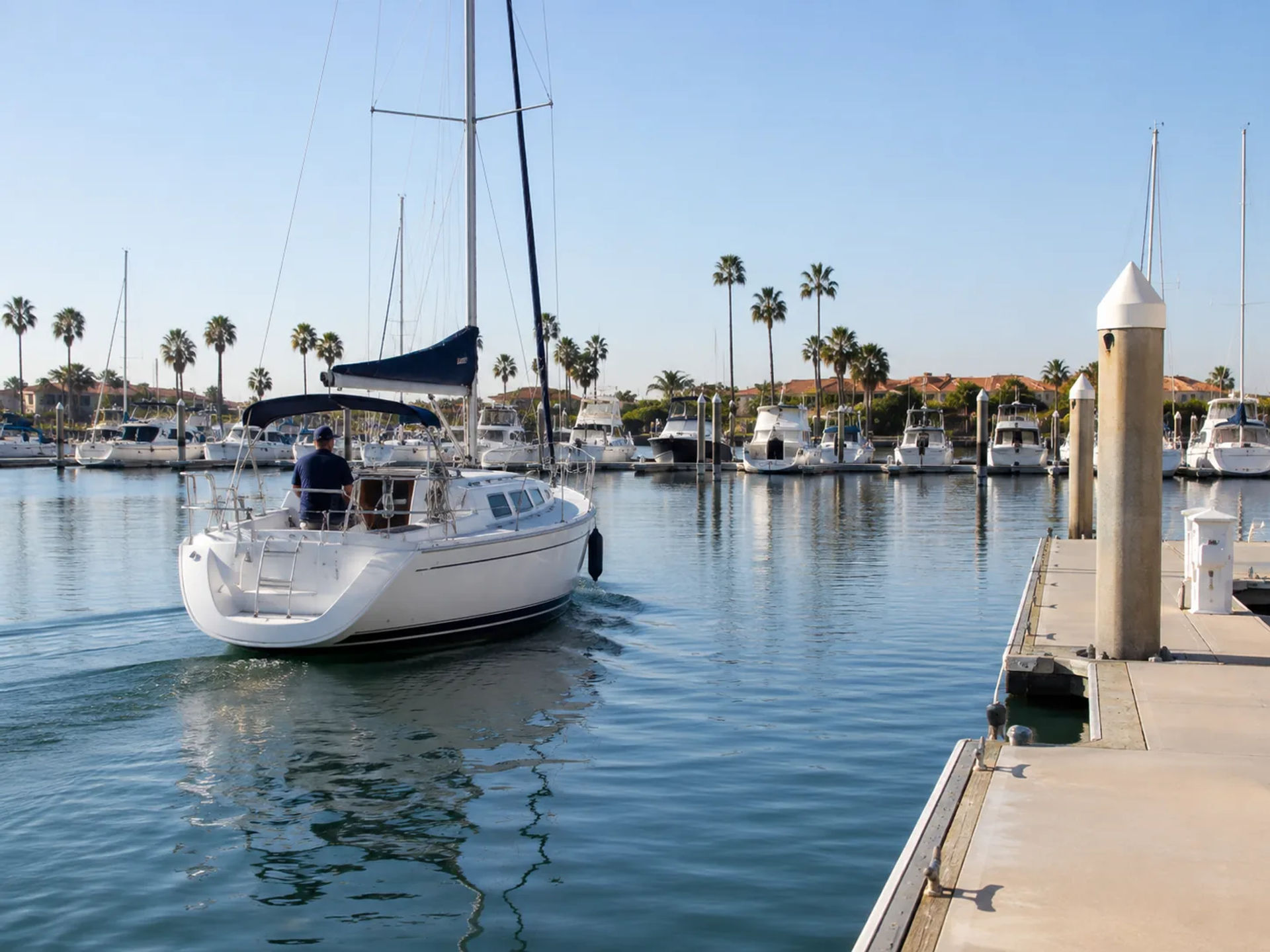
Docking is one of the most important boat-handling skills for any new sailor to develop. Unlike sailing in open water, docking a sailboat requires you to maneuver slowly in a confined space while accounting for wind, current, momentum, nearby boats, and the location of your dock lines. Although approaching a crowded marina can feel intimidating at first, a calm plan and a few fundamental techniques can make the process much easier.
In this beginner’s guide, we will explain how to dock a sailboat step by step so you can make safer, smoother, and more controlled arrivals.
Understand How Your Sailboat Handles Before Approaching the Dock
Before practicing docking, spend some time understanding how your particular sailboat responds at slow speeds. Different boats can react differently depending on their hull shape, keel configuration, rudder arrangement, engine, propeller, and displacement.
Practice in open water to learn how quickly the boat slows when you shift into neutral, how much distance it takes to stop when reverse is engaged, and how effectively the rudder works at very low speeds.
You should also become familiar with the tendency known as prop walk. When reverse is engaged, the propeller may cause the stern to move slightly to port or starboard depending on the boat’s propulsion system. Understanding this tendency can help you anticipate how the boat will behave during close-quarters maneuvering.
Prepare Before Entering the Marina
Good docking begins before you reach the slip.
Whenever possible, prepare the boat while you still have plenty of open water around you. Trying to organize lines and fenders while simultaneously navigating a narrow fairway creates unnecessary stress.
Before entering the marina:
- Reduce your speed.
- Lower and secure the sails.
- Start the engine and confirm that it is operating properly.
- Determine which side of the boat will be alongside the dock.
- Position fenders at the appropriate height.
- Prepare bow, stern, and spring lines.
- Assign crew members specific responsibilities.
- Review the docking plan with everyone aboard.
- Check wind and current conditions.
- Identify your slip before beginning the final approach.
A prepared crew can focus completely on the maneuver instead of scrambling for equipment at the last moment.
Evaluate the Wind and Current
Wind and current can dramatically change how a sailboat approaches a dock.
Before entering your slip, look at flags, water movement, nearby boats, and other visual indicators to determine which direction the wind and current are moving. Consider whether these forces will push you toward the dock or away from it.
When the Wind Is Pushing You Toward the Dock
A wind blowing toward the dock can help bring the boat alongside, but it can also cause you to arrive too quickly.
Approach slowly and allow the wind to assist with the final portion of the maneuver. Keep enough control to prevent the boat from being pushed aggressively against the dock.
When the Wind Is Blowing You Away From the Dock
An offshore wind generally requires more planning because the boat may begin drifting away before your crew can secure the lines.
You may need to approach at a slightly more deliberate angle and secure a useful line promptly once the boat reaches the dock.
Wind conditions should influence your strategy before the final approach begins rather than becoming something you react to at the last second.
How to Dock a Sailboat Step by Step
While every marina and docking situation is somewhat different, the following process provides a useful starting point for beginners learning how to dock a sailboat.
Step 1: Brief Your Crew
Make sure everyone understands the plan before entering the slip.
Explain:
- Which side will be against the dock
- Who will handle each line
- Which line should be secured first
- Where each person should stand
- What you expect during the approach
Establish clear verbal commands as well. Simple communication prevents confusion when the boat reaches the dock.
Crew members should never attempt to stop a moving sailboat using their hands, feet, or bodies. Use fenders and dock lines instead.
Step 2: Position the Dock Lines and Fenders
Place your fenders on the side that will contact the dock. Adjust their height based on the dock configuration so they protect the hull rather than sitting above or below the point of contact.
Prepare the primary lines before starting the final maneuver:
- Bow line: Controls the bow.
- Stern line: Controls the stern.
- Forward spring line: Helps prevent the boat from moving backward.
- Aft spring line: Helps prevent the boat from moving forward.
Keep the lines organized and ready to use rather than tangled around deck equipment.
Step 3: Approach at a Slow, Controlled Speed
One of the most important rules when docking a sailboat is to maintain a slow speed while still preserving enough momentum for steering.
A common principle among experienced boaters is to approach no faster than you are comfortable making contact with the dock. Excessive speed creates unnecessary risk and leaves less time to correct mistakes.
Use short applications of forward gear when necessary and then return the transmission to neutral. This technique can provide enough water flow across the rudder for steering without allowing the boat to continually accelerate.
Step 4: Approach the Dock at an Appropriate Angle
For a typical side-to docking maneuver, approach the dock at a shallow angle rather than attempting to drive directly parallel to it from the beginning.
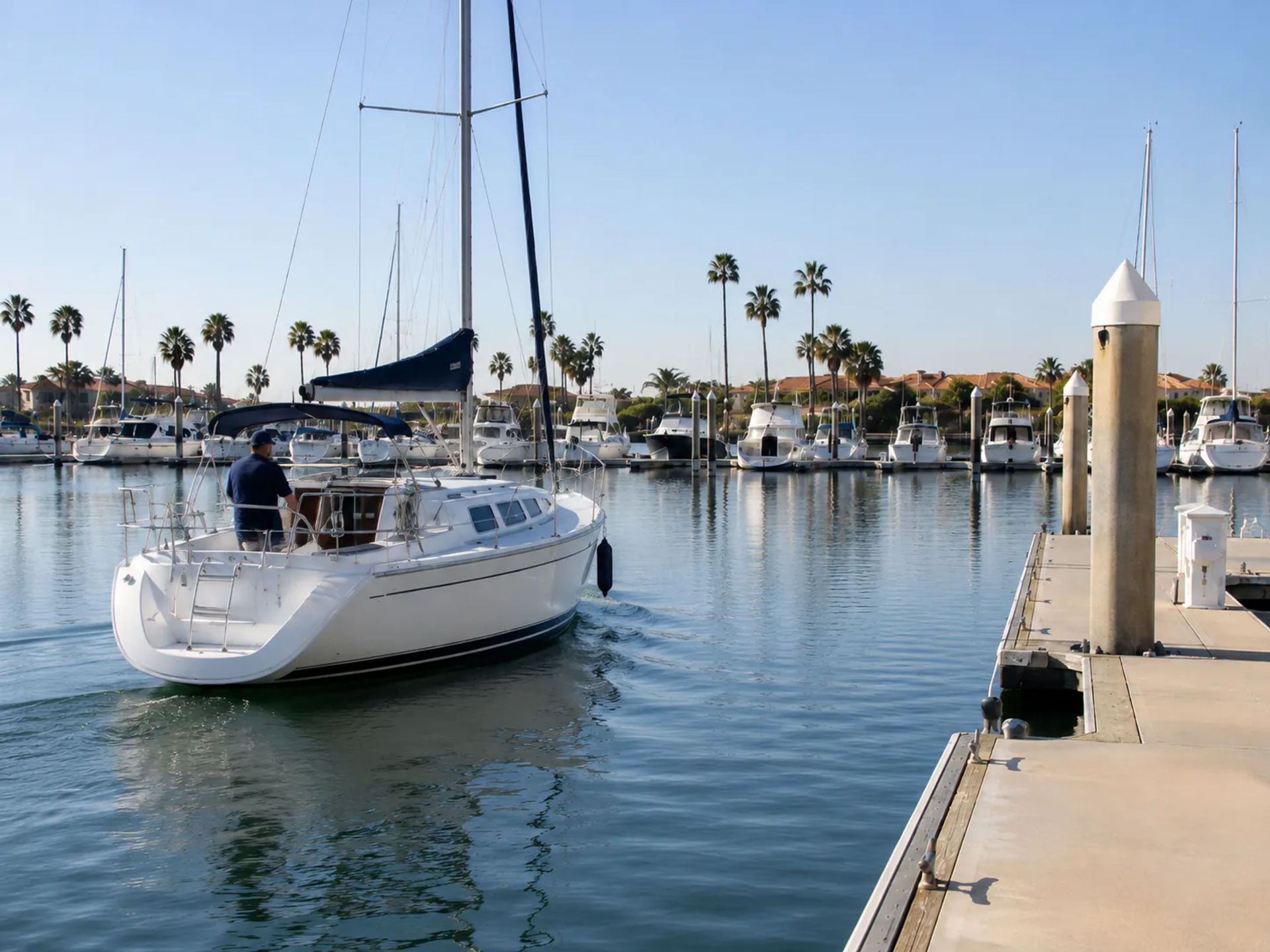
The exact angle will vary depending on the boat and environmental conditions, but the objective is to maintain steering control while gradually bringing the boat alongside.
As the bow approaches the desired position, begin reducing the angle and preparing to stop the boat’s forward momentum.
Step 5: Shift Into Neutral
As you get closer to the dock, shift into neutral and allow the sailboat’s remaining momentum to carry it forward.
Sailboats often glide farther than beginners expect. Practicing this behavior in open water can help you understand how early you should reduce power.
Using neutral also reduces the possibility of entering the slip with excessive speed.
Step 6: Use Reverse to Reduce Forward Momentum
If necessary, briefly engage reverse to slow or stop the boat.
Reverse thrust should generally be used deliberately rather than aggressively. Remember that prop walk may also affect the direction of the stern while the engine is in reverse.
As the boat slows, steer and adjust your position so the hull settles alongside the dock.
Step 7: Secure the First Dock Line
Once the boat is safely within reach of the dock, secure the appropriate line.
Which line should go on first depends on the docking conditions. A spring line is particularly useful because it can help control the boat’s fore-and-aft movement while allowing the engine and rudder to assist in holding the vessel against the dock.
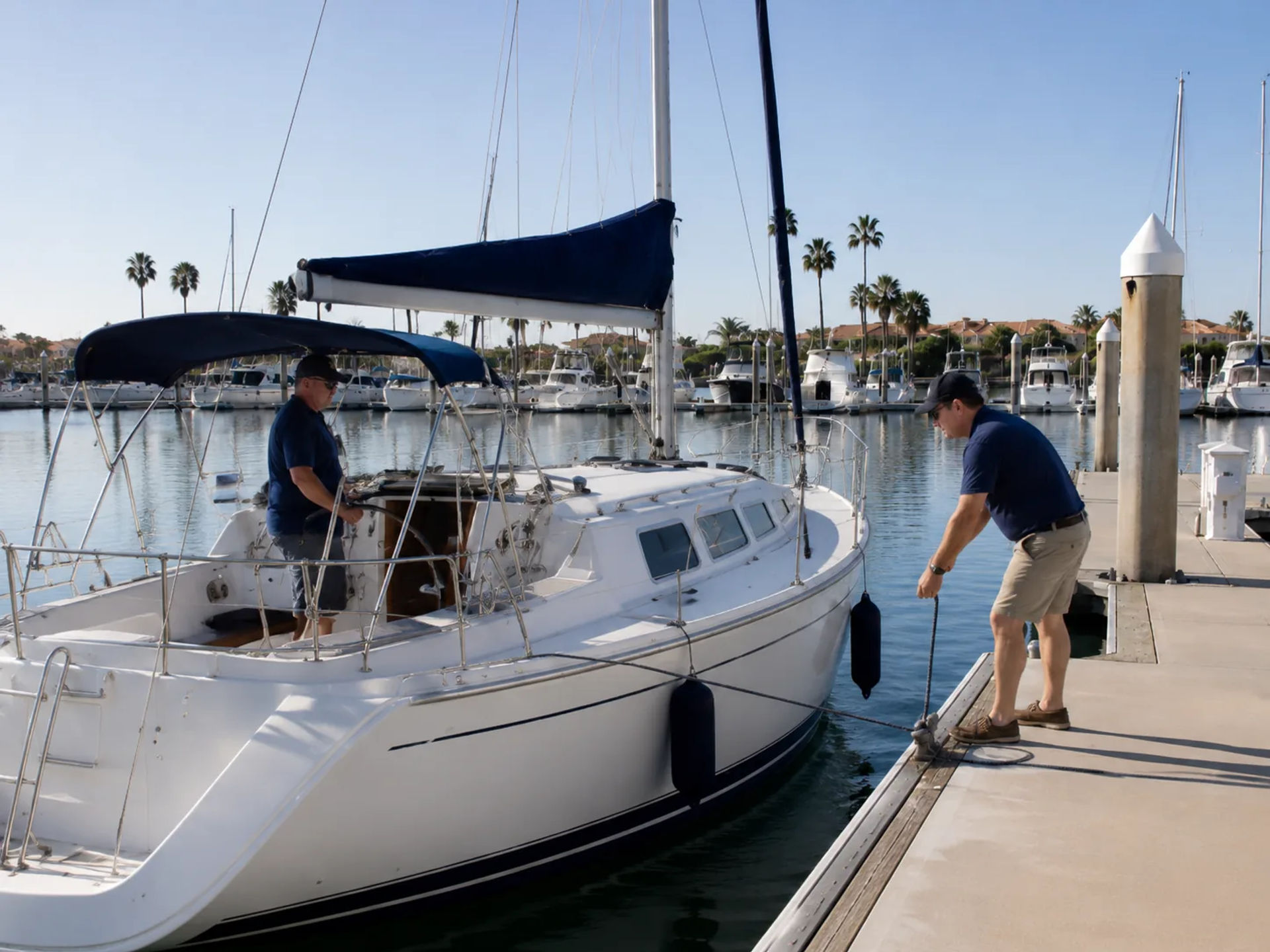
Your docking plan should determine the line sequence before your approach begins.
Step 8: Secure the Remaining Lines
Once the boat is under control, secure the remaining dock lines.
Typically, you will use a combination of:
- Bow line
- Stern line
- Forward spring line
- Aft spring line
Adjust each line so the boat remains comfortably positioned without being pulled excessively tight against the dock.
You should also confirm that the fenders remain positioned between the hull and dock.
Step 9: Shut Down and Inspect Your Setup
Once all lines are secure and the boat is stable, place the transmission in neutral and shut down the engine according to the vessel’s normal procedures.
Walk around the boat and verify:
- Dock lines are properly secured.
- Knots and cleats are correctly arranged.
- Fenders protect the hull.
- The boat has adequate clearance from other vessels.
- Lines are not creating unnecessary trip hazards.
- The boat can accommodate expected movement from wind, current, wake, or tidal changes.
This final inspection helps ensure the boat remains secure after everyone steps ashore.
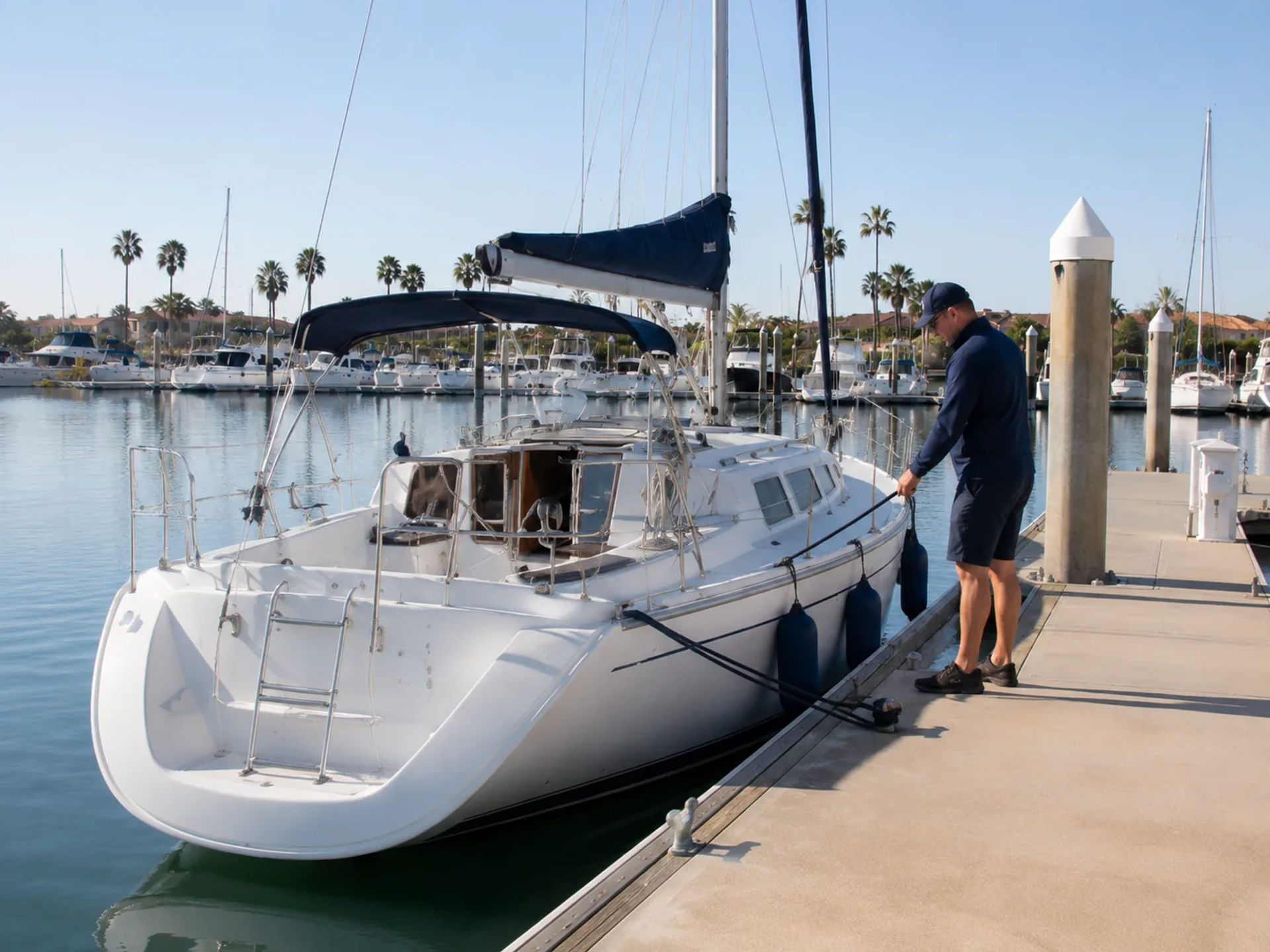
Understanding Dock Lines and Spring Lines
Knowing how dock lines work can make docking significantly easier.
Bow and stern lines help control the ends of the boat, while spring lines restrict forward and backward movement. Because spring lines can control movement while the engine is still operating, they can also be extremely useful when maneuvering in confined spaces.
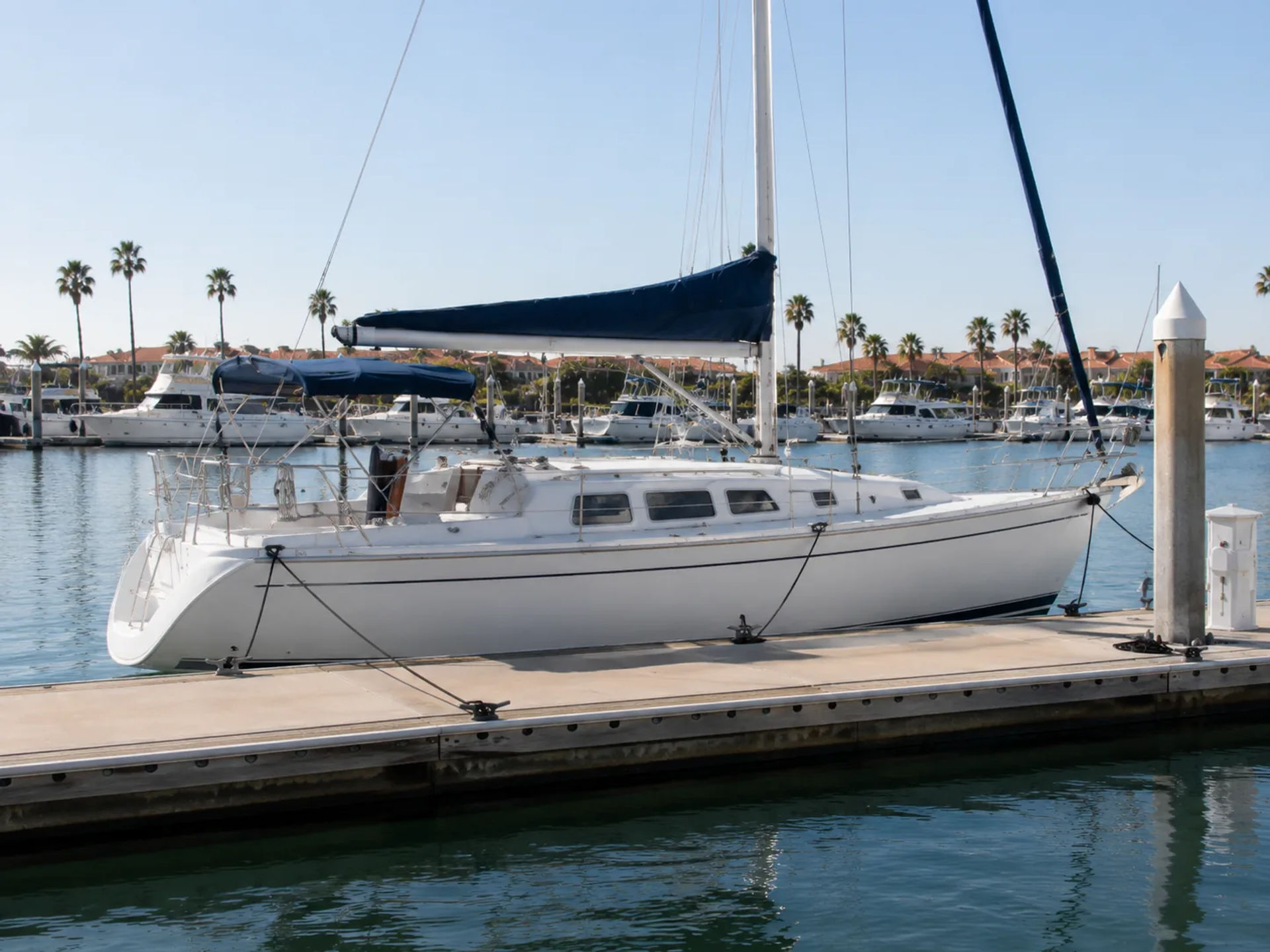
For example, under appropriate conditions, a properly placed spring line combined with gentle engine power and rudder input may help hold or pivot the boat against the dock.
These techniques are best practiced with an instructor before attempting them in tight marina environments.
Keep Your Speed as Low as Practical
Beginners sometimes assume that additional speed provides more steering control. While a small amount of water flow over the rudder is necessary, entering a slip too quickly creates more problems than it solves.
Momentum increases with speed, and heavier cruising boats may continue moving even after the engine is shifted into neutral.
Instead of maintaining constant throttle, use controlled bursts of power followed by neutral. This approach allows you to maintain steering authority while limiting overall boat speed.
Slow movements also give you more time to observe what the wind is doing and make corrections.
Communicate Clearly With Your Crew
Good communication is one of the most overlooked aspects of docking a sailboat.
Before beginning the maneuver, every crew member should know their responsibility. Avoid having several people shouting different instructions at the same time.
Useful commands may include:
- "Bow line ready."
- "Stern line ready."
- "Fenders down."
- "Step ashore when safe."
- "Secure the spring line."
- "Hold that line."
- "Release the line."
The helmsperson should generally coordinate the maneuver while crew members communicate important information about distances and obstacles.
Calm, simple communication makes docking safer and considerably less stressful.
Never Jump From a Moving Sailboat
Crew members should not leap from the boat to reach the dock.
The boat should be brought close enough that a crew member can step safely onto the dock when appropriate. Jumping creates the possibility of falling between the boat and dock or losing control of the line.
Similarly, never place a hand, arm, leg, or foot between the hull and dock in an attempt to prevent contact. That is what properly positioned fenders are designed to do.
What Should You Do If the Approach Is Going Wrong?
One of the most valuable docking skills is knowing when to abandon an approach.
If you are moving too quickly, approaching at the wrong angle, being pushed off course by the wind, or simply do not feel comfortable with the situation, do not force the maneuver.
When conditions allow, disengage from the approach, return to open water, reorganize, and try again.
There is nothing wrong with making another attempt.
Trying to rescue a poorly planned approach at the final moment is often more difficult than simply starting over.
Common Sailboat Docking Mistakes Beginners Should Avoid
Developing good habits early can make every arrival easier. Some common mistakes include:
Approaching Too Fast
Excessive speed reduces reaction time and increases the force of an accidental collision.
Preparing Lines Too Late
Dock lines and fenders should be positioned before entering the slip whenever possible.
Ignoring Wind and Current
Even a perfectly planned approach can quickly change if environmental forces begin moving the boat sideways.
Using Too Much Throttle
Large throttle adjustments can create abrupt boat movements. Small, deliberate applications of power are usually easier to control.
Forgetting About Prop Walk
Reverse gear may move the stern sideways in addition to slowing the boat.
Poor Crew Communication
Unclear instructions can lead to the wrong line being secured or released at the wrong moment.
Trying to Save a Bad Approach
Sometimes the safest maneuver is simply leaving the slip area and starting again.
Smooth Docking Comes From Planning, Not Speed
Good docking rarely looks dramatic.
Experienced sailors generally make controlled movements, anticipate environmental forces, communicate clearly, and use only as much engine power as necessary.
The most important habits when learning how to dock a sailboat are preparation and patience. Determine your strategy before entering the slip, move slowly, and remain willing to make another approach when conditions do not develop as expected.
With practice, the process becomes much more predictable.
Learn How to Dock a Sailboat at Naos Yachts in Marina del Rey
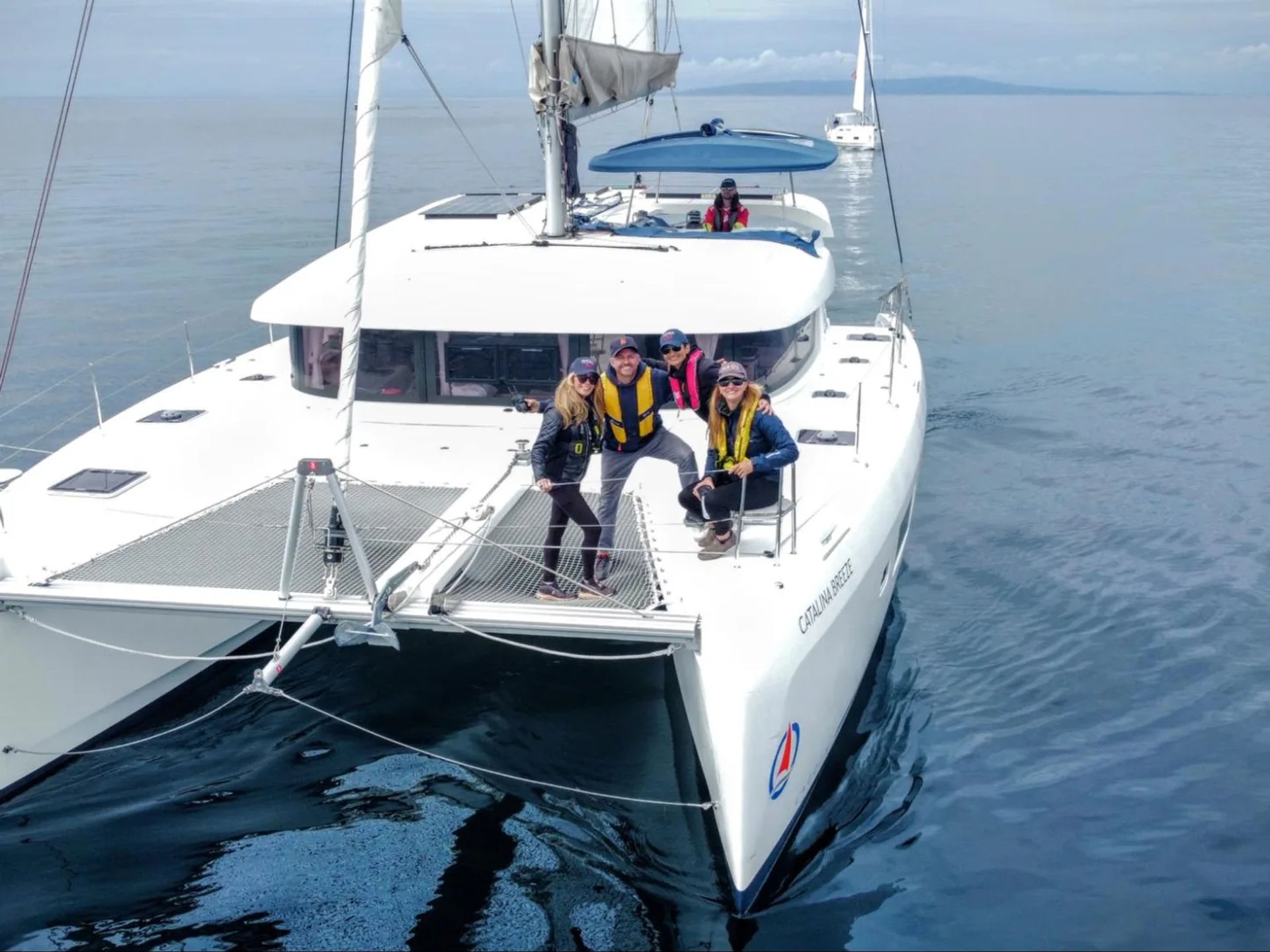
Reading about docking techniques provides a useful foundation, but hands-on instruction gives sailors the opportunity to see how wind, propulsion, rudder movement, momentum, and dock lines actually interact aboard a boat. At Naos Yachts in Marina del Rey, our sailing school offers a wide range of American Sailing and American Boating certified courses for sailors at different experience levels. Our current course lineup includes American Sailing programs such as ASA 101, 103, 104, 114, 116, 118, and additional coastal and advanced training, along with American Boating classes.
For sailors who specifically want to become more confident docking a sailboat, our ASA 118 Docking Endorsement provides focused instruction in docking, undocking, line handling, and maneuvering in marina environments. Naos Yachts offers dedicated ASA 118 docking and maneuvering instruction covering topics such as steering and propulsion theory, wind and current, safety precautions, knots, line handling, and maneuvering around fixed and floating docks.
Introductory docking skills can also be developed through foundational courses such as ASA 101, while ASA 103 builds on basic sailing skills with additional instruction in areas including docking, anchoring, and coastal cruising.
Build Your Docking Confidence With Naos Yachts
Understanding how to dock a sailboat is an essential step toward becoming a confident and capable sailor. By preparing your lines and fenders early, evaluating wind and current, approaching slowly, controlling momentum, communicating with your crew, and practicing regularly, you can make docking safer and much less intimidating.
If you would like to move beyond the basics and practice these skills with professional instruction, contact Naos Yachts in Marina del Rey or book a sailing class directly online. Whether you are starting with ASA 101, continuing your development through ASA 103, or focusing specifically on precision maneuvering with the ASA 118 Docking Endorsement, our sailing school can help you develop the practical skills needed to approach the dock with greater control and confidence.
FAQs
What dock lines do you need for a sailboat?
Most sailboats use a bow line, stern line, forward spring line, and aft spring line when secured alongside a dock. These lines work together to control side-to-side and fore-and-aft movement.
What are spring lines used for when docking a sailboat?
Spring lines help prevent a sailboat from moving forward or backward while tied to a dock. They can also be used with controlled engine power to help position or stabilize the boat during certain docking and undocking maneuvers.
How do you stop a sailboat when docking?
To stop a sailboat while docking, reduce power early, shift into neutral, and allow the boat’s momentum to decrease. A short application of reverse can help slow or stop the boat when necessary, but it should be used carefully.
What sailing course teaches how to dock a sailboat?
Docking skills are introduced in foundational sailing courses such as ASA 101 and reinforced as sailors progress into courses like ASA 103. Sailors who want more focused instruction can take an ASA 118 Docking Endorsement course, which specifically emphasizes docking, undocking, line handling, and close-quarters maneuvering.