A Beginner's Guide to USCG Navigation Rules for Inland and Coastal Waters
Learning to sail is exciting, but it also comes with a serious responsibility: knowing how to share the water safely. Whether you are daysailing in a harbor, cruising along the coast, entering a marina, or crossing paths with commercial traffic, the USCG navigation rules help every boater understand what to do, when to act, and how to avoid collisions.
Often called the "Rules of the Road," the USCG navigation rules are the maritime regulations that govern vessel behavior on U.S. inland waters and coastal waters. They explain right-of-way responsibilities, safe speed, lookout requirements, sound signals, navigation lights, and the actions vessels must take when meeting, crossing, or overtaking one another. For new sailors, these rules are one of the most important foundations of safe boating.
This beginner's guide provides a practical overview of the USCG navigation rules so you can better understand how they apply on the water and why formal training can make such a difference.
What Are USCG Navigation Rules?
USCG navigation rules are legally binding maritime regulations used to reduce the risk of collisions between vessels. They apply to a wide range of boaters, including sailors, powerboaters, commercial operators, paddlers, fishing vessels, and larger ships.
The rules are organized into two main categories:
- International Rules, also known as COLREGS, which apply outside established U.S. navigational boundary lines.
- Inland Rules, which apply inside U.S. inland waters, including many harbors, bays, rivers, and other waters shoreward of demarcation lines.
For a beginner, the most important takeaway is this: the rules change depending on where you are operating. A sailor moving from a harbor to open coastal waters should know whether Inland or International Rules apply in that area.
Why USCG Navigation Rules Matter for New Sailors
Learning the USCG navigation rules is not just about passing a test. These rules help you make safer decisions in real time when other vessels are nearby. They also help you understand what other boaters are likely to do.
For new sailors, the rules are especially important because sailboats are affected by wind, sail trim, visibility limitations, and maneuverability. A sailboat may have right-of-way in some situations, but that does not mean the skipper can ignore risk or assume other vessels will respond correctly.
The rules help sailors answer practical questions such as:
- Who should give way when two boats are crossing?
- What should you do when approaching another vessel head-on?
- How do you safely overtake another boat?
- What lights should a vessel show at night?
- What sound signal should you use when visibility is limited?
- When should a sailboat avoid impeding a larger vessel in a narrow channel?
Inland vs. International USCG Navigation Rules
One of the first concepts beginners should learn is the difference between Inland and International Rules. These two systems are similar in many ways, but they are not identical.
Inland Rules apply on U.S. inland waters, including many waters inside harbors, rivers, bays, and shoreward of established COLREGS demarcation lines. International Rules apply seaward of those lines and are based on the International Regulations for Preventing Collisions at Sea.
For sailors in coastal areas, this distinction matters. For example, when leaving a marina, transiting a harbor, and then heading offshore, you may pass from Inland Rules into International Rules. Local charts, navigation publications, and official references help identify where those demarcation lines are.
A good habit for beginners is to treat every passage plan as a rules review. Before leaving the dock, know where you are going, what types of traffic you may encounter, and whether you will be operating under Inland Rules, International Rules, or both.
The Foundation of USCG Navigation Rules: Responsibility and Good Seamanship
Before getting into specific right-of-way rules, beginners should understand that every mariner has a general responsibility to act safely. Even when another vessel is supposed to give way, you cannot ignore a developing danger.
Good seamanship means staying alert, anticipating problems, communicating clearly, and taking early action when needed. The rules do not give any vessel permission to force a collision simply because it technically has right of way.
A helpful beginner mindset is this: know your rights, but never rely on them blindly.
Rule 5: Maintaining a Proper Lookout
One of the most important USCG navigation rules is the requirement to maintain a proper lookout at all times. A proper lookout means using sight, hearing, and all available tools to understand what is happening around your vessel.
For a sailor, this includes watching for:
- Nearby sailboats and powerboats
- Ferries, tugs, barges, and commercial vessels
- Kayaks, paddleboards, and personal watercraft
- Navigation markers, buoys, and hazards
- Changes in weather or visibility
- Sound signals from vessels you may not see
A proper lookout is especially important in busy harbors, near breakwaters, in fog, at night, and in areas with crossing traffic.
Rule 6: Safe Speed Under USCG Navigation Rules
The USCG navigation rules require vessels to proceed at a safe speed. Safe speed does not mean the maximum speed your boat can reach. It means a speed that allows you to take effective action to avoid collision and stop within an appropriate distance for the conditions.
Factors that affect safe speed include:
- Visibility
- Traffic density
- Wind, sea state, and current
- Maneuverability of your vessel
- Background lights at night
- Depth and proximity to hazards
- The limitations of radar or electronic navigation equipment
For sailors, safe speed also depends on how quickly the boat can turn, slow down, tack, or change sail configuration. A sailboat moving quickly under full sail in a crowded channel may not be operating safely, even if it is not breaking a posted speed limit.
Understanding Risk of Collision
A major part of the USCG navigation rules is learning how to determine whether a risk of collision exists. One basic method is to observe the bearing of another vessel. If the bearing remains steady while the distance closes, there may be a risk of collision.
Beginners should watch for these warning signs:
- Another vessel stays in the same relative position but gets closer
- You are unsure what the other vessel intends to do
- A vessel is approaching quickly from your starboard side
- You are entering a channel, harbor mouth, or traffic area
- Visibility is reduced and sound signals are nearby
When in doubt, assume there is risk and take early, clear, and substantial action.
Give-Way and Stand-On Vessels
Many USCG navigation rules are built around the relationship between the give-way vessel and the stand-on vessel.
The give-way vessel is responsible for taking early and obvious action to stay clear. The stand-on vessel generally maintains course and speed so the give-way vessel can predict its movement.
However, the stand-on vessel still has responsibilities. If it becomes clear that the give-way vessel is not taking appropriate action, the stand-on vessel must act to avoid collision.
This is one of the most important concepts for new sailors to learn: being the stand-on vessel does not mean doing nothing no matter what. Safety always comes first.
The USCG Navigation Rules Right-of-Way Hierarchy
When two vessels are approaching and risk of collision exists, the USCG navigation rules use a hierarchy of vessel responsibilities. In general, vessels that are more maneuverable must keep clear of vessels that are less able to maneuver.
A simplified version of the hierarchy, from highest priority to lowest, is:
- Vessels not under command: These are vessels unable to maneuver as required, often due to mechanical failure or another serious limitation.
- Vessels restricted in their ability to maneuver: These may include dredges, vessels engaged in towing, survey vessels, or vessels performing work that limits their movement.
- Vessels engaged in fishing: This refers to vessels fishing with nets, lines, trawls, or other gear that restricts maneuverability. It does not usually include a recreational boat trolling a simple line.
- Sailing vessels: A vessel under sail generally has priority over a power-driven vessel, but this is not absolute.
- Power-driven vessels: These include motorboats, yachts under power, and sailboats using an engine.
For sailors, it is important to remember that a sailboat using its engine is treated as a power-driven vessel, even if the sails are also raised.
Meeting Head-On: What the USCG Navigation Rules Require
When two power-driven vessels meet head-on, both should alter course to starboard so they pass port side to port side. This is similar to how vehicles on a road keep to their side of the lane.
For sailors, the head-on rule is especially relevant when operating under power in a harbor, marina entrance, or channel. If you are motoring, you are no longer treated as a sailing vessel for right-of-way purposes.
A simple way to remember this rule is: when meeting head-on under power, turn right early and clearly.
Crossing Situations Under USCG Navigation Rules
Crossing situations are among the most common scenarios boaters encounter. When two power-driven vessels are crossing and there is risk of collision, the vessel that has the other vessel on its starboard side must give way.
In plain language: if another power-driven vessel is approaching from your right, you generally need to keep clear.
The give-way vessel should avoid crossing ahead of the stand-on vessel whenever possible. Instead, it should slow down, turn, or pass astern in a way that is obvious to the other skipper.
Overtaking: The Vessel Behind Must Keep Clear
Under the USCG navigation rules, any vessel overtaking another vessel must keep out of the way of the vessel being overtaken. This applies even if the overtaking vessel is a sailboat and the vessel ahead is power-driven.
A vessel is generally considered overtaking when it approaches from more than 22.5 degrees abaft the beam of the vessel ahead. In simpler terms, if you are coming up from behind, you are responsible for staying clear.
For new sailors, overtaking can be tricky because wind, current, and sail trim may limit your options. Plan early, give the other vessel plenty of room, and avoid creating confusion.
Sailing Vessel Rules: Port Tack, Starboard Tack, Windward, and Leeward
Sailing vessels have their own steering and sailing rules when they meet one another. These are essential for anyone learning to sail.
The most important sailing vessel rules include:
- When two sailboats are on opposite tacks, the boat on port tack keeps clear of the boat on starboard tack.
- When two sailboats are on the same tack, the windward boat keeps clear of the leeward boat.
- If a vessel on port tack cannot determine whether the other vessel is on port or starboard tack, it should keep clear.
These rules are especially important in racing areas, harbor entrances, and popular daysailing zones. Even casual sailors should know them well.
Narrow Channels and Fairways
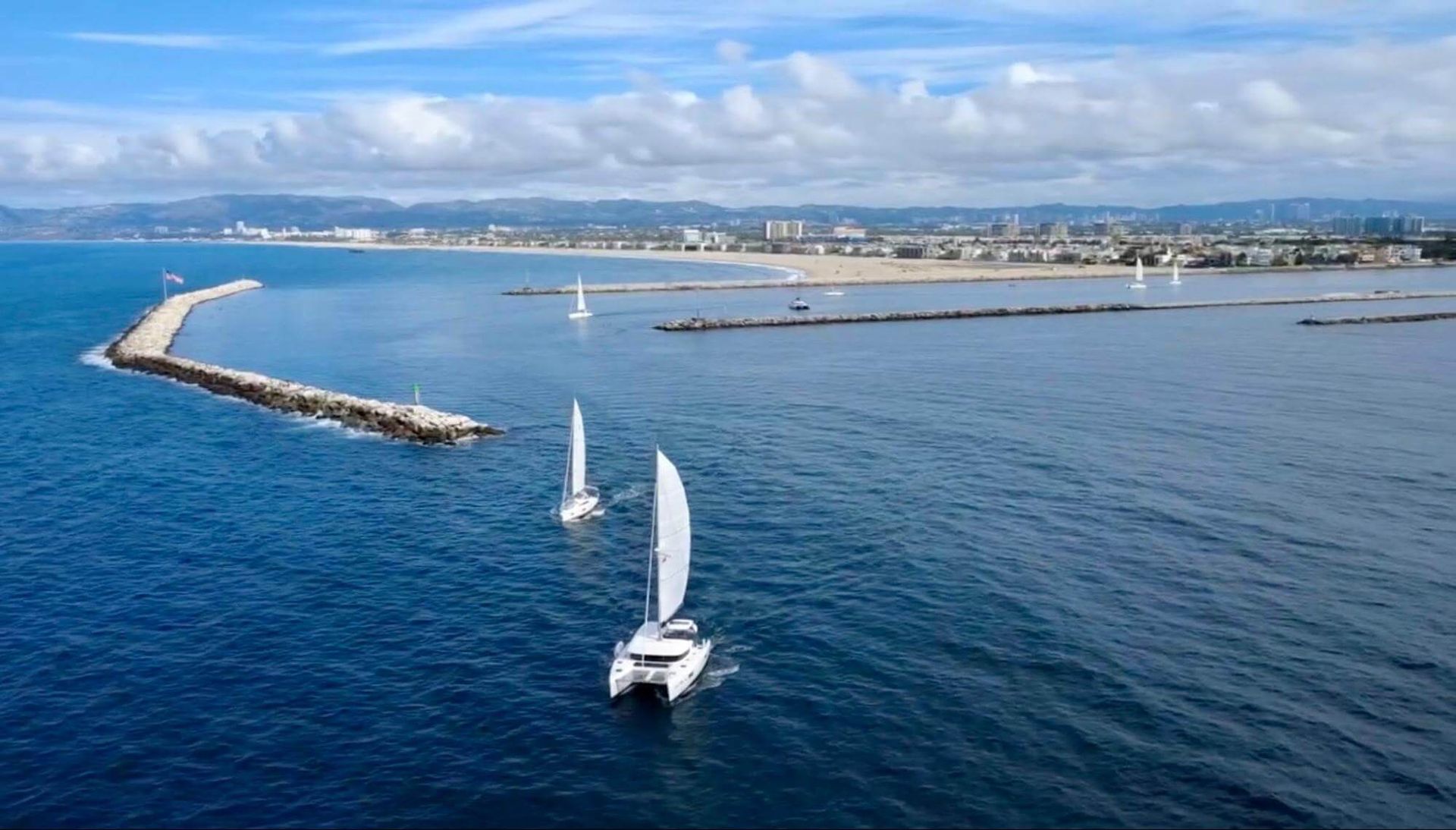
Narrow channels are a major focus of the USCG navigation rules because larger vessels may have very limited room to maneuver. A deep-draft vessel, ferry, tug, or commercial ship may not be able to safely leave the channel, even if a smaller boat technically appears to have room nearby.
In narrow channels:
- Keep as near to the outer limit of the channel on your starboard side as is safe and practical.
- Do not impede vessels that can safely navigate only within the channel.
- Avoid crossing a channel if doing so would interfere with traffic.
- Sailing vessels, small vessels, and fishing vessels must not obstruct larger vessels restricted to the channel.
For beginners, this rule is critical. A small sailboat should never assume a large vessel can easily stop, turn, or move around it.
Traffic Separation Schemes
Traffic separation schemes are organized routing systems used to manage vessel movement in busy areas. They are similar in concept to lanes on a highway, but for ships.
When operating near traffic lanes, vessels should follow the direction of traffic, avoid unnecessary crossing, and cross lanes as close to a right angle as practical when crossing is required.
Most beginner sailors will not spend much time in major offshore traffic lanes at first, but understanding these rules becomes increasingly important as you move into coastal cruising and longer passages.
USCG Navigation Rules for Restricted Visibility
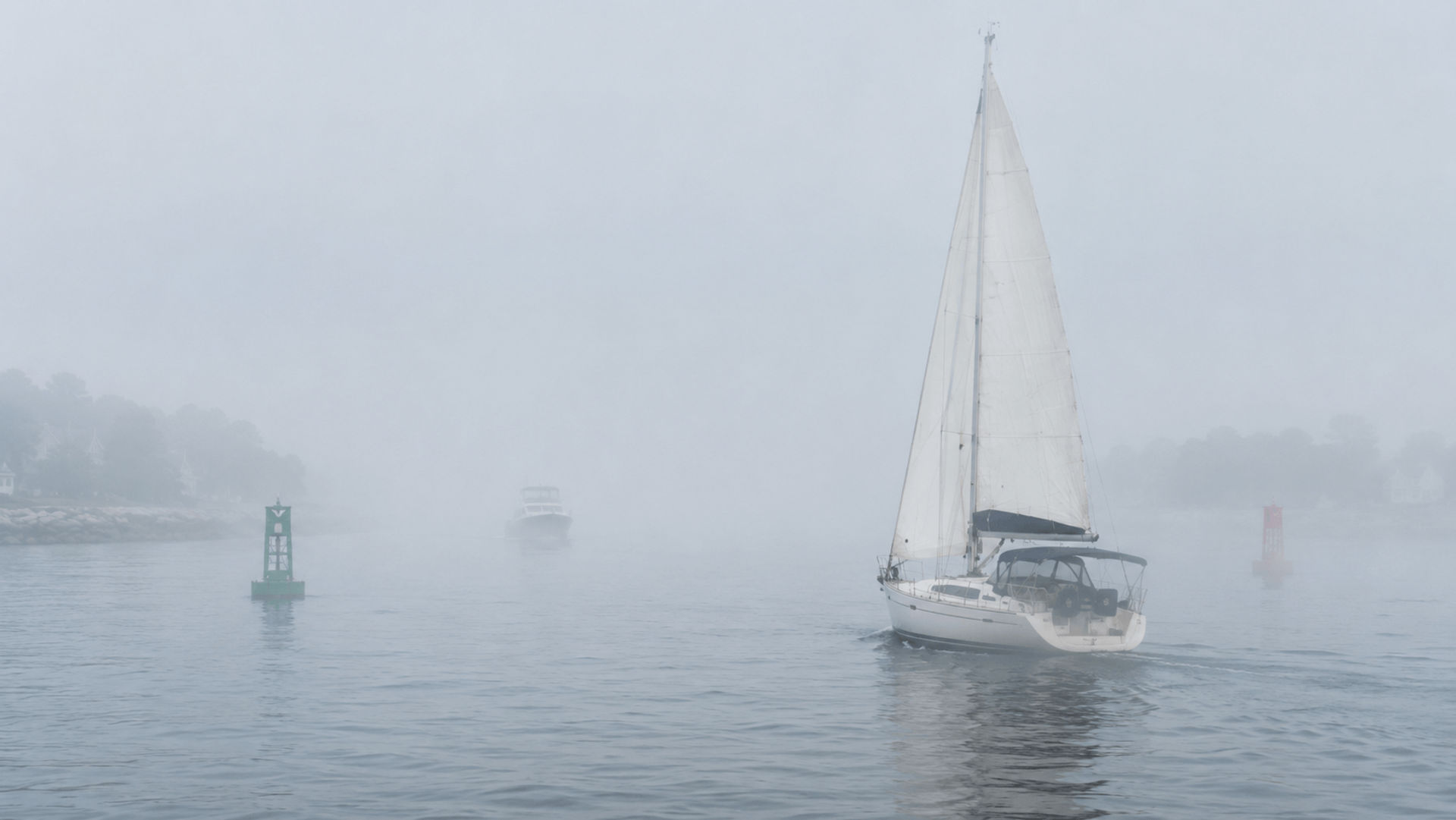
Restricted visibility includes fog, heavy rain, haze, darkness, or any condition that makes it harder to see other vessels. In these conditions, the USCG navigation rules require extra caution.
When visibility is restricted, sailors should:
- Reduce speed
- Maintain a careful lookout by sight and hearing
- Use proper sound signals
- Turn on required navigation lights
- Use radar or AIS if available
- Avoid assumptions about another vessel's course or intention
In restricted visibility, the usual "in sight of one another" rules may not apply in the same way. This is why fog navigation and sound signals are important topics in coastal navigation training.
Navigation Lights: How Vessels Communicate at Night
Navigation lights help vessels identify one another in darkness or restricted visibility. The USCG navigation rules specify which lights vessels must display based on vessel type, size, and activity.
Common navigation lights include:
- Red sidelight: visible on the port side
- Green sidelight: visible on the starboard side
- White sternlight: visible from behind
- White masthead light: used by power-driven vessels
- All-around white light: often used by anchored vessels or small powerboats
A sailing vessel under sail typically shows red and green sidelights and a white sternlight. A sailboat operating under power must display lights required for a power-driven vessel.
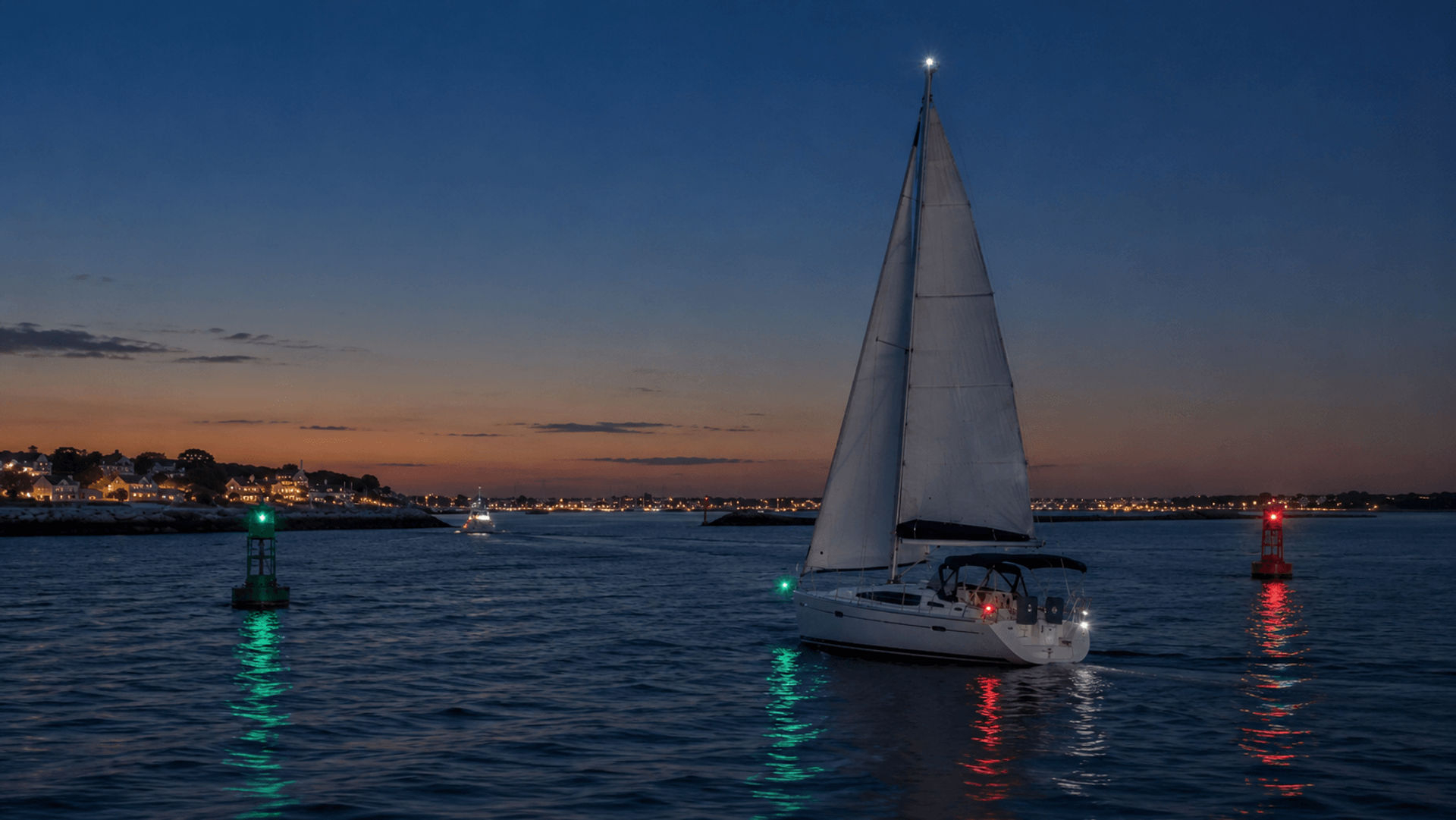
Learning to read lights is one of the most valuable skills for night sailing. A few lights on the horizon can tell you whether a vessel is approaching, crossing, moving away, under sail, under power, towing, fishing, anchored, or restricted in maneuverability.
Day Shapes: The Daytime Version of Navigation Lights
Day shapes are visual signals displayed during daylight to show a vessel's status or activity. They are especially important for larger vessels, commercial operations, and vessels with limited maneuverability.
Examples include shapes that indicate a vessel is:
- Anchored
- Not under command
- Restricted in ability to maneuver
- Engaged in fishing
- Constrained by draft
Recreational sailors may not use day shapes often, but they should still understand them. Recognizing a day shape can help you identify a vessel that needs extra room.
Sound Signals Under USCG Navigation Rules
Sound signals allow vessels to communicate intentions, warnings, and uncertainty. They are especially useful in close quarters, narrow channels, and restricted visibility.
Common maneuvering and warning signals include:
- One short blast: I intend to alter course to starboard.
- Two short blasts: I intend to alter course to port.
- Three short blasts: I am operating astern propulsion.
- Five or more short blasts: Danger or doubt.
Five short blasts are especially important for beginners. If you do not understand another vessel's intentions, or you believe a dangerous situation is developing, five short blasts can alert the other vessel immediately.
Anchoring Rules and Responsibilities
Anchored vessels also have responsibilities under the USCG navigation rules. A vessel at anchor must display the proper anchor light at night and the appropriate day shape when required. It should also anchor in a location that does not obstruct channels, fairways, or normal vessel traffic.
For sailors, safe anchoring includes more than setting the hook. You should consider swing room, depth, current, wind shifts, nearby boats, and traffic patterns.
Special Considerations for Sailboats
Sailors need to understand both general navigation rules and sailing-specific situations. A sailboat may have right-of-way over some power-driven vessels, but not always.
A sailing vessel must still keep clear of:
- Vessels not under command
- Vessels restricted in ability to maneuver
- Vessels engaged in fishing with gear restricting movement
- Large vessels confined to narrow channels
- Vessels being overtaken by the sailboat
Sailors should also remember that once the engine is on and being used for propulsion, the boat is treated as a power-driven vessel.
Common Beginner Mistakes With USCG Navigation Rules
New sailors often misunderstand the USCG navigation rules because they learn simplified phrases like "sailboats have right of way." While that idea may be partly true in some situations, it is far from complete.
Common mistakes include:
- Assuming sailboats always have priority
- Holding course too long when another vessel is not giving way
- Crossing ahead of a larger vessel in a channel
- Forgetting that a sailboat under power is a power-driven vessel
- Failing to maintain a proper lookout
- Not knowing basic sound signals
- Moving too fast for crowded or low-visibility conditions
- Misreading navigation lights at night
The best way to avoid these mistakes is to study the rules, practice with an instructor, and apply them in real boating situations.
Practical Tips for Learning USCG Navigation Rules
The USCG navigation rules can feel overwhelming at first, but beginners do not need to master everything in one sitting. Start with the situations you are most likely to encounter, then build from there.
A practical learning path might include:
- Learn the difference between Inland and International Rules.
- Memorize lookout and safe speed responsibilities.
- Practice give-way and stand-on scenarios.
- Review sailing vessel rules for port, starboard, windward, and leeward.
- Study overtaking, head-on, and crossing situations.
- Learn common navigation lights.
- Practice sound signals.
- Apply the rules during supervised time on the water.
- Take a formal navigation or seamanship course.
- Keep reviewing the rules throughout your sailing life.
Navigation rules are not just classroom knowledge. They become most useful when you apply them with real vessels, real wind, real traffic, and real decisions.
Learn USCG Navigation Rules With Naos Yachts in Marina del Rey
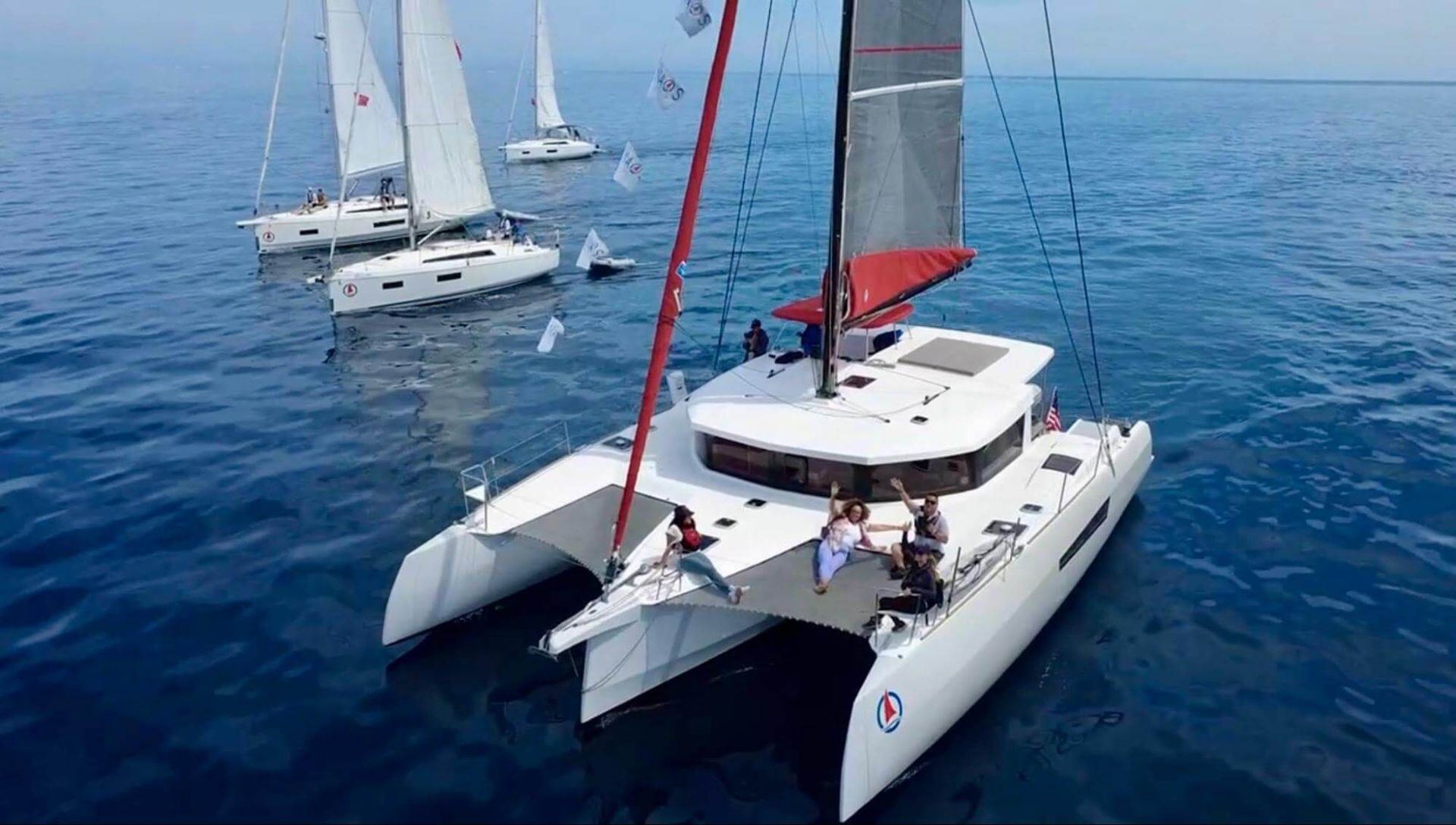
At Naos Yachts in Marina del Rey, we help new and experienced boaters build the skills they need to sail with greater confidence, safety, and independence. Our sailing school offers a wide range of American Sailing and American Boating certified classes designed to support students at different experience levels, from first-time sailors to boaters preparing for more advanced coastal cruising.
For sailors who want a deeper understanding of USCG navigation rules, chart work, course plotting, and coastal passage planning, our American Sailing 105 Coastal Navigation class is an excellent next step. This course helps students strengthen the navigation knowledge that supports safer decision-making on inland and coastal waters. Along with learning essential coastal navigation concepts, students gain a clearer understanding of how navigation rules, seamanship, and situational awareness work together on the water.
Book a Sailing Class at Naos Yachts in Marina del Rey
The USCG navigation rules are more than a set of regulations. They are the shared language of safe boating. When every skipper understands lookout responsibilities, safe speed, right-of-way rules, sound signals, lights, shapes, and narrow channel procedures, the water becomes safer and more predictable for everyone.
For beginners, the best approach is to start with the fundamentals, practice often, and continue learning as your boating experience grows. The more comfortable you become with the USCG navigation rules, the more confident you will feel as a sailor.
If you are ready to improve your navigation knowledge and become a safer, more capable boater, contact us here at Naos Yachts in Marina del Rey or book a class directly online. Our team is ready to help you choose the right American Sailing or American Boating certified course, including our American Sailing 105 Coastal Navigation class, so you can build real skills and enjoy your time on the water with confidence.
FAQs
What is the difference between Inland Rules and International USCG navigation rules?
Inland Rules generally apply inside established U.S. waters, such as bays, rivers, harbors, and many nearshore areas. International Rules, also called COLREGS, apply outside established demarcation lines and are used for vessels operating in international or offshore waters.
What are the rules for overtaking another vessel?
Any vessel overtaking another vessel must keep out of the way of the vessel being overtaken. This applies regardless of whether the overtaking vessel is under sail or power.
What does five short blasts mean?
Five or more short blasts mean danger or doubt. This signal is used when a vessel operator does not understand another vessel's intentions or believes a collision risk may be developing.
Where can I take a coastal navigation class?
Naos Yachts in Marina del Rey offers American Sailing and American Boating certified classes for sailors and boaters who want to improve their skills. Their American Sailing 105 Coastal Navigation class is a valuable option for anyone who wants to build confidence with navigation, rules of the road, and coastal sailing fundamentals.