Buying your first boat in Los Angeles rarely starts with a spreadsheet. It starts with a rented powerboat out of Marina del Rey, a weekend sail to Two Harbors, or one too many afternoons watching the harbor from the dock — and the quiet realization that this is how you want your weekends to look. Then reality arrives: the inventory, the slip situation, the paperwork, the insurance, and the real cost of it all. This guide is a first-time yacht buyer checklist built for Southern California, in the order decisions actually happen: how you will use the boat, what your total budget must include, new versus used, financing, inspection, documentation, insurance, and the first season of ownership. Browse our live inventory to make every choice concrete, and when you are ready to move, a conversation with Naos Yachts turns this checklist into a plan.
None of this needs marine expertise, just sequence: budget before the boat, process before the offer, marina before delivery.
Start With Your Weekend, Not the Spec Sheet
The best filter for a first boat is not length, brand, or price; it is the weekend you are trying to create. Fishing trips out of San Pedro point to a center console; Friday-night runs to Avalon with the family suggest a motoring yacht or a cruising catamaran; learning to sail properly changes the conversation entirely. Write one sentence describing your ideal day on the water, and half the inventory in Los Angeles eliminates itself.
Be honest about frequency: a slip fifteen minutes from home gets used, one ninety minutes away collects dust. Catalina Island is the most popular first-boat destination in Southern California for good reason — open water that flatters new owners and rewards preparation. See how local owners plan the Catalina run while you define your own weekend.
New or Used: Two Honest Paths to Your First Boat
The two paths solve different problems. A new Beneteau or Lagoon arrives with a warranty, dealer support, and modern systems; you pay more up front and absorb early depreciation. A brokerage boat delivers more boat for the money, but condition is everything: you inherit the previous owner's maintenance choices — which is why the survey step later is non-negotiable.
Most first boats are stepping stones, so weigh resale from day one. Compare paths in our new-build lineup, the Lagoon catamaran range, and the full brokerage inventory; our new versus brokerage comparison digs into trade-offs.
The Total Budget: Purchase Price Plus the Boat You Actually Keep
The sticker price is only half the number. The real budget is the purchase price plus the annual cost of keeping the boat — buyers who skip the second half end up with bills they did not plan for. In Southern California, that ledger has six items:
- Slip or mooring — the largest recurring cost, varying considerably between Marina del Rey, San Pedro, and Long Beach, with some marinas running waitlists.
- Insurance — hull and liability coverage required by marinas and lenders.
- Maintenance — engine service, bottom care, electronics, and general upkeep.
- Fuel — modest on a sailboat, meaningful on a powerboat.
- Haul-out — periodic hauling for bottom cleaning, anodes, and underwater gear.
- Light winterizing — fuel treatment, covers, and battery care rather than a full haul-and-store shutdown.
In order of magnitude, the annual carrying costs form a substantial line item on top of any loan payment — and for cash buyers they are the true cost of ownership. There is no figure that fits every boat, so price each item for your exact boat and marina. The market data published year after year by the National Marine Manufacturers Association rewards buyers who plan the full cost rather than the down payment.

Financing a Boat Loan Without Stretching Your Plan
Most first purchases use a boat loan with familiar mechanics: a down payment, fixed monthly payments over a term of years, and the boat as collateral. Lenders want to know where the boat will live and require insurance for the life of the loan. Marine lenders in Southern California know boats well, and pre-approval before you shop gives you serious negotiating power.
The trap is not the payment; it is the payment plus everything else. Match the loan term to how long you honestly plan to keep the boat, keep a cash margin for the ownership items above, and treat affordability as a total-cost question, not a monthly-payment question.
Survey, Sea Trial, and Negotiation: Evidence Before Money
Never buy a boat on photographs and a test ride. The pre-purchase survey — a credentialed marine surveyor inspecting hull, structure, and systems — plus a sea trial under real operating conditions turn an emotional purchase into an informed one. Survey findings become your negotiating currency: discovered work translates into price adjustments, seller-side repairs, or a clean exit.
This is where a broker earns its keep. Our guide to surveys, sea trials, and negotiation shows how findings convert into a fair deal, and the Naos Yachts team runs this sequence weekly. Negotiate from evidence, not emotion: the goal is a price that reflects true condition, documented in writing.
Registration, Documentation, and the Paperwork Stack
California boats are titled and registered through the state's DMV process, and California sales tax is due on the purchase — confirm it before you sign. Larger vessels, and boats used commercially, can instead be documented with the Coast Guard, creating a federal title many lenders prefer. Know which route applies to your boat before closing.
The USCG Boating site is the federal reference for registration, safety equipment, and rules of the road, and BoatUS offers plain-language guidance on ownership paperwork. Your broker will flag the right path, so paperwork never stalls the deal.
Your Slip, Your Lessons, Your Home Water
In Los Angeles, arrange the slip before you finalize the boat. Marina del Rey, San Pedro, and Long Beach anchor the local scene, each with its own character and pricing, and several popular marinas hold waitlists. Start early — ideally months early — so your boat has a home on delivery, which also matters to lenders and insurers.
Training belongs on the same shortlist: harbor entrances, currents, and crowded summer weekends reward formal instruction, and there is no cheaper way to confirm which type of boating you enjoy than a class before you commit. Our boating lessons cover ASA sailing certification and powerboat handling; the BoatUS Foundation's free courses are approved options for the California Boater Card.
Insurance and Your First Season of Ownership
Insurance is no formality: marinas require liability coverage, lenders require hull coverage, and policies typically protect against damage, liability, and salvage or removal. Get quotes with the survey in hand — a clean survey improves both premiums and the range of insurers willing to quote. If you are choosing between boats, ask your insurer about each candidate before you commit.
Your first season is mostly small habits: engine hours and oil changes, battery care, hull cleaning, zinc anodes, and canvas against the sun — in Southern California, sun is the real enemy. A light winter routine — fuel treatment, washdown, covers — makes spring recommission a morning of work, not a project.
The First-Time Buyer Checklist
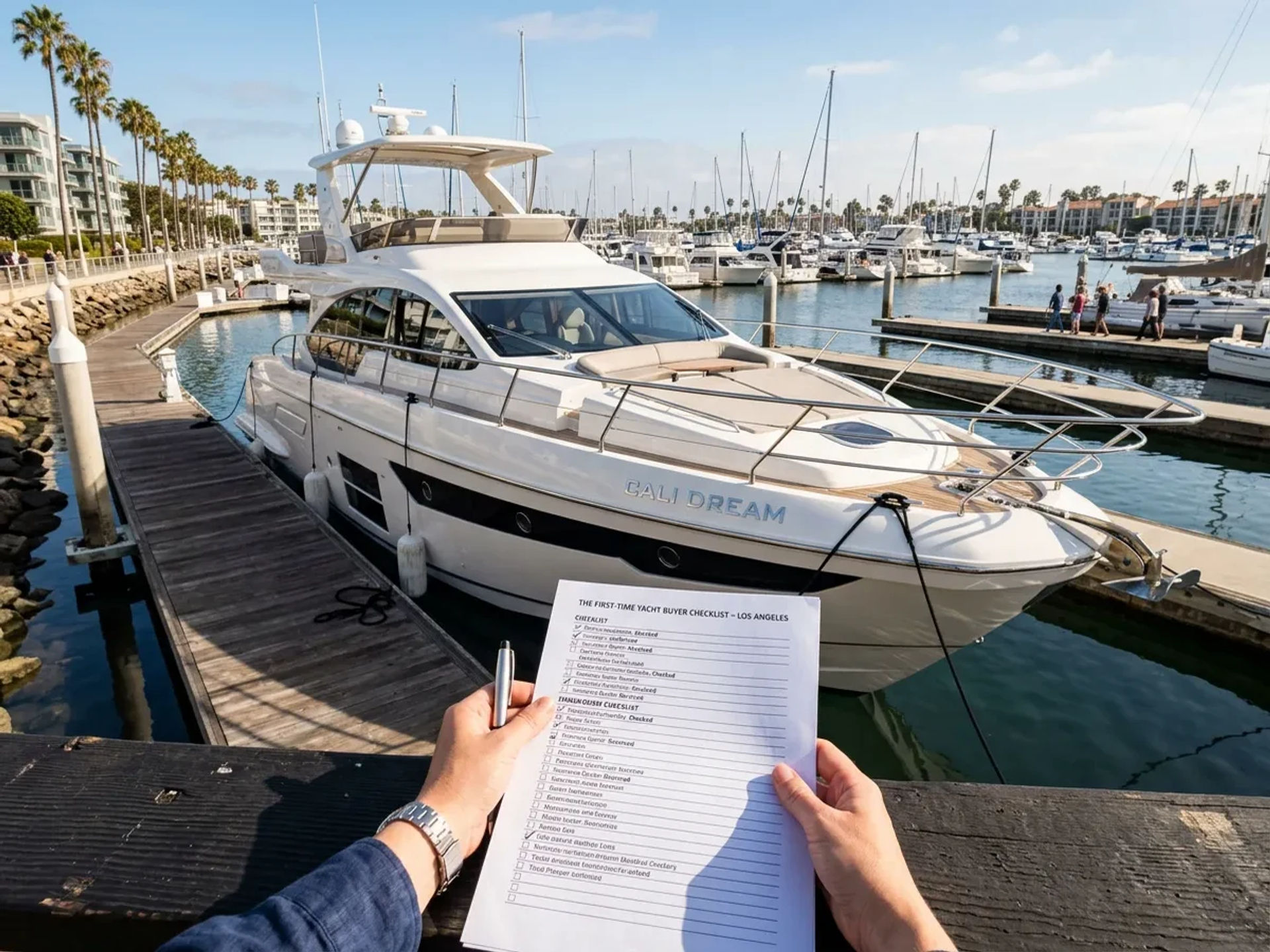
Here is the whole process in brief: define how you will use the boat, size a total budget that includes ownership, choose new or used on that basis, secure financing and insurance, survey and sea-trial before committing, handle registration and your slip, and book lessons before delivery.
- Define your weekend: fishing, cruising, Catalina, solo or with crew.
- Set the total budget: purchase plus slip, insurance, maintenance, fuel, haul-out, winterizing.
- Choose new or used against your usage, support needs, and resale thinking.
- Shop with loan pre-approval and insurance quotes on each candidate.
- Run the full pre-purchase survey and a sea trial under load.
- Negotiate from documented findings, not emotion.
- Confirm registration or Coast Guard documentation, and California tax, before closing.
- Secure your slip or mooring in Marina del Rey, San Pedro, or Long Beach before delivery.
- Complete an approved safety course and earn your California Boater Card.
- Plan first-season maintenance and the light Southern California winter routine.
FAQs
How much should I budget beyond the purchase price?
There is no universal figure, so plan the list rather than the total: slip or mooring, insurance, maintenance, fuel, haul-out, and light winterizing. For most owners, those annual items amount to a substantial addition on top of the loan payment — price each one for your boat and marina.
Do I really need a marine survey?
Treat the survey as mandatory for anything beyond a small or brand-new boat. Lenders and insurers rely on it, brokers build the deal around it, and it is your only independent condition check before you commit. Significant findings are normal and useful — they become negotiating material, not a disaster.
Can I finance a used boat the same way as a new one?
Yes. Marine lenders finance both, with terms shaped by the boat's age, condition, and survey results. A clean survey and documented maintenance history generally produce better terms — one more reason to inspect before you sign.
What insurance does a first boat need in California?
At minimum, liability coverage as your marina requires and hull coverage as your lender requires. Policies typically add salvage and removal coverage, and a clean survey improves availability and premiums. Get quotes early, and ask about each candidate boat.
Do I need a boating license in California?
California does not issue a boating license, but since January 1, 2025, every operator of a motorized vessel — including sailboats with motors — must carry a California Boater Card, earned through an approved safety course. Our boating lessons cover the certification directly.
How long does buying a first boat take in Los Angeles?
Give yourself several weeks at a minimum, more if you are financing or starting from scratch on the slip. Pre-approval, survey scheduling, sea trial, negotiation, paperwork, and delivery rarely compress below a month, and the timeline is mostly set by survey and marina logistics — start both early.
Start Your First Season the Right Way
A successful first purchase comes down to sequence: usage first, total budget second, then financing, inspection, paperwork, slip, and lessons in order. Every step is familiar to the teams who work Los Angeles waters daily — the quiet advantage of buying through a brokerage rather than alone.
Before you book anything, spend one evening defining your ideal weekend and sketching the full cost of ownership for two candidate boats. After that, every decision — new or used, loan or cash, slip or mooring — answers itself.
Then browse the current inventory to anchor your candidates, and book a consultation at Naos Yachts to turn your shortlist into an offer.
Last reviewed: October 2026.