2026 Southern California Yacht Brokerage Outlook and Market Trends
If you are a buyer or a private owner weighing a move on the water this year, the 2026 Southern California yacht brokerage outlook reads like this: the market has rebalanced, and the disciplined participants are doing best. The pandemic-era urgency is gone. Demand across Marina del Rey, San Pedro, and San Diego has settled into a steadier, more selective rhythm, inventory has grown, and asking prices have drifted down from their 2021-2022 peaks. That favors prepared buyers and sellers who price from evidence. For owners planning a spring listing, that means starting now, not in April. For buyers, the year opens with real choice and time to compare. Below: where listings, demand, and pricing stand now, and what to do about it this month.
How Demand Has Shifted Since the Peak
The national numbers frame the regional picture: per full-year NMMA data, U.S. new boat retail sales declined 8.8% in 2025 to 215,237 units, down from 236,070 the year before (NMMA full-year 2025 data) — a normalization after the early-2020s surge. Southern California followed the same arc with one difference that matters: brokerage demand here never collapsed.
Buyers still tour boats in serious numbers — comparing listings, questioning condition, resisting peak-era prices. Overpriced or poorly documented boats collect viewings and little else; a qualified buyer now expects a seller to meet the market halfway, and that expectation shapes everything below.
Inventory Is Up, and That Changes the Conversation
More boats are for sale than at any point since the post-pandemic peak, and that fact is reshaping negotiations across the region. Sellers can no longer assume the next qualified buyer is one phone call away; buyers have legitimate alternatives, including Beneteau brokerage listings, Lagoon catamarans, and a new-boat pipeline delivering fresh product to the docks.
The result is that condition and documentation now separate sellers more sharply than price alone. Two similar boats can sit in adjacent marinas with very different outcomes: one sells in weeks because its records, rig, and engine hours tell a clean story; the other lingers because the first impression raises questions — a fair market, but one that rewards preparation.
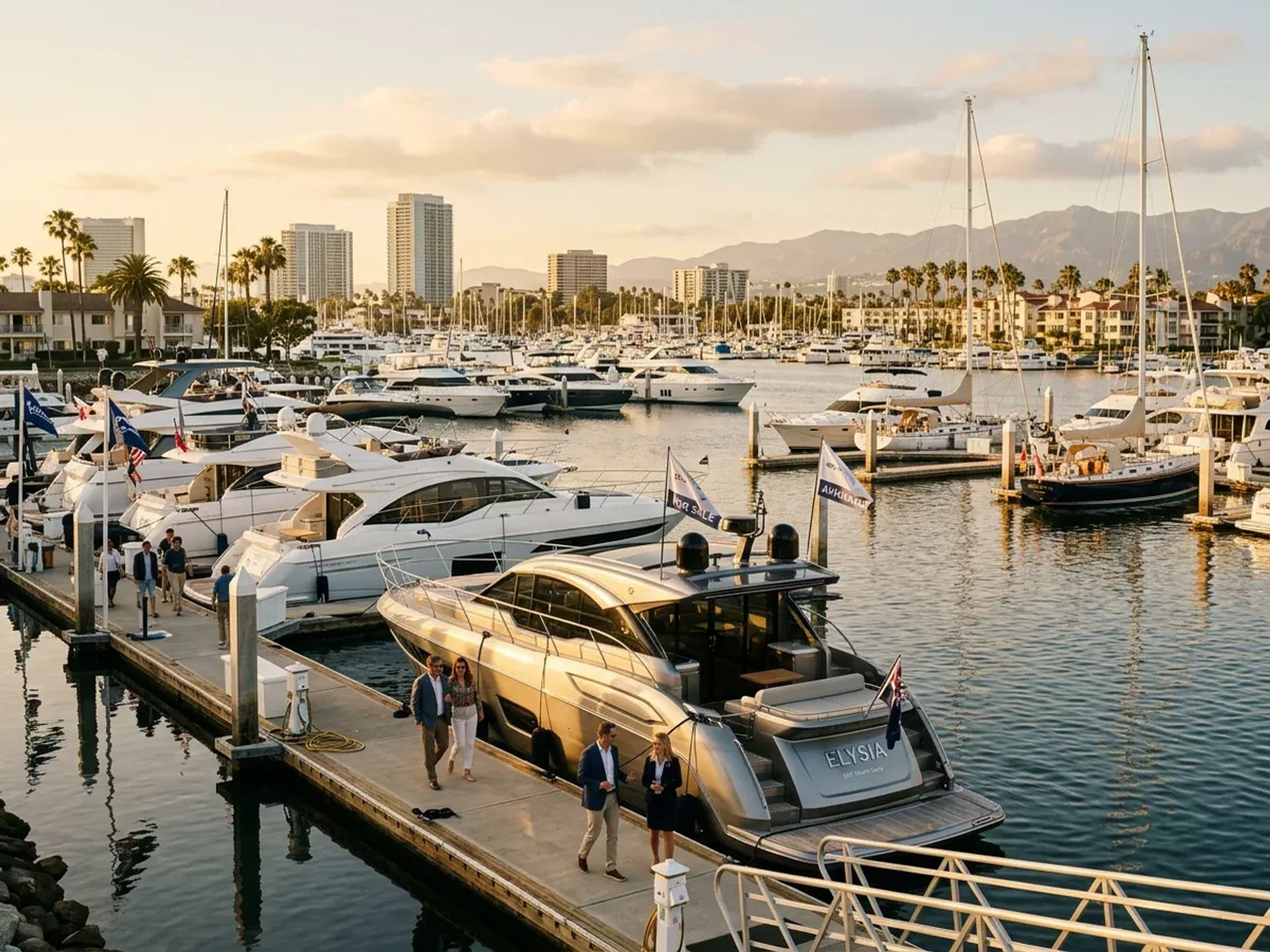
What Buyers Should Do in January
January is the quietest month on Southern California water, which makes it the best month to get ahead of the spring rush. Start with how you intend to use the boat: weekend coastal cruising, Catalina passages, day sailing with family, or longer trips to the Channel Islands. That narrows everything downstream — size range, rig, accommodations, engine hours, budget. New to the category? Spend winter building skills so your sea trial is a conversation, not a lesson (our ASA sailing courses run year-round in Marina del Rey).
Then handle the financial side before touring: marine lenders, slip plans, and an all-in budget covering survey, haul-out, insurance, and first-year maintenance. And watch listings now — boats listed last fall that survived the winter are often most negotiable. Browse current inventory, read the first-time buyer checklist, and have your shortlist ready before spring inventory arrives.
What Sellers Should Do Before the Spring Window
If you want your boat sold in 2026, the work belongs to January and February, not April. The spring brokerage window — roughly April through May — rewards listings that are ready the day they go live: deferred maintenance completed, service records organized, documentation in order, anything a surveyor would flag resolved. A boat that shows clean on day one commands a very different conversation.
Pricing deserves the same honesty and lead time. Weighing an offer or a valuation? Talk to a broker before the season, not during it — request a consultation while you still have room to adjust. And list through a brokerage that actively co-brokers with buyer-side agents; the wider the network, the faster the match — YachtWorld explains how co-brokerage works. The calendar itself is covered in our guide to the spring listing window.
Pricing in 2026: Let Comparables Lead
In 2026, a realistic asking price is one a buyer can verify: supported by recent sales of comparable boats, consistent with condition, and defensible in negotiation. Such boats attract serious inspections and sell on schedule. Boats priced from hope accumulate market time and draw low offers — after months of carrying costs.
The discipline behind that paragraph is comparables — not asking prices, not your 2021 purchase price. A good comparison uses boats actually sold in the last six to twelve months of similar type, size, year, and condition, adjusted for equipment, maintenance history, and regional demand. Industry-wide context helps: the NMMA's U.S. Recreational Boating Statistical Abstract tracks retail and pre-owned trends framing where values sit.
For private owners, the temptation is to anchor on the top of the range or on the original purchase price — both instincts cost money in 2026. Sellers who set an evidence-based number from the start keep control of the narrative; overpricing hands the first move to the buyer. Our guide to realistic owner pricing is worth reading before you set a number.
Spring Seasonality Still Sets the Rhythm
Southern California boating follows a calendar that has not changed, even as the market shifts. Buyer activity builds from late March, peaks through April and May as the season opens, and stays strong through the summer. For sellers, the spring window is the highest-attention stretch of the year — but only for boats already listed. Boats listed late in May compete with fresh inventory; boats listed in January get a running start.
The fall offers a second, smaller window as owners reposition, and the final quarter brings tax and transaction planning. Buyers who miss spring find quieter negotiations in the fall reset. Our brokerage year in review shows how those rhythms played out — a useful baseline before you set your timeline.

Five Signals to Watch Through 2026
Markets announce themselves in advance if you know where to look. These are the signals our brokers track:
- Financing conditions. Interest-rate direction and marine-lending availability determine how many qualified buyers are active.
- New model arrivals. Each new Beneteau and Lagoon launch recalibrates buyer expectations and pressures comparable used pricing.
- Inventory depth. More similar boats listed in your size and price range means more negotiating room.
- Price adjustments. Known listings dropping prices in visible steps signal where the true clearing price sits.
- Sold-boat data. Recent closed sales, not asking prices, are the most reliable compass.
None predicts the future alone; together they show whether you are in a buyer's market, a seller's market, or the balanced middle ground held since late 2024.
FAQs
Is 2026 a good year to buy a used yacht in Southern California?
Yes, for prepared buyers. Inventory is broader than at any point since the post-pandemic peak, and sellers are more realistic than two years ago. The catch is execution: financing, survey planning, and slip arrangements should be settled before you negotiate seriously.
Will prices keep falling if I wait?
Prices have largely corrected from their 2021-2022 highs, and the decline has slowed as sellers align with evidence. Waiting costs: more slip fees, months of lost use, and competition for the best boats. Rather than timing a bottom, focus on fair value through comparables.
How long does it take to sell a boat in Southern California this year?
It depends on positioning more than the calendar. Well-priced, well-documented boats in active segments attract serious offers within weeks; overpriced boats sit through multiple seasons. Price from comparables, prepare paperwork, and list before the spring window.
When is the best time to list a yacht in the region?
The spring window — roughly April through May — draws the most qualified buyer traffic of the year, with a secondary window in the fall. Listings should go live in January or February to be ready before that traffic arrives.
How can I tell if my boat is realistically priced?
Cross-check your asking price against recent closed sales of comparable boats — same type, size, and year — not against asking prices. Within the range of verified sold comparables, your number is defensible; above it, expect extended market time and weaker offers.
Should I sell privately or through a brokerage in 2026?
Exposure and screening matter more than in a hot market. A brokerage brings listing reach, co-brokerage with buyer-side agents, and handling of surveys, sea trials, documentation, and negotiation — the phases where private sales stall. For most owners, the commission pays for itself.
Build skills before you buy:
A Working Plan for the Year Ahead
The takeaway is simple: 2026 is a balanced, evidence-driven market — real opportunity for prepared buyers, real outcomes for sellers who do the work early. The next step is January work. Buyers: define your use case, confirm financing and slip plans, build a shortlist from current inventory. Sellers: finish maintenance, assemble records, set a price validated by sold comparables. Then talk to us — a valuation or strategy conversation with the Naos team pressure-tests your plan against live market data. The spring window rewards the prepared; make sure that is you.
Last reviewed: October 2026.