Basic Sailing Knots for Beginners: Essential Knots Every New Sailor Should Learn (and When to Use Them!)
Learning a few basic sailing knots is one of the most important skills every new sailor should develop before heading out on the water. Whether you are securing a line to a cleat, tying a fender to a lifeline, attaching a sheet to a sail, or preparing for docking, the right knot can make sailing safer, easier, and more controlled.
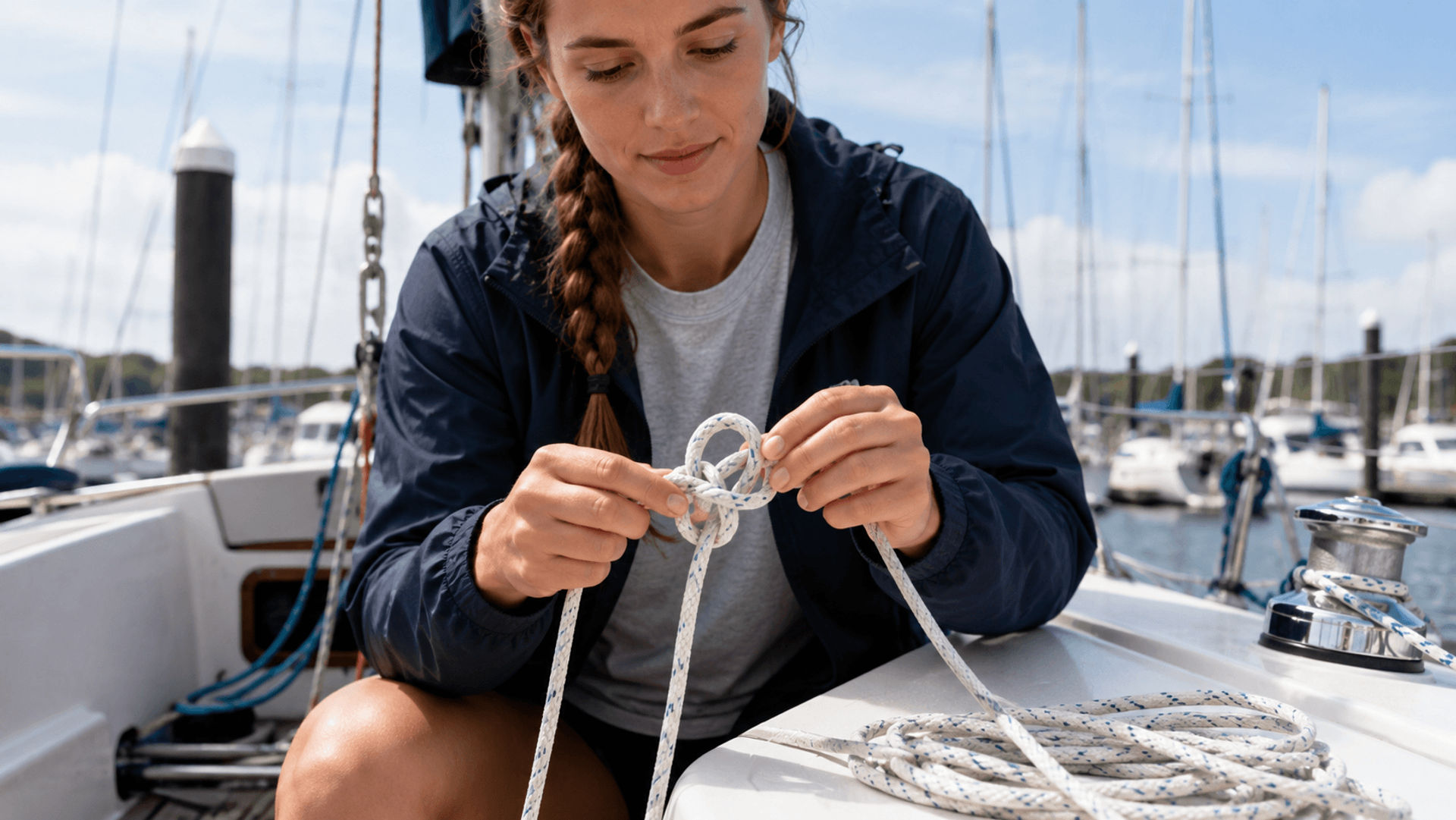
For beginners, sailing knots may seem intimidating at first, but most everyday knots for sailing are simple once you understand what each one is designed to do. The key is not just memorizing how to tie a knot, but also knowing when to use it, why it works, and how to untie it quickly when conditions change.
This guide breaks down essential beginner knots into practical categories so new sailors can build confidence one knot at a time.
Why Sailing Knots Matter for New Sailors
Sailing relies heavily on lines, and those lines need to be secured, adjusted, released, and managed safely. A poorly tied knot can slip under load, jam when you need to release it, or create unnecessary risk during docking, anchoring, or sail handling.
Knowing basic sailing knots helps sailors:
- Secure the boat at the dock
- Attach lines to sails, cleats, posts, and rings
- Tie fenders in the right position
- Join two lines together when needed
- Create loops that will not easily slip
- Handle lines more safely under tension
- Communicate and work more confidently with a crew
For new sailors, the best approach is to start with a small group of reliable knots, practice them often, and understand the specific situations where each knot is most useful.
Stopper Knots: Knots That Keep Lines From Slipping Away
Stopper knots are designed to keep a line from running through a block, fairlead, clutch, or other fitting. These are some of the simplest knots for sailing, but they are also some of the most useful.
Figure-Eight Knot
The figure-eight knot is one of the first sailing knots beginners should learn. It creates a simple stopper at the end of a line and is commonly used to prevent sheets, halyards, and control lines from slipping through hardware.
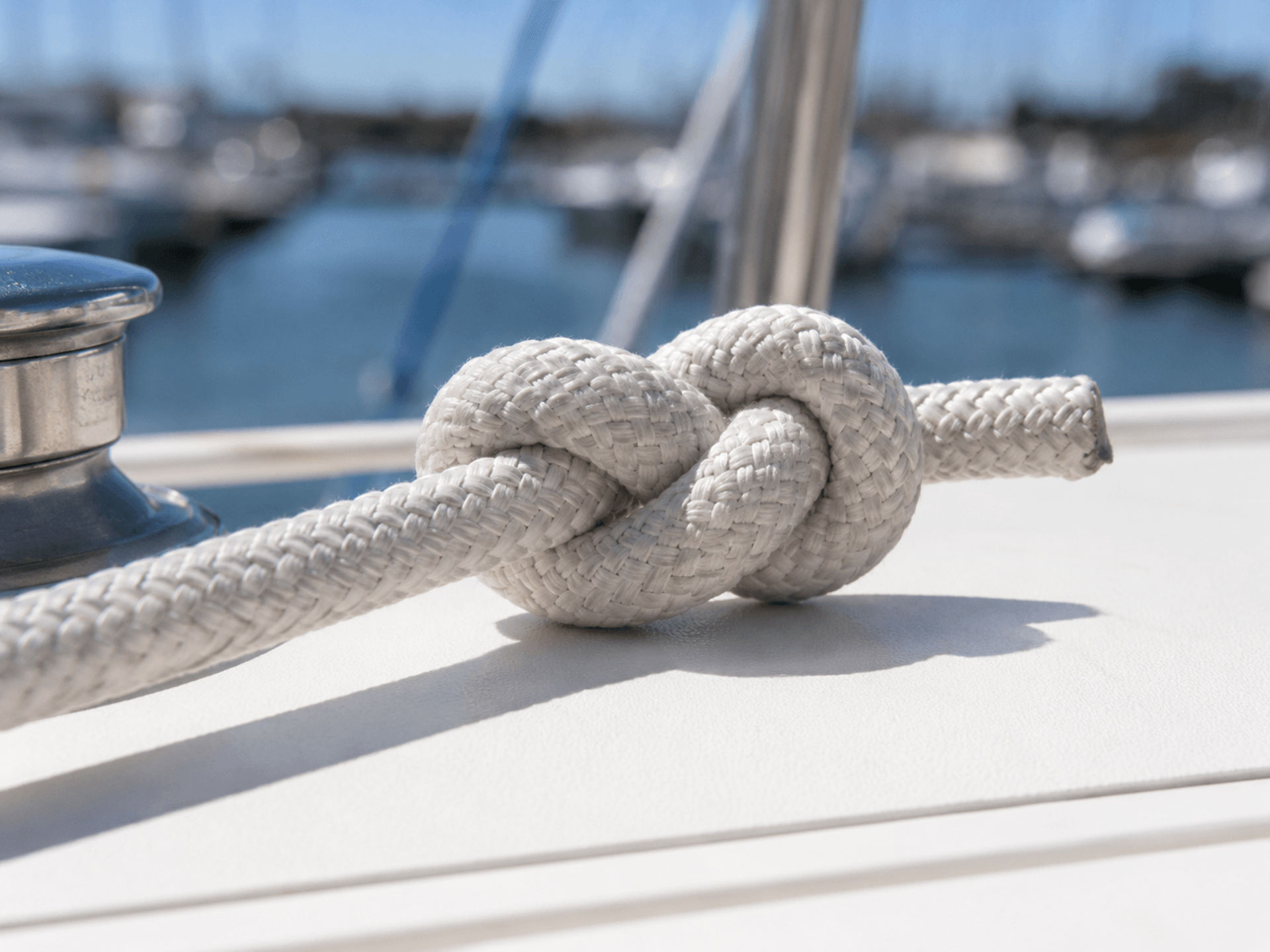
When to Use a Figure-Eight Knot
Use a figure-eight knot when you need to stop a line from pulling through a block, fairlead, or clutch. It is especially useful at the end of jib sheets, mainsheets, or other control lines that could otherwise disappear through deck hardware.
How to Tie a Figure-Eight Knot
- Take the working end of the line and pass it over the standing part to form a loop.
- Wrap the working end under the standing part.
- Bring the working end back through the original loop.
- Pull both ends gently to tighten the knot into a clean figure-eight shape.
Beginner Tip
The figure-eight knot is usually better than a simple overhand knot because it is easier to untie after being loaded.
Binding and Securing Knots: Knots That Fasten Lines to Objects
These knots are used to secure a line around a post, rail, ring, piling, or other object. For beginners, these basic sailing knots are especially useful when docking, tying fenders, or temporarily securing gear.
Clove Hitch
The clove hitch is a fast, adjustable knot that is commonly used to tie fenders to lifelines, stanchions, or rails. It is quick to tie and easy to reposition, making it very useful around the dock.
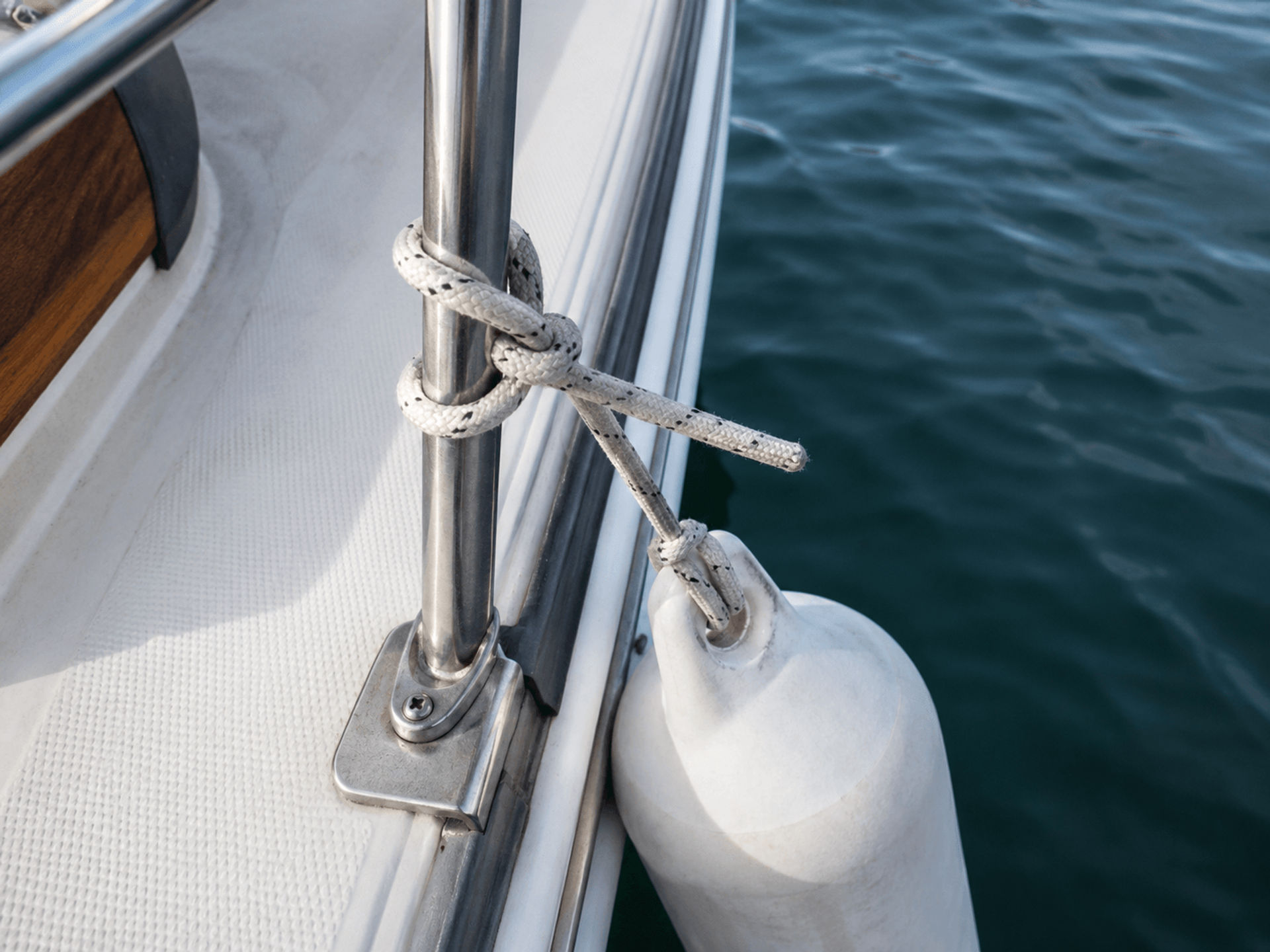
When to Use a Clove Hitch
Use a clove hitch when you need to temporarily secure a line to a rail, post, or piling. It is especially common for hanging fenders along the side of the boat.
How to Tie a Clove Hitch
- Wrap the line around the rail or post.
- Cross the working end over the standing part.
- Wrap the working end around the rail or post a second time.
- Tuck the working end under the second wrap.
- Pull both ends to tighten the knot.
Beginner Tip
A clove hitch is useful, but it can slip if the load shifts or if it is not backed up. For extra security, add two half hitches after tying it.
Round Turn and Two Half Hitches
The round turn and two half hitches is a dependable knot for securing a line to a dock ring, piling, post, or rail. It is stronger and more secure than a clove hitch in many situations, especially when a line may remain under load.
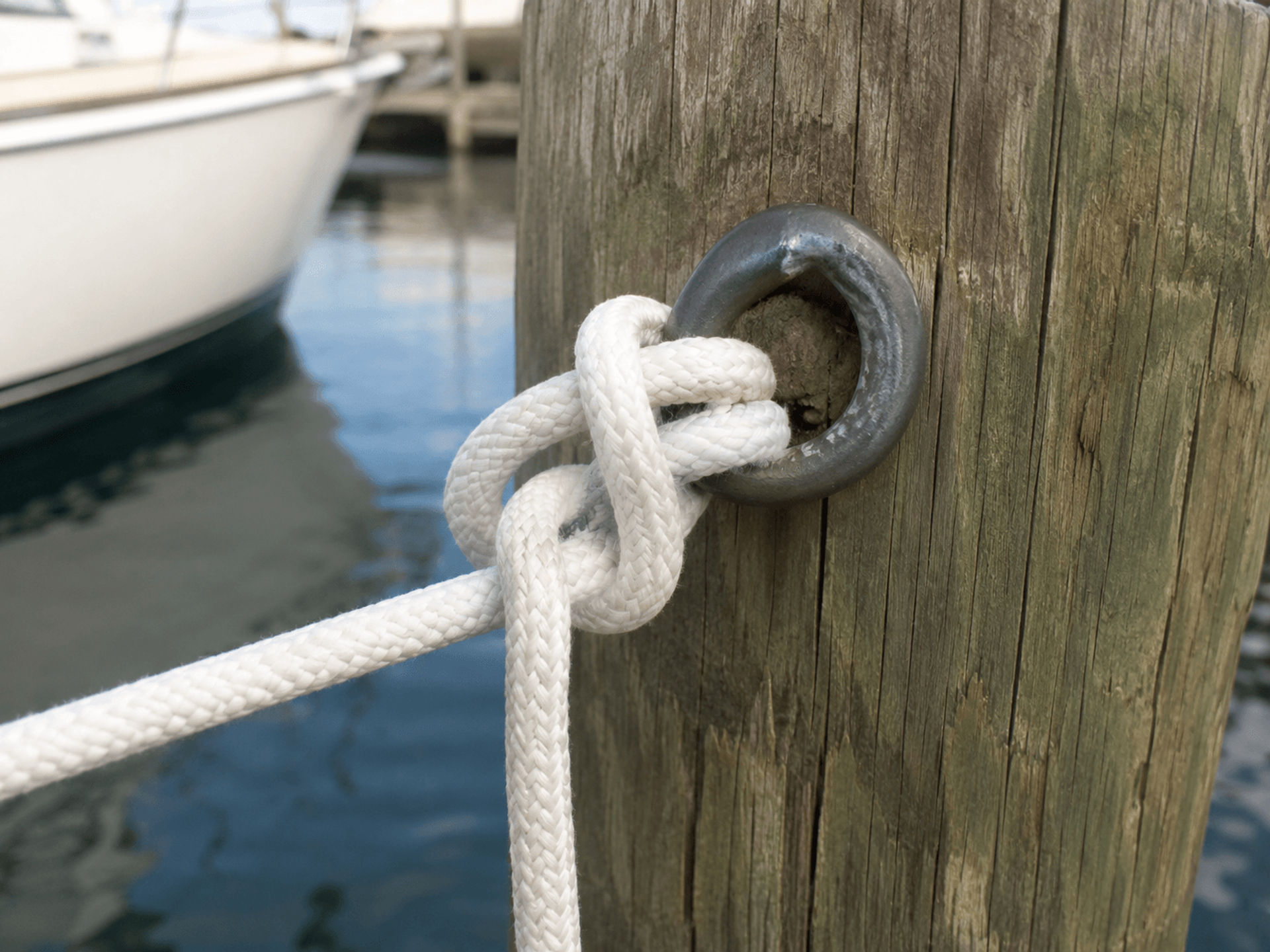
When to Use a Round Turn and Two Half Hitches
Use this knot when tying a boat to a dock ring, securing a line to a post, or attaching a line where steady tension is expected. It is a great beginner knot because the round turn absorbs some of the load before the half hitches secure the line.
How to Tie a Round Turn and Two Half Hitches
- Pass the working end of the line around the post, ring, or rail twice to create a round turn.
- Bring the working end around the standing part of the line.
- Pass the working end through the loop you just made to create the first half hitch.
- Repeat the same motion to create a second half hitch.
- Pull the knot snug and make sure both half hitches are seated neatly.
Beginner Tip
This is one of the best knots for sailing when you need a secure hold that can still be untied after tension has been applied.
Cleat Knots: Knots for Docking and Securing the Boat
Knowing how to properly secure a line to a cleat is essential for docking. While often called a "cleat hitch," this is more of a line-handling technique than a traditional knot, but it is one of the most important skills for any new sailor.
Cleat Hitch
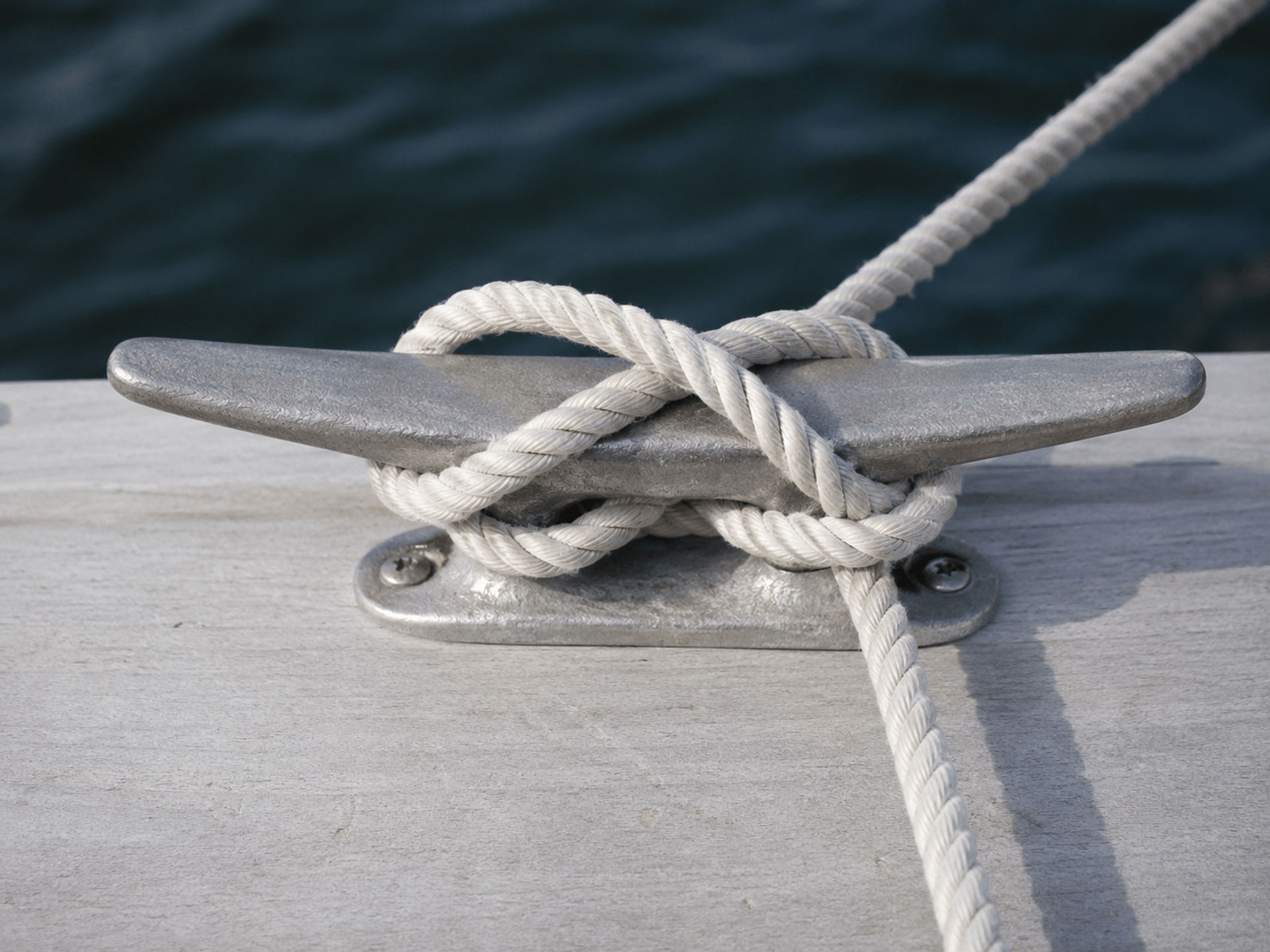
The cleat hitch is used to secure dock lines, halyards, and other control lines to a cleat. It is simple, strong, and easy to release when tied correctly.
When to Use a Cleat Hitch
Use a cleat hitch when securing the boat to a dock cleat, fastening a halyard to a mast cleat, or tying off a line on deck. It is one of the most important basic sailing knots and line skills for docking.
How to Tie a Cleat Hitch
- Lead the line around the base of the cleat, starting with the horn farthest from the load.
- Wrap the line around the opposite horn.
- Cross the line over the cleat in a figure-eight pattern.
- Make one final turn with a small underhand loop.
- Place the loop over the cleat horn so the line locks neatly in place.
- Pull the line snug without stacking too many wraps on the cleat.
Beginner Tip
Avoid wrapping the cleat over and over again. A clean cleat hitch with one proper locking turn is more secure and easier to release.
Loop Knots: Knots That Create a Secure Loop
Loop knots create a fixed loop at the end of a line. These sailing knots are useful when attaching a line to a sail, ring, piling, or other point where a stable loop is needed.
Bowline
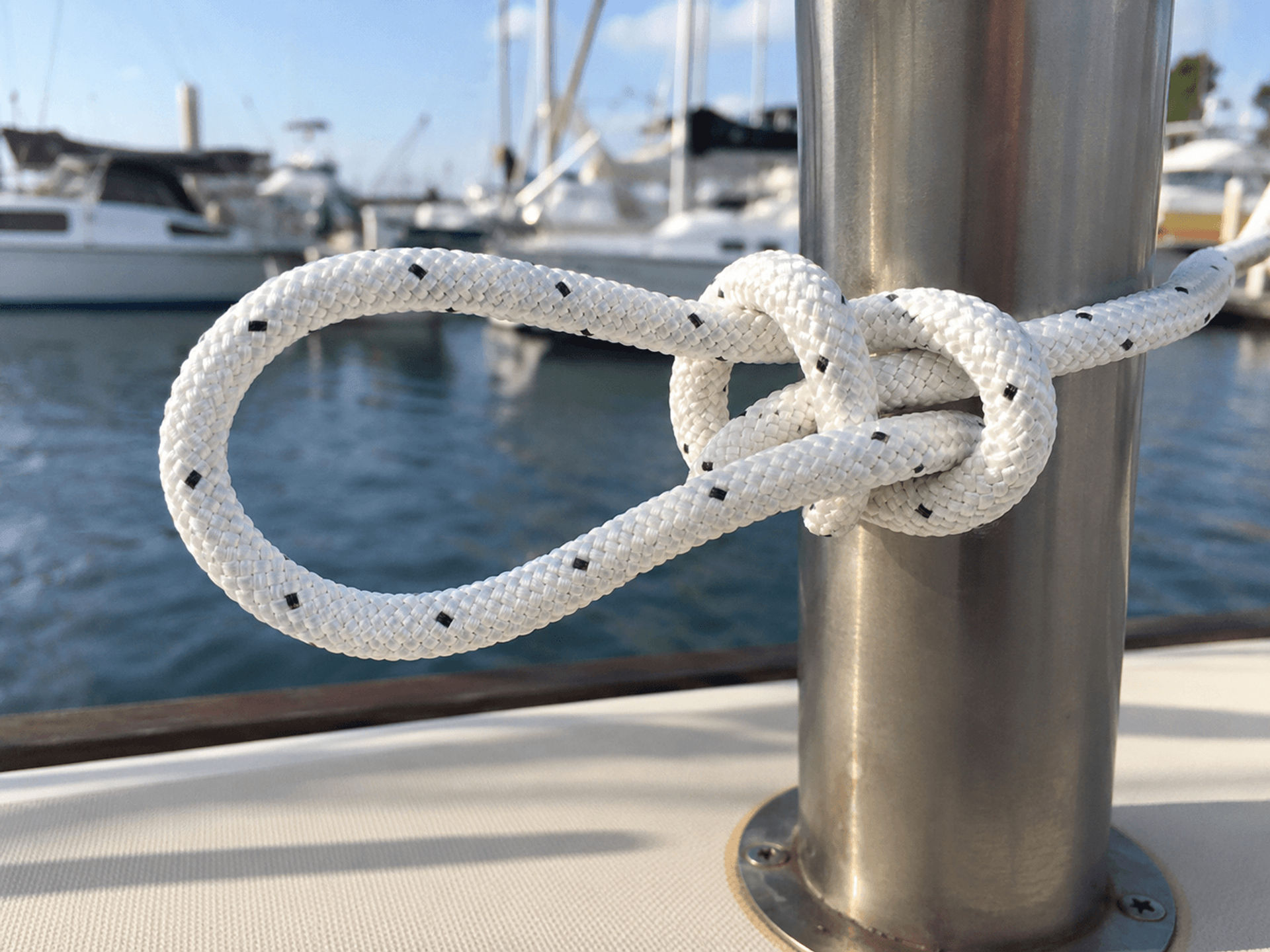
The bowline is one of the most famous knots for sailing because it creates a strong fixed loop that does not easily slip or tighten under load. It is commonly used to attach sheets to sails, secure lines to rings, or create a temporary loop in a line.
When to Use a Bowline
Use a bowline when you need a secure loop that will not close down under tension. It is helpful for attaching a jib sheet to a clew, tying a line around a piling, or creating a loop for general boat handling.
How to Tie a Bowline
- Make a small loop in the standing part of the line.
- Pass the working end up through the loop.
- Wrap the working end around the standing part.
- Pass the working end back down through the original loop.
- Pull the standing part and the loop to tighten the knot.
Beginner Tip
Many sailors remember the bowline with the phrase: "The rabbit comes out of the hole, goes around the tree, and goes back into the hole." The "rabbit" is the working end, the "hole" is the loop, and the "tree" is the standing part.
Running Bowline
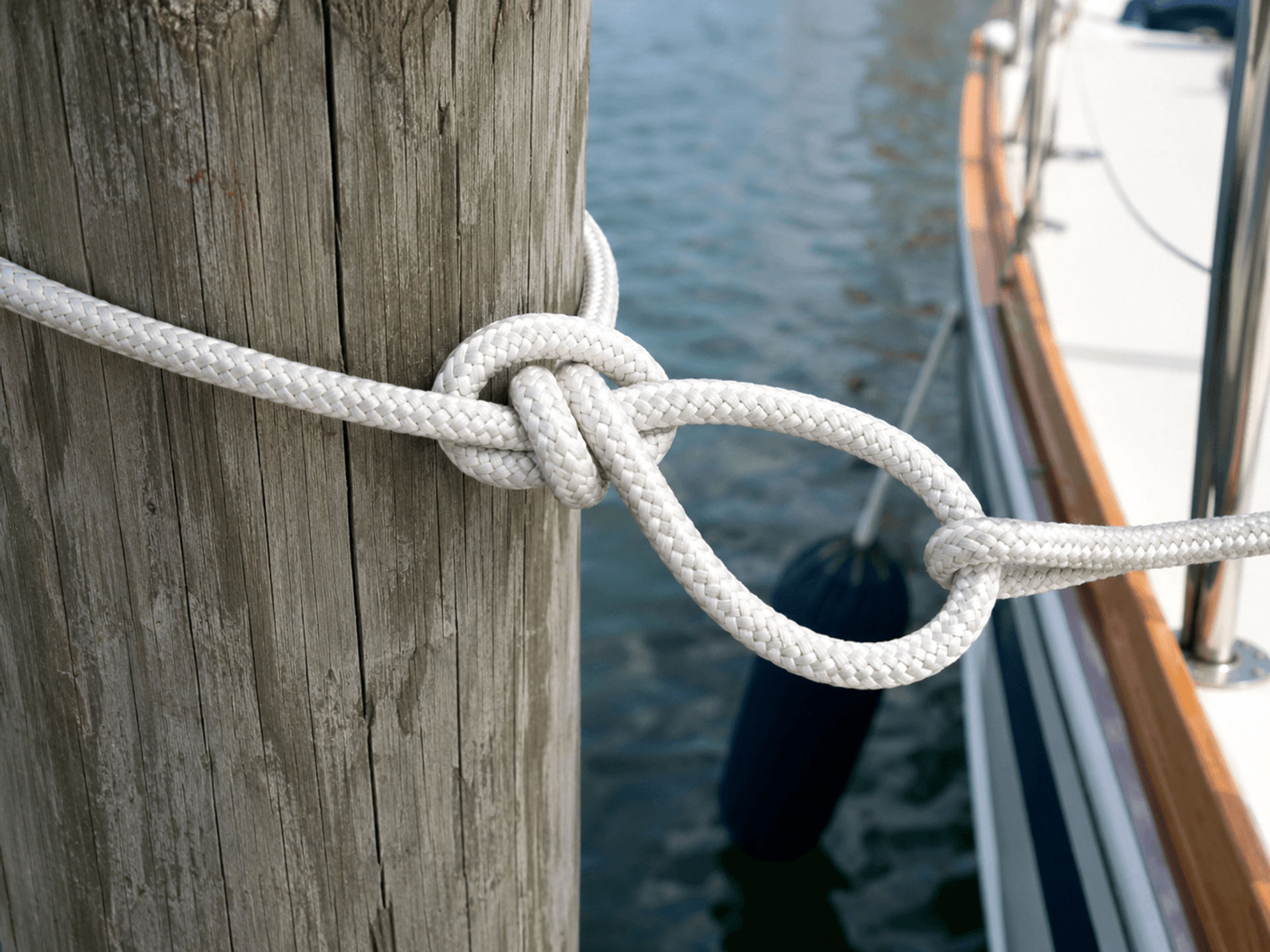
A running bowline creates a loop that can slide and tighten around an object. It is less commonly used than a standard bowline for beginners, but it is useful to understand as sailors build their knot knowledge.
When to Use a Running Bowline
Use a running bowline when you need a loop that tightens around a piling, post, or object. It may be used in certain mooring, retrieval, or securing situations, but beginners should practice it carefully and understand how it behaves under load.
How to Tie a Running Bowline
- Tie a standard bowline near the end of the line.
- Pass the standing part of the line through the fixed loop of the bowline.
- Pull the standing part to create a sliding loop.
- Place the loop around the object and apply tension carefully.
Beginner Tip
Because a running bowline tightens under load, it should be used intentionally and only when a sliding loop is appropriate.
Bends: Knots That Join Two Lines Together
Bends are used to connect two lines. These basic sailing knots are helpful when extending a line, joining lines of different sizes, or making temporary connections between ropes.
Sheet Bend
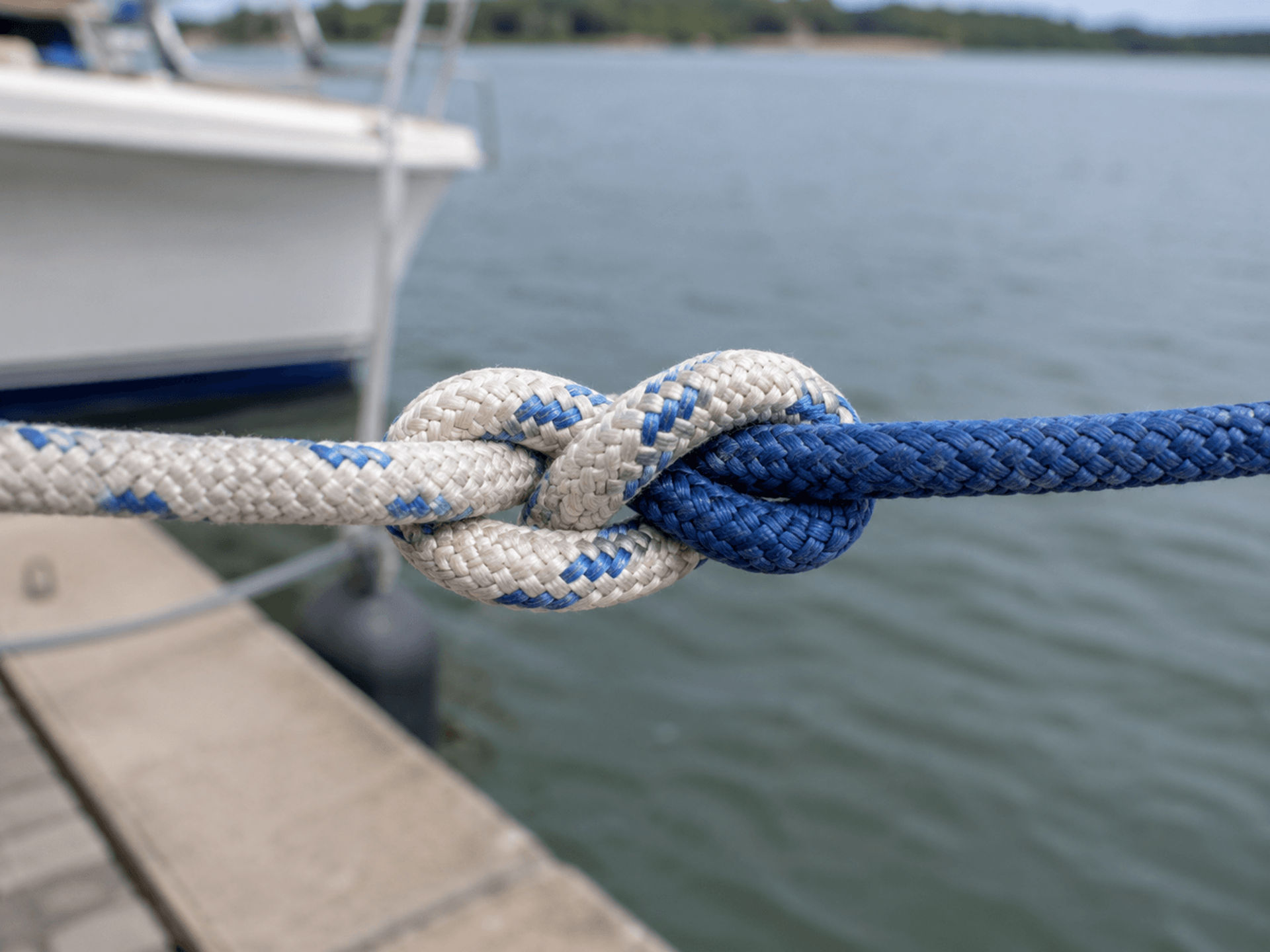
The sheet bend is used to join two lines together, especially when the lines are different sizes. It is practical, easy to learn, and useful in many sailing and boating situations.
When to Use a Sheet Bend
Use a sheet bend when you need to connect two lines, such as extending a dock line or joining a thinner line to a thicker one. It is one of the best beginner knots for sailing when two separate lines need to work together.
How to Tie a Sheet Bend
- Make a bight, or U-shaped bend, in the thicker line.
- Pass the working end of the thinner line up through the bight.
- Wrap the thinner line around both parts of the thicker line.
- Tuck the working end of the thinner line under itself.
- Pull both standing parts to tighten the bend.
Beginner Tip
For extra security, especially with slippery or unequal lines, use a double sheet bend by wrapping the working end around the thicker line twice before tucking it under.
Reefing and Sail-Handling Knots
Some sailing knots are especially useful for managing sails, bundling lines, or reducing sail area. These knots help keep the boat organized and allow sailors to respond more effectively to changing wind conditions.
Reef Knot
The reef knot, also called a square knot, is used for tying two ends of the same line together around an object. Historically, it has been associated with reefing sails, but it should not be used for critical loads or joining two separate lines under heavy tension.
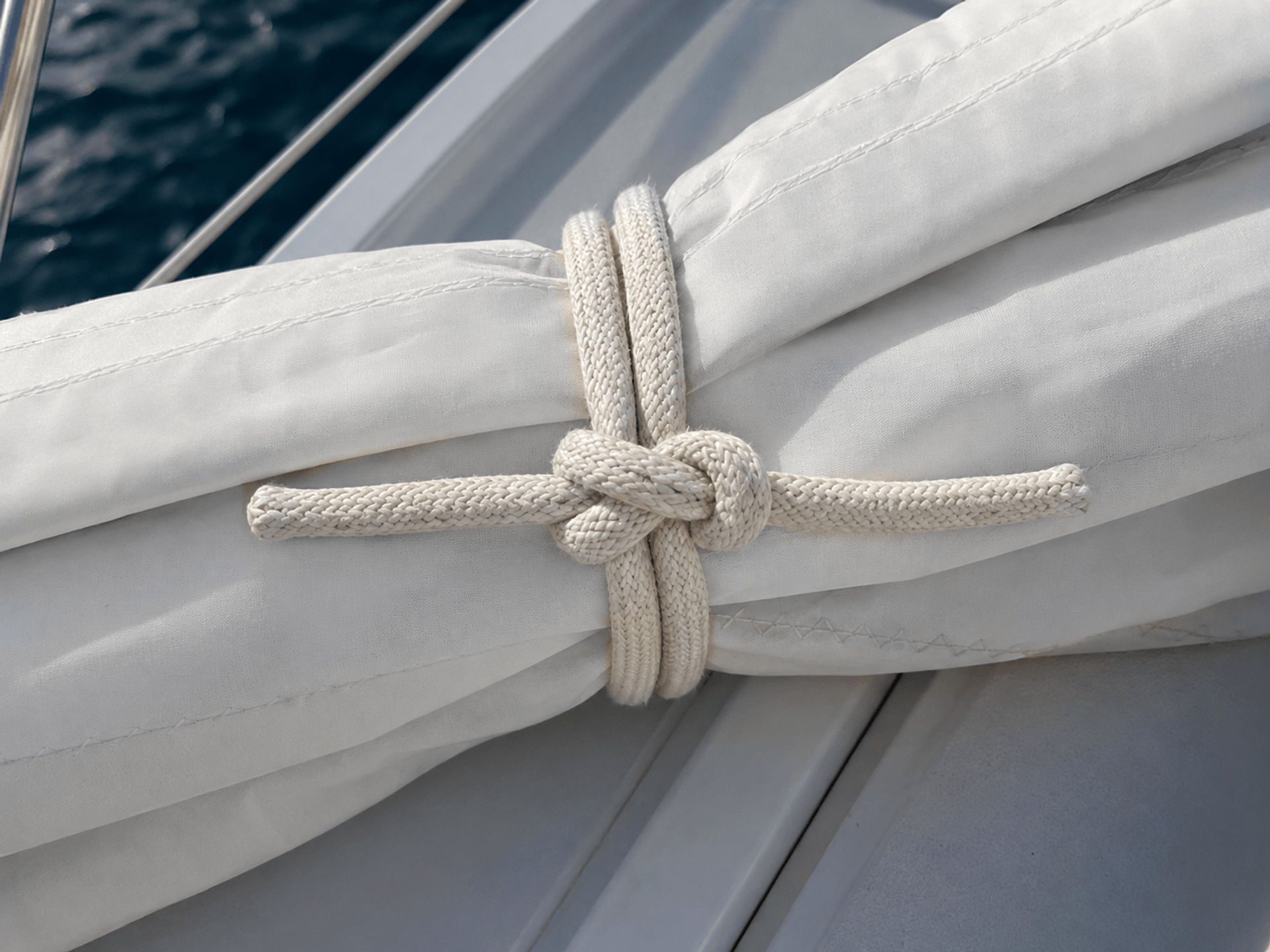
When to Use a Reef Knot
Use a reef knot for light-duty tasks, such as tying sail ties, bundling a line, or securing non-critical gear. Do not use it to join two loaded lines or for docking, towing, or any situation where failure could be dangerous.
How to Tie a Reef Knot
- Cross the right end over the left end.
- Tuck it underneath and pull both ends gently.
- Cross the left end over the right end.
- Tuck it underneath.
- Pull both ends evenly so the knot lies flat.
Beginner Tip
Remember: "Right over left, left over right." If tied incorrectly, it can become a granny knot, which is less secure.
Slip Knots and Quick-Release Knots
Quick-release knots are useful when you need temporary security with the ability to release the line quickly. These knots can be helpful around the dock, but they should only be used in appropriate low-risk situations.
Slipped Half Hitch
A slipped half hitch is a simple temporary knot that can be released quickly by pulling the working end. It is useful for short-term tasks when you do not want the knot to jam.
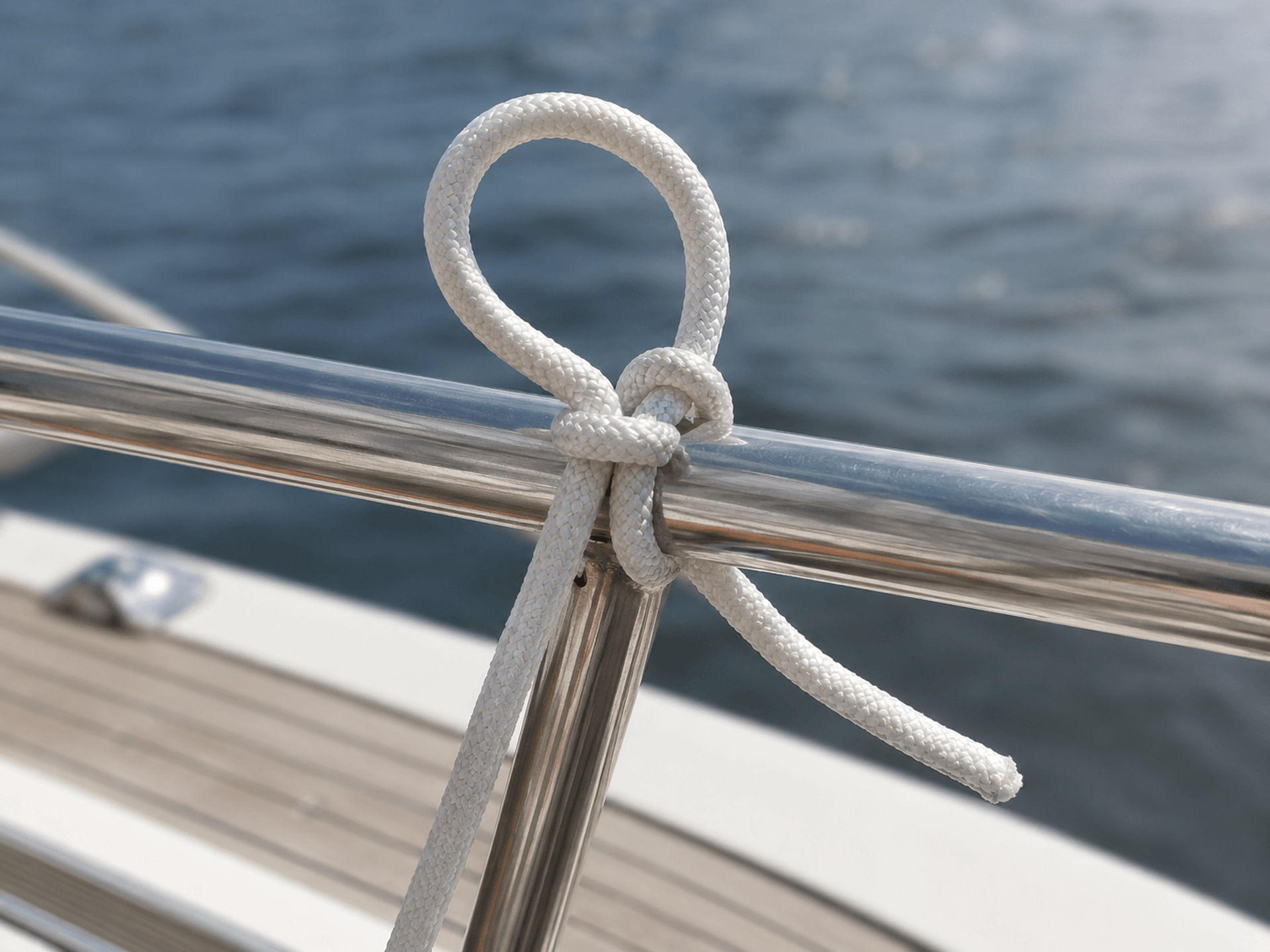
When to Use a Slipped Half Hitch
Use a slipped half hitch for temporary, light-duty securing tasks, such as holding a coiled line, securing a loose end, or making a quick tie that you expect to release soon.
How to Tie a Slipped Half Hitch
- Pass the line around the object or standing part.
- Form a small loop with the working end.
- Pass the loop through the hitch instead of passing the full end through.
- Pull gently to tighten.
- Release the knot by pulling the free end.
Beginner Tip
Do not use slipped knots for heavy loads unless you fully understand how they will behave under tension.
Common Beginner Mistakes When Learning Sailing Knots
Even simple knots can fail if they are tied incorrectly or used in the wrong situation. New sailors should focus on clean technique, proper use, and regular practice.
Common mistakes include:
- Using the wrong knot for the job
- Tying knots too loosely
- Leaving tails too short
- Using a knot that jams under load
- Using a temporary knot for a critical task
- Forgetting to dress the knot neatly
- Adding too many wraps to a cleat
- Not practicing until the knot becomes second nature
A good sailing knot should be properly dressed, meaning the parts of the knot are aligned cleanly and tightened evenly. Messy knots are harder to inspect, harder to untie, and more likely to behave unpredictably under load.
How to Practice Basic Sailing Knots at Home
You do not need to be on a boat to practice sailing knots. In fact, practicing at home is one of the best ways to build confidence before taking a sailing class or heading out on the water.
Try practicing with a short piece of line and a fixed object such as a chair leg, railing, or cleat board. Start slowly, focus on clean form, and repeat each knot until you can tie it without looking at step-by-step instructions. Once you are comfortable, practice tying each knot in different orientations, with your eyes closed, or while explaining when you would use it.
For beginners, the most important knots to practice first are:
- Figure-eight knot
- Bowline
- Clove hitch
- Round turn and two half hitches
- Cleat hitch
- Sheet bend
- Reef knot
These basic sailing knots will give new sailors a strong foundation for docking, sail handling, line management, and general boating safety.
Learn Basic Sailing Knots With Naos Yachts in Marina del Rey
At Naos Yachts in Marina del Rey, we help new and experienced sailors build the confidence, knowledge, and hands-on skills needed to enjoy sailing safely. Our sailing school offers a wide range of American Sailing and American Boating certified classes designed to help students develop practical seamanship skills, from understanding the parts of a boat to docking, sail trim, navigation, and knots for sailing.
For beginners, our American Sailing 101 Basic Keelboat Sailing class is an excellent place to start. This course introduces the fundamentals of sailing, including essential terminology, boat handling, points of sail, safety practices, and the basic sailing knots every new sailor should know. Students who want to continue building their skills can also take our American Sailing 103 Basic Coastal Cruising class, where they can expand their knowledge of cruising, anchoring, coastal navigation, and real-world seamanship.
Book a Sailing Class at Naos Yachts in Marina del Rey Today
Learning sailing knots is about more than memorizing rope tricks. It is about knowing how to safely control lines, secure the boat, protect equipment, and respond with confidence in real sailing situations. Once you understand the purpose of each knot, when to use it, and how to tie it correctly, you will be much better prepared for life on the water.
Whether you are brand new to sailing or preparing to improve your skills, Naos Yachts can help you take the next step. Contact us here at Naos Yachts in Marina del Rey or book a sailing class directly online to start learning the essential skills, knots, and seamanship techniques every sailor should know.
FAQs
What are the most important basic sailing knots for beginners to learn?
The most important basic sailing knots for beginners include the figure-eight knot, bowline, clove hitch, cleat hitch, sheet bend, reef knot, and round turn with two half hitches. These knots help new sailors secure lines, tie off to cleats, attach sails, manage fenders, and handle common situations on the water.
What is the easiest sailing knot for beginners?
The figure-eight knot is often one of the easiest sailing knots for beginners to learn. It is simple to tie, easy to inspect, and commonly used as a stopper knot to keep a line from slipping through a block or fitting.
Are sailing knots hard to learn?
Sailing knots are not hard to learn when beginners start with a few practical knots and practice regularly. The key is understanding when to use each knot, tying it correctly, and making sure it is properly dressed and tightened.
What happens if you use the wrong sailing knot?
Using the wrong sailing knot can cause a line to slip, jam, loosen, or become difficult to untie under tension. In some situations, this can create safety risks during docking, sail handling, or securing the boat.